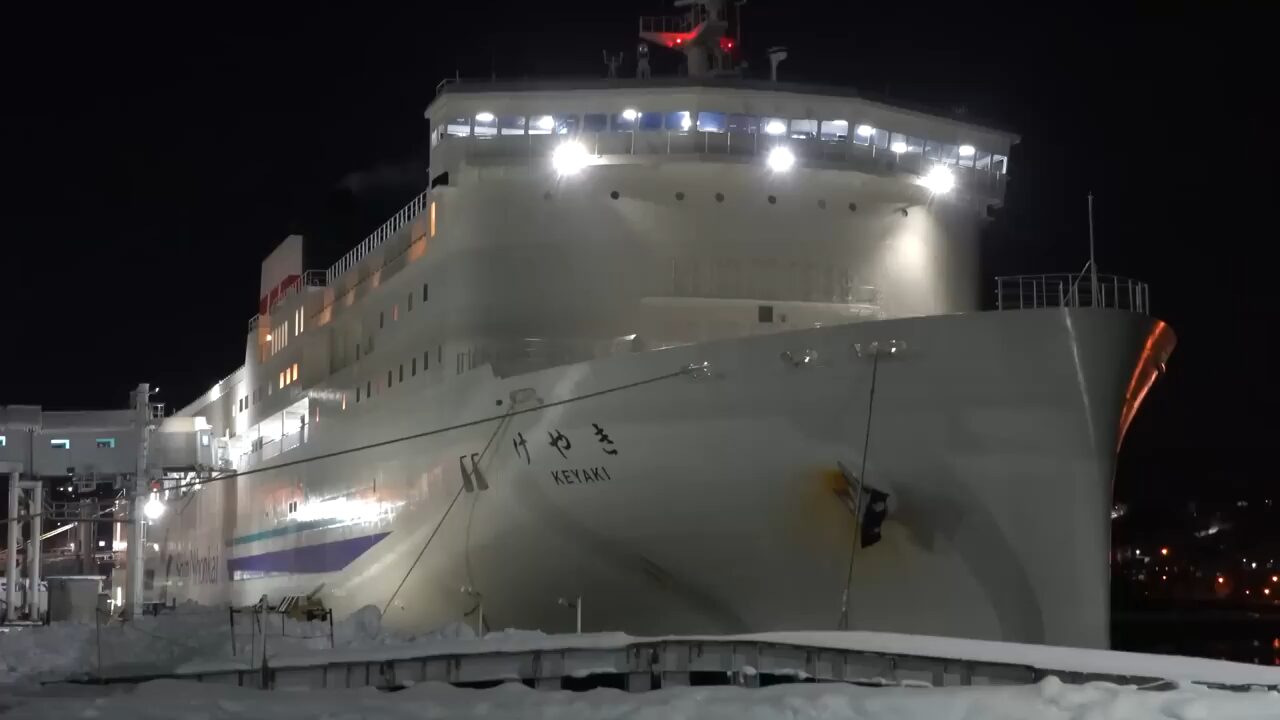
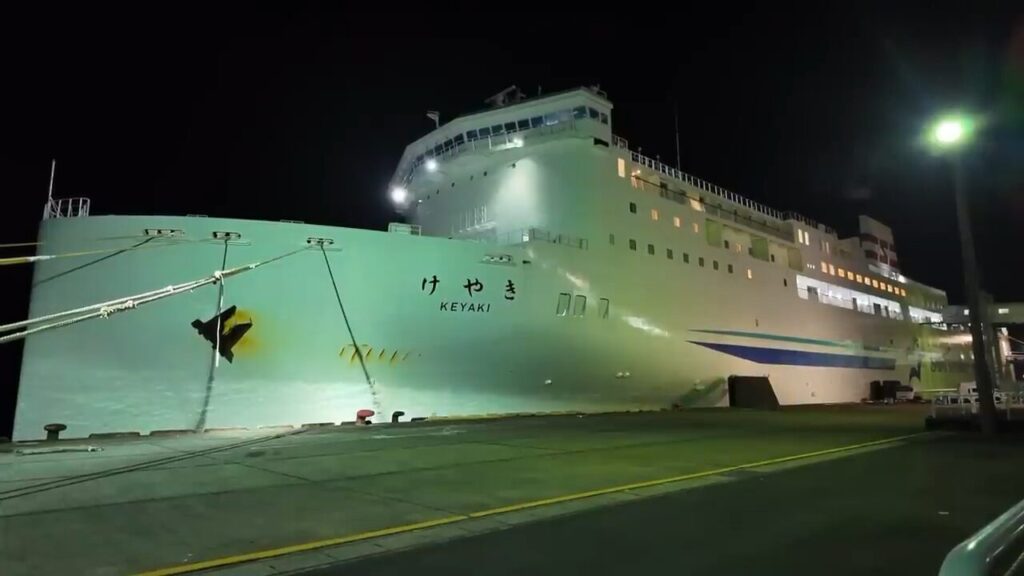
Japan’s newest ferry set sail for the first time in November 2025, and we booked a cabin on its very first weeks in service. The Keyaki, operated by Shin Nihonkai Ferry, is the first new ship on the Otaru–Maizuru route in 21 years. It connects Otaru, Hokkaido, with Maizuru, Kyoto, in a single overnight journey of roughly 21 hours. Its interior design leans into a “Kyoto and history” theme, and the result feels elegant, warm, and considerably more refined than a typical ferry.
We booked a Deluxe A Room on the top deck and rode the full route, through calm seas, a projection mapping show, an onboard sauna, and eventually a stormy stretch of the Sea of Japan. Here’s everything that happened along the way.
Table of Contents
- Getting to Otaru Ferry Terminal
- What Makes the Keyaki Different?
- Inside the Deluxe A Room
- A Midnight Departure
- Breakfast in the Onboard Restaurant
- The Two-Story Forward Salon
- Projection Mapping in the Screen Room
- Souvenirs and New-Ship Merchandise
- The Panoramic Outdoor Bath and Sauna
- Lunch: Hokkaido’s Famous Pork Bowl
- Rough Seas and a Temporary Shutdown
- Riding Out the Storm to Maizuru
- Practical Information and Final Thoughts
Getting to Otaru Ferry Terminal
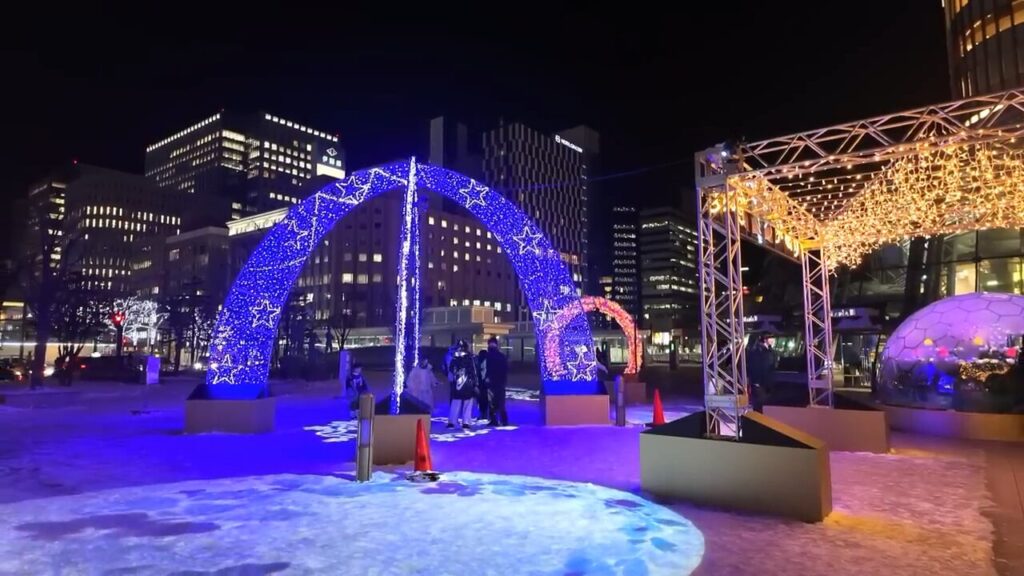
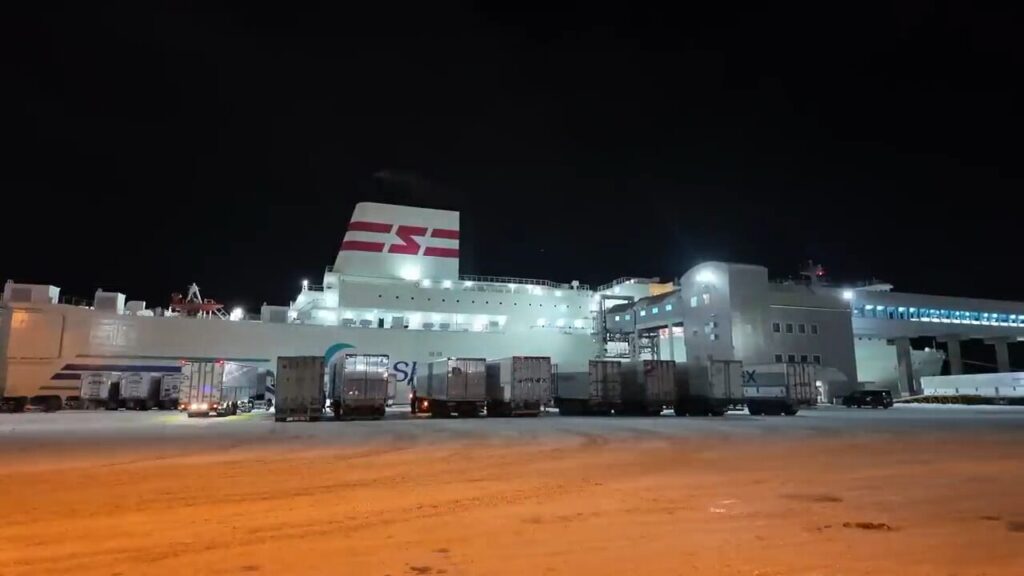
Our journey started in Hokkaido. From Sapporo Station, a train and bus combination got us to the Otaru terminal in about an hour. This was our first look at the Keyaki, the newest ship on the Maizuru–Otaru route in 21 years.
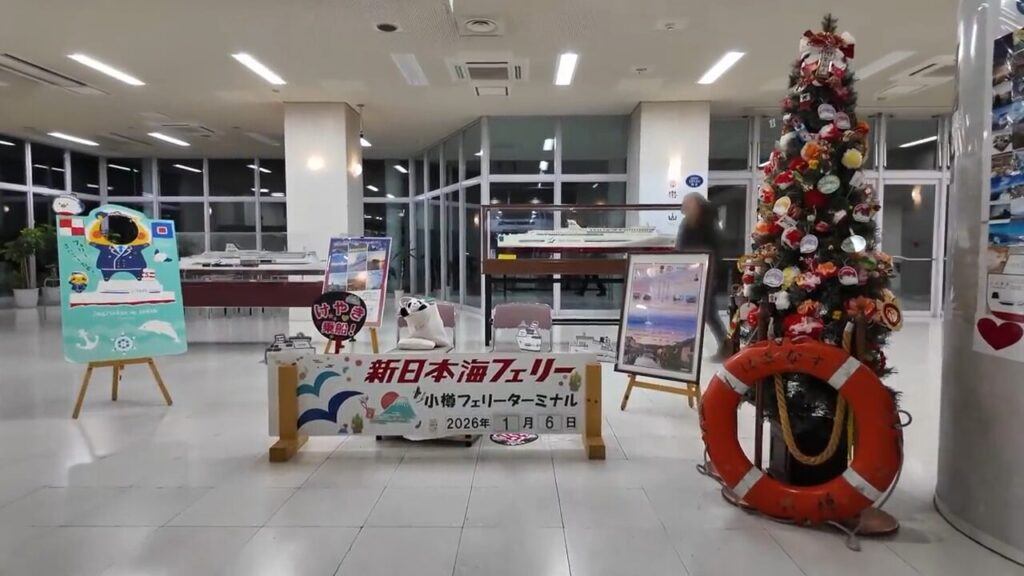
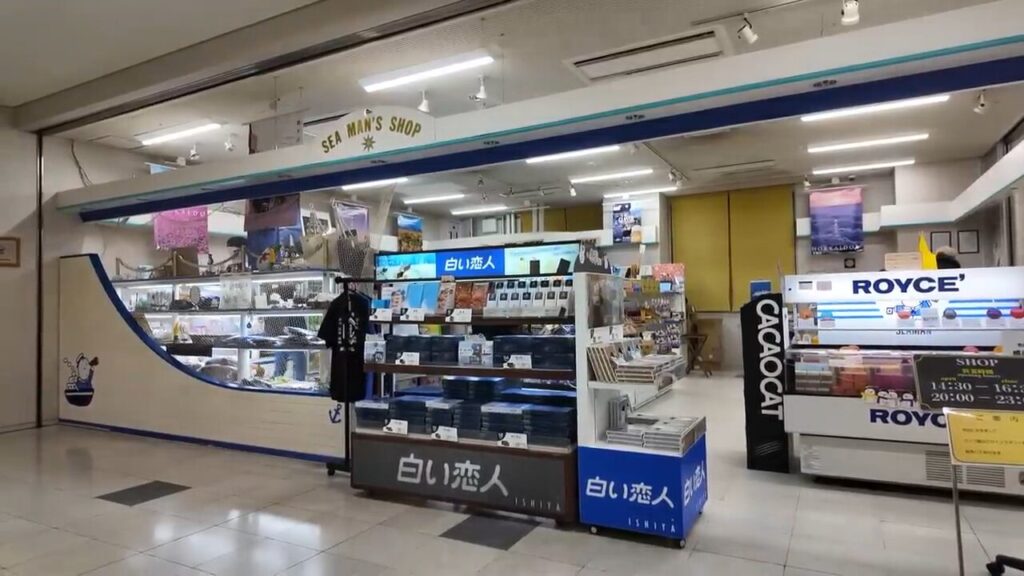
Check-in went smoothly at the terminal, and the building’s Christmas decorations leaned heavily into a ferry theme, clearly the work of someone who genuinely loves this ship. Departure from Otaru was scheduled for 11:30 PM. With boarding running about 30 minutes behind, we spent the wait browsing the terminal shop. Conveniently, the shop stays open right up until departure, which meant no last-minute scramble for Hokkaido souvenirs.

What Makes the Keyaki Different?
The Keyaki runs once daily between Maizuru and Otaru, covering the route in about 20 hours and 55 minutes. Its “Kyoto and history” design concept comes through clearly in the interior, elegant and warm rather than purely functional. Mitsubishi Heavy Industries built the ship at its Shimonoseki shipyard, one of Japan’s leading shipbuilders.
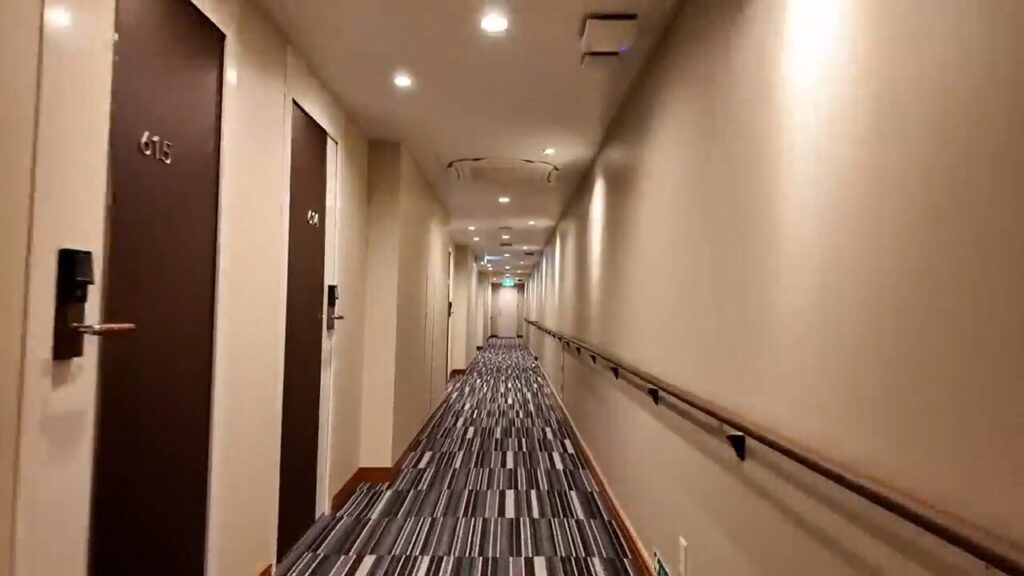
Passenger cabins occupy decks 4 through 6, and our room sat on the top deck. In a nice modern touch, the QR code printed on the boarding ticket doubles as the room key, so there’s no separate card to keep track of.
Inside the Deluxe A Room
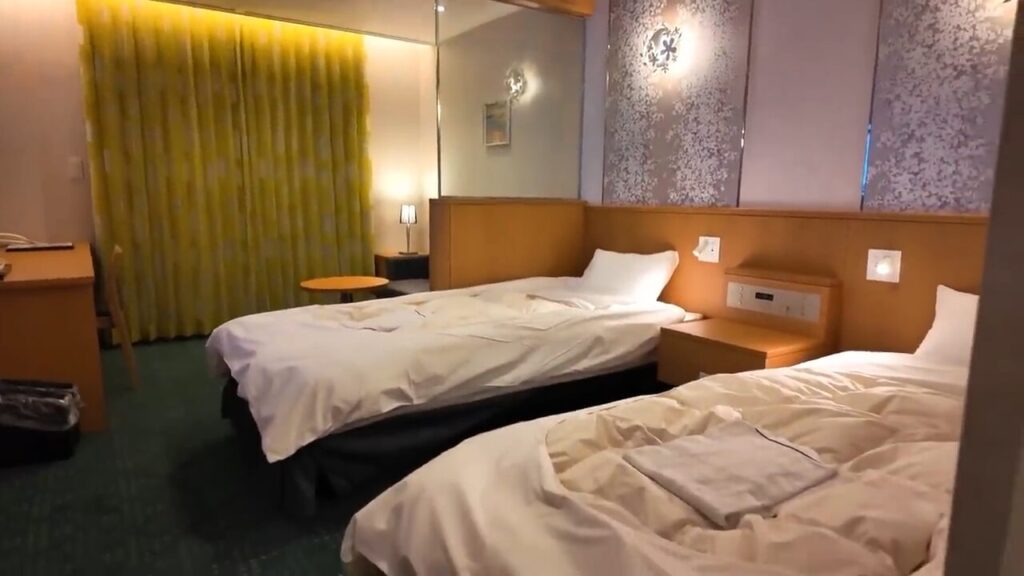
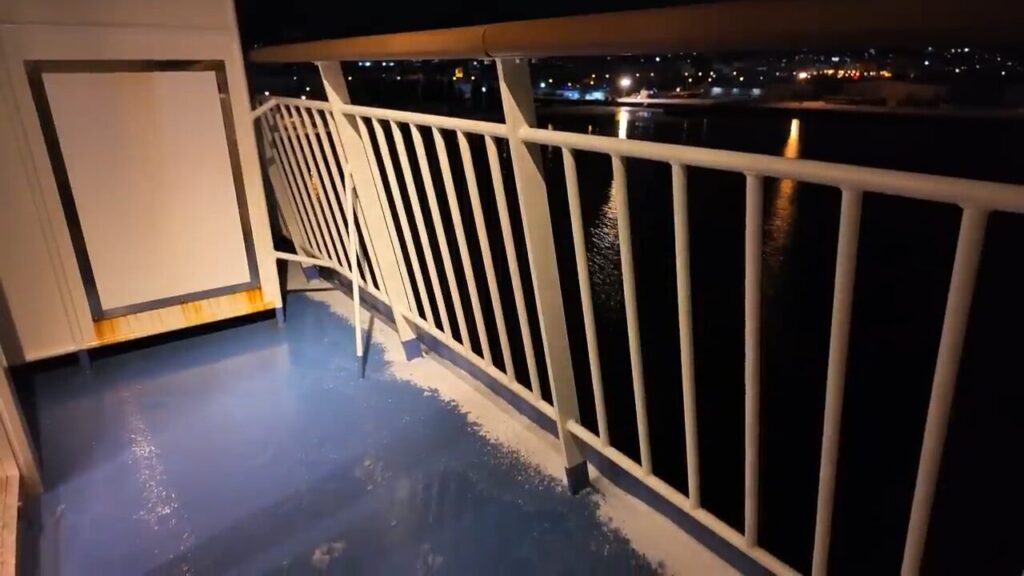
Staff showed us to the Deluxe A Room, a 25-square-meter space including a private terrace. We chose this room mainly for the terrace access, though on the night of our stay, a layer of ice covered the floor out there, making it dangerously slippery.
Inside, the room came with twin beds, a table and chairs, and a refrigerator. A motion sickness bag sat tucked inside the room folder, a practical touch given the length of the crossing. The ship measures 199.0 meters in total length. Beyond that, most of the amenities felt close to a standard hotel room. The bedside light included a USB-C charging port, and the closet held disposable slippers and a safety box.
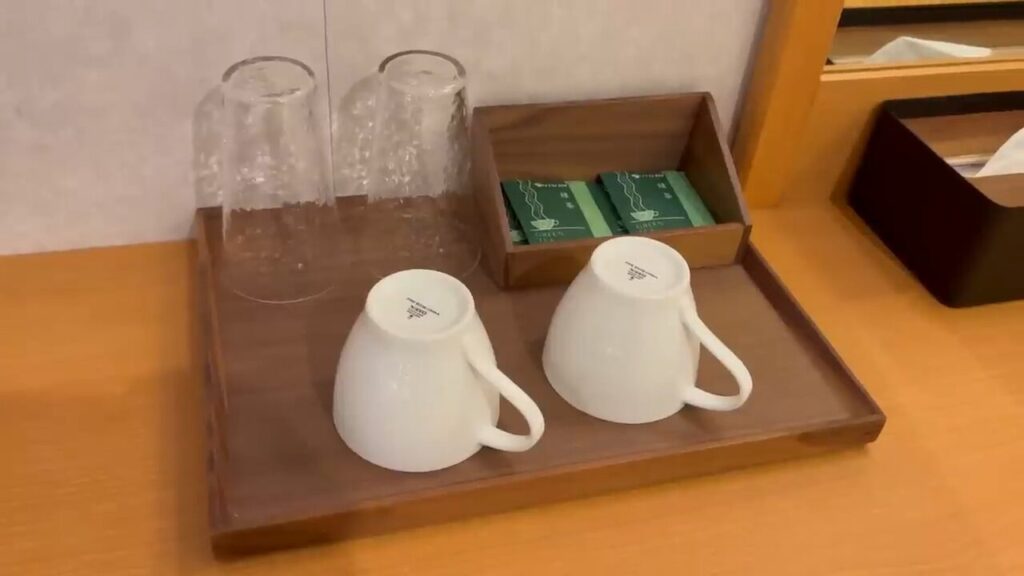
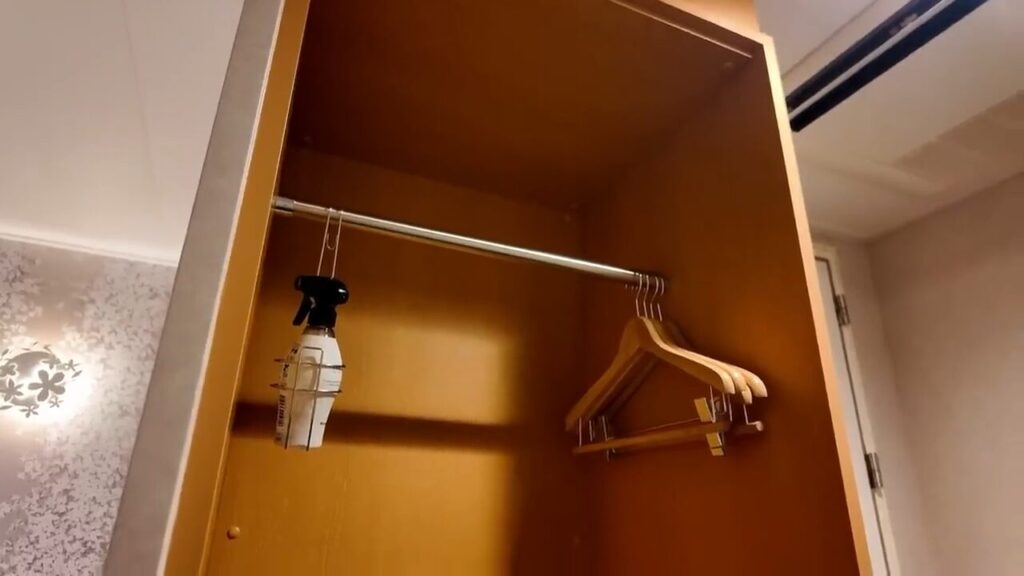
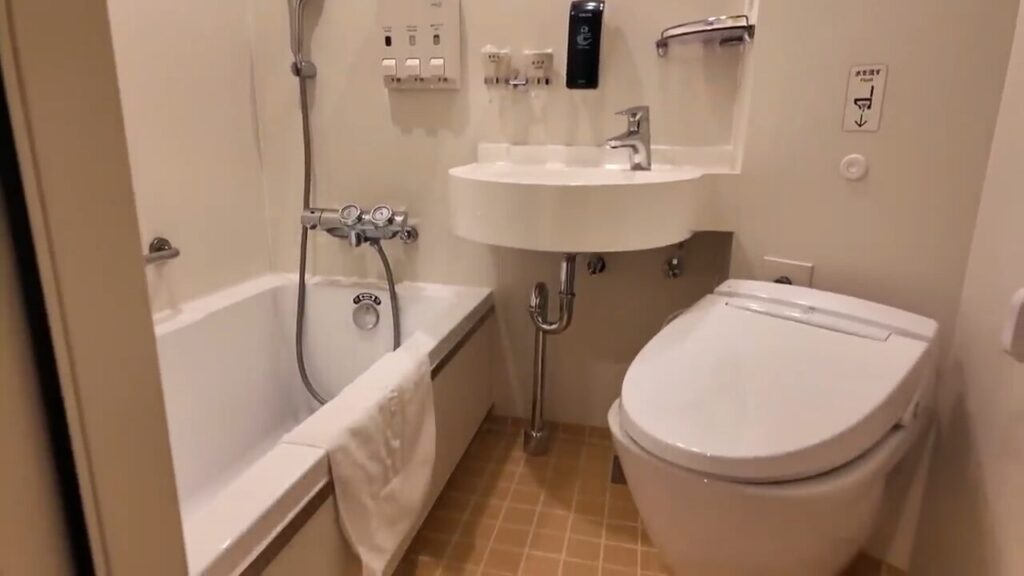
Best of all, the room came with its own private bathroom and toilet, meaning no trips down the hall to shared facilities. Body soap, shampoo, conditioner, and a toothbrush were all provided too.
A Midnight Departure
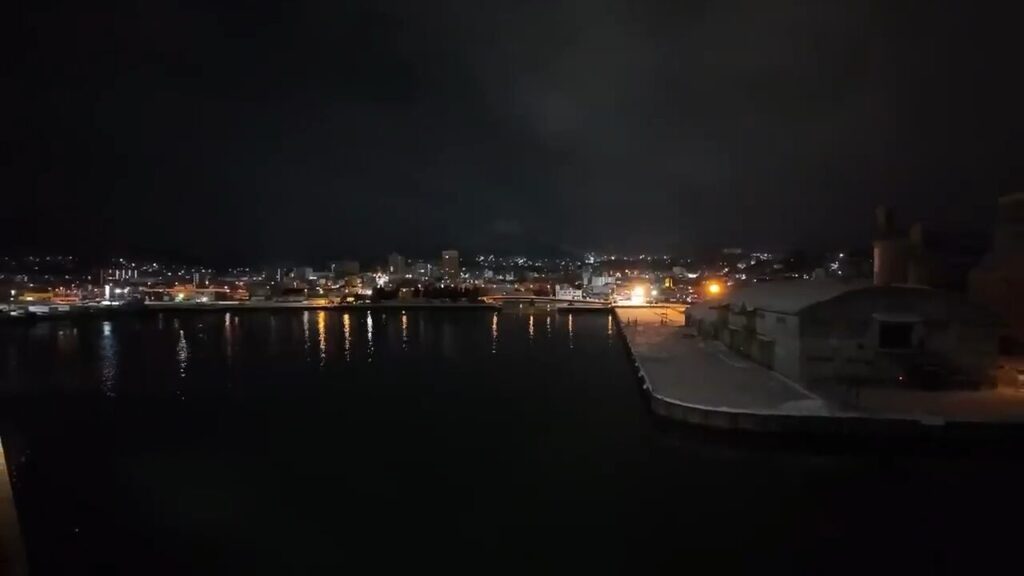
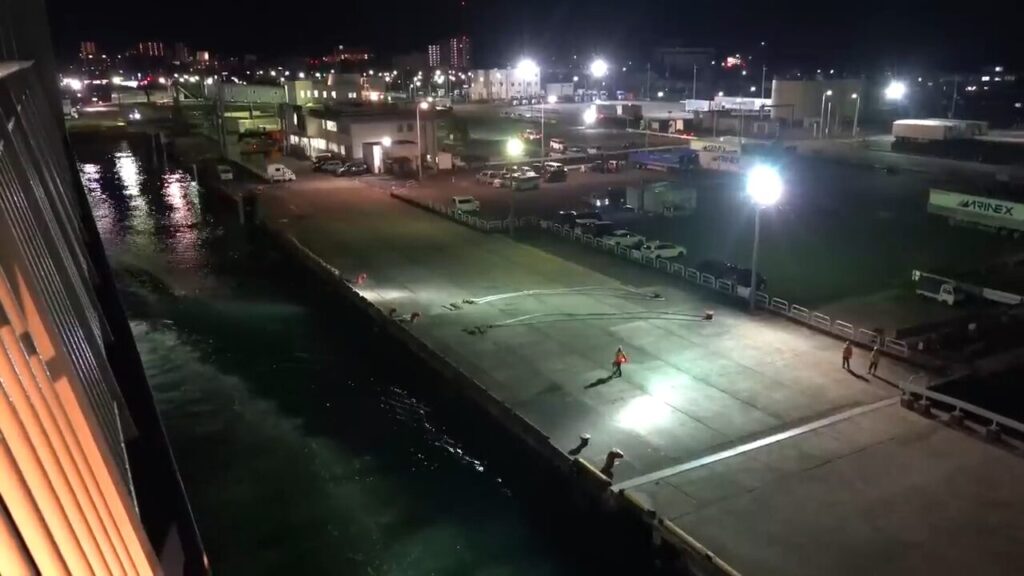
Rough weather kept the rooftop deck closed that night, and honestly, one look outside made the decision easy to understand. Instead, we watched the departure from inside the ship. Conditions still looked calm at that point, though rougher weather was forecast ahead. By the time the ship actually left port, midnight had already come and gone.

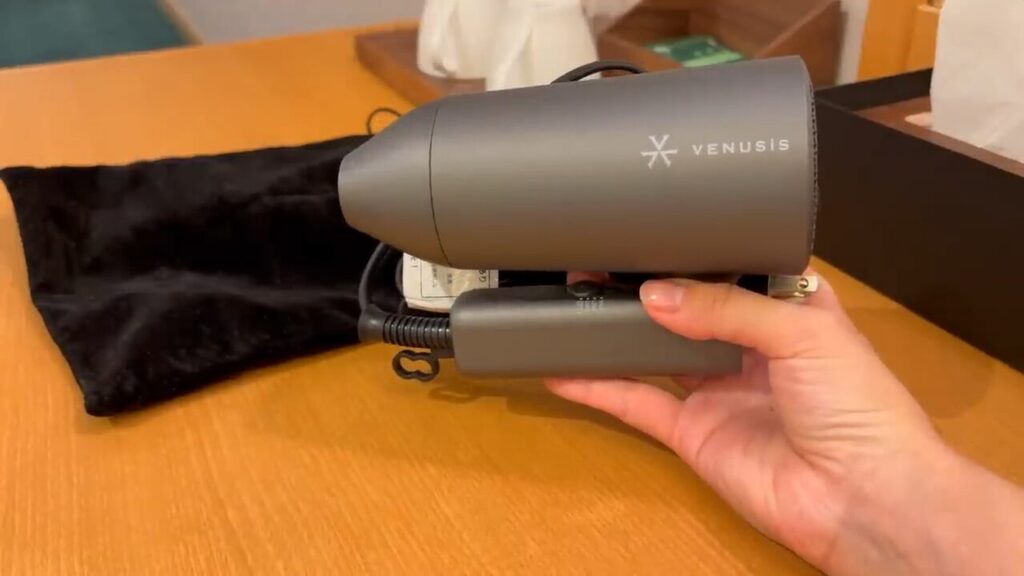
We decided to shower and turn in early. The bathtub’s drain worked by twisting rather than pulling, and it took us a minute to figure out an unfamiliar button on the wall. A curtain kept water from splashing out, a setup familiar from Japanese unit baths everywhere. Filling the tub, the water turned a pleasant shade of blue, a small decorative touch we didn’t expect. The desk had a hairdryer available for use in the room (not for taking with you), and a set of pajamas sat waiting on the bed. With that, it was time to sleep.

Breakfast in the Onboard Restaurant
The next morning brought cloudy skies and breakfast in the ship’s restaurant. Shin Nihonkai Ferry runs its dining service order-style rather than buffet, so we went with the Western-style set.
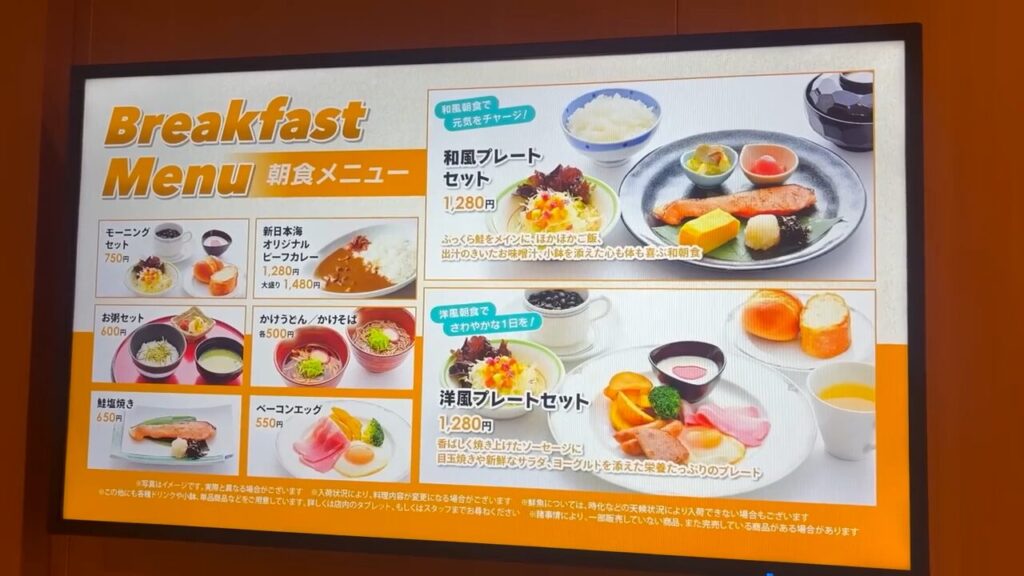
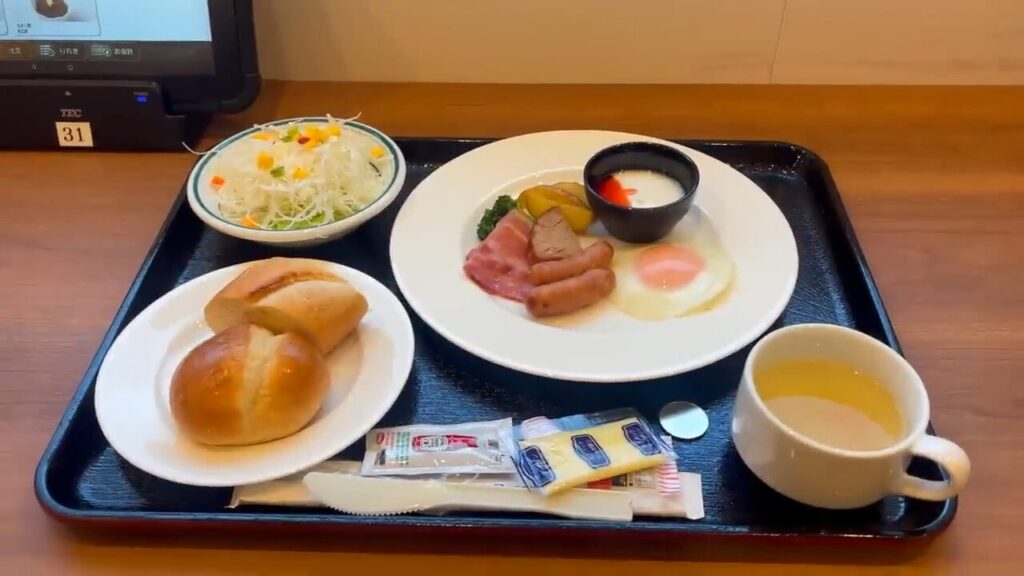
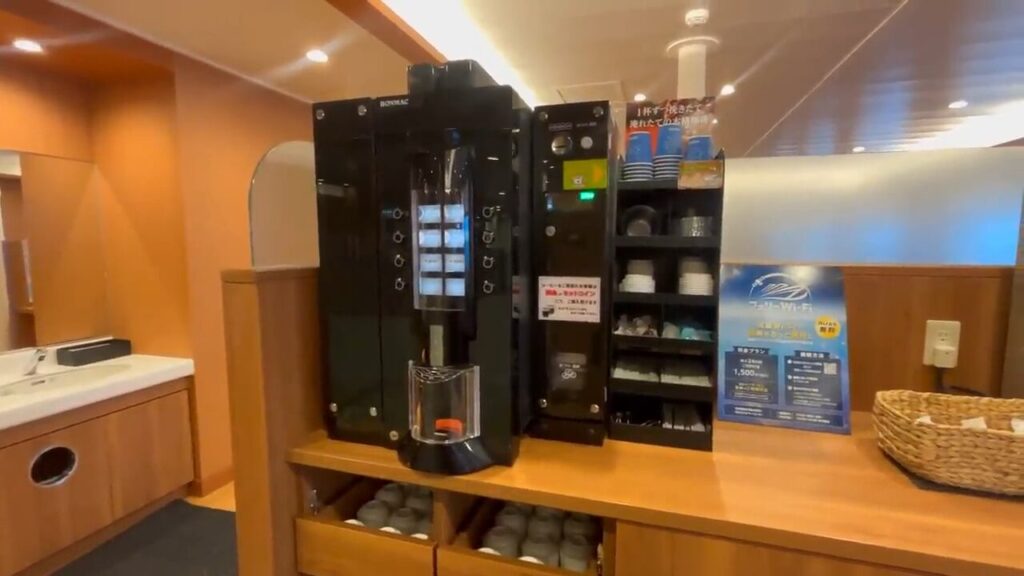
The plate arrived with a fried egg, sausage, bacon, potatoes, and yogurt. A silver coin included with the meal covers coffee from a self-service machine, available whenever we wanted it. Coffee alone costs 300 yen if ordered separately. We’re fans of buffet-style dining, but there’s something to be said for a pre-plated breakfast like this one too. Alongside the main plate, the meal came with a baguette, salad, and plenty of margarine. Payment worked on a self-checkout basis, accepting cash, credit cards, and electronic payment.
The Two-Story Forward Salon
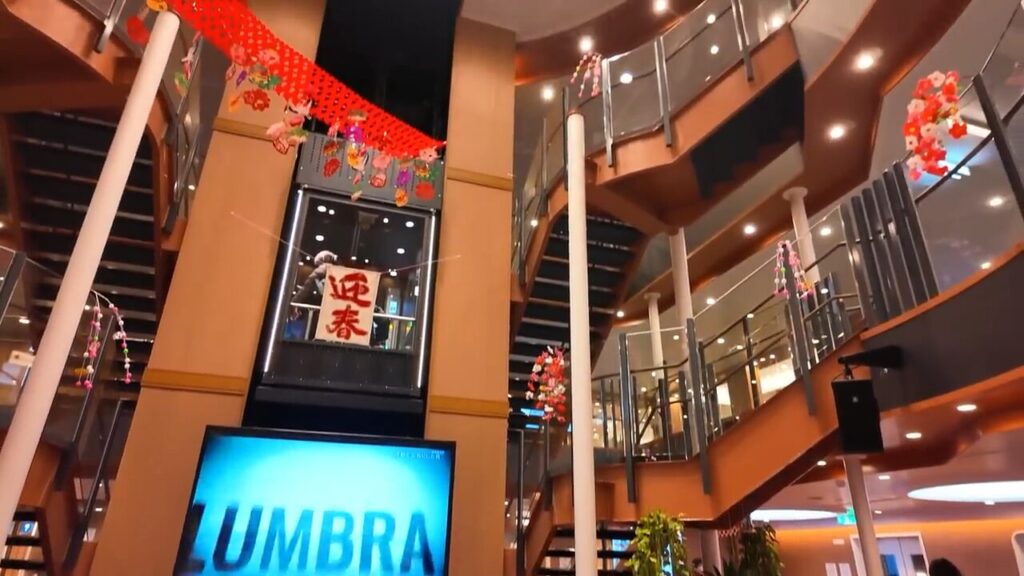
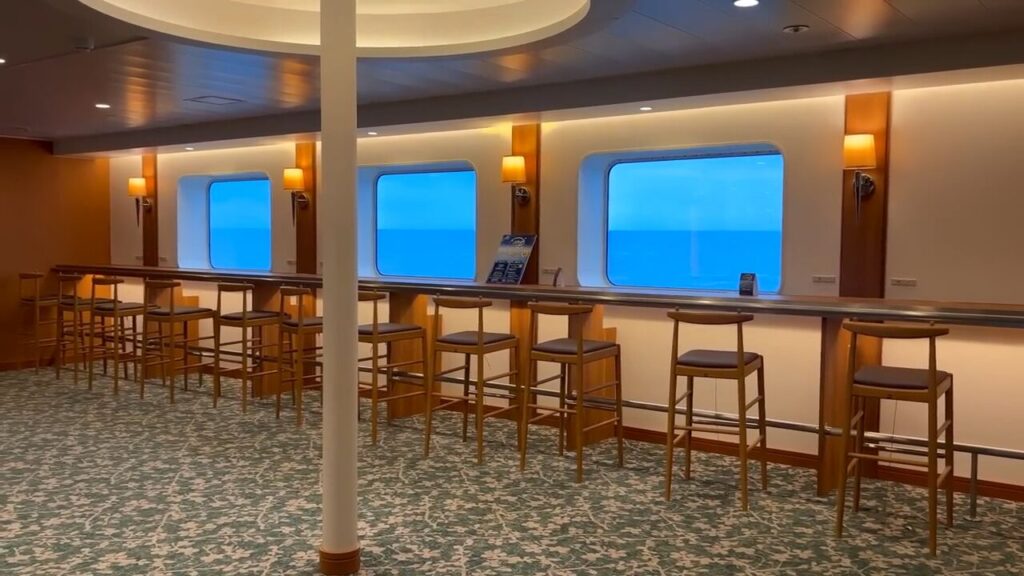
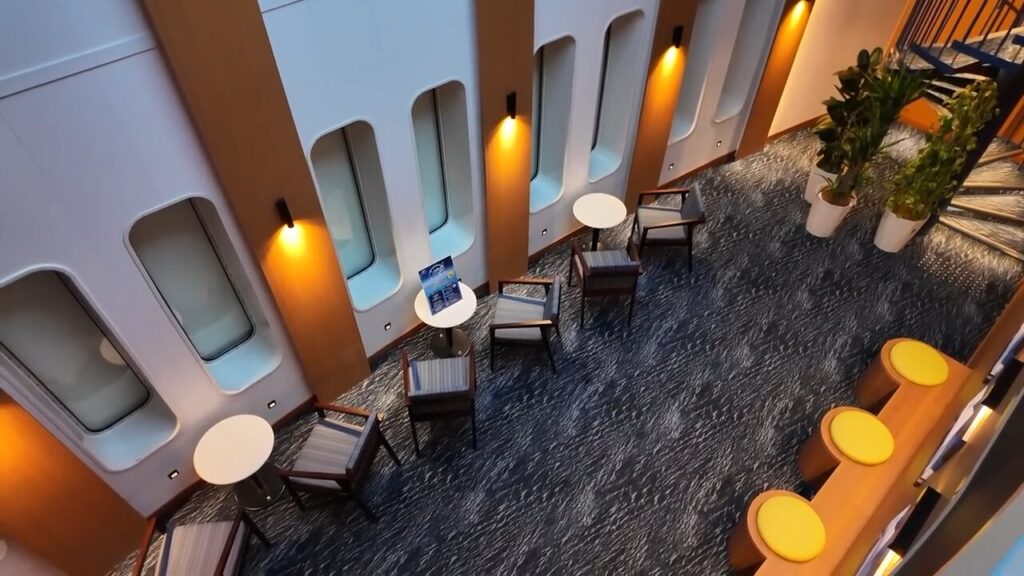
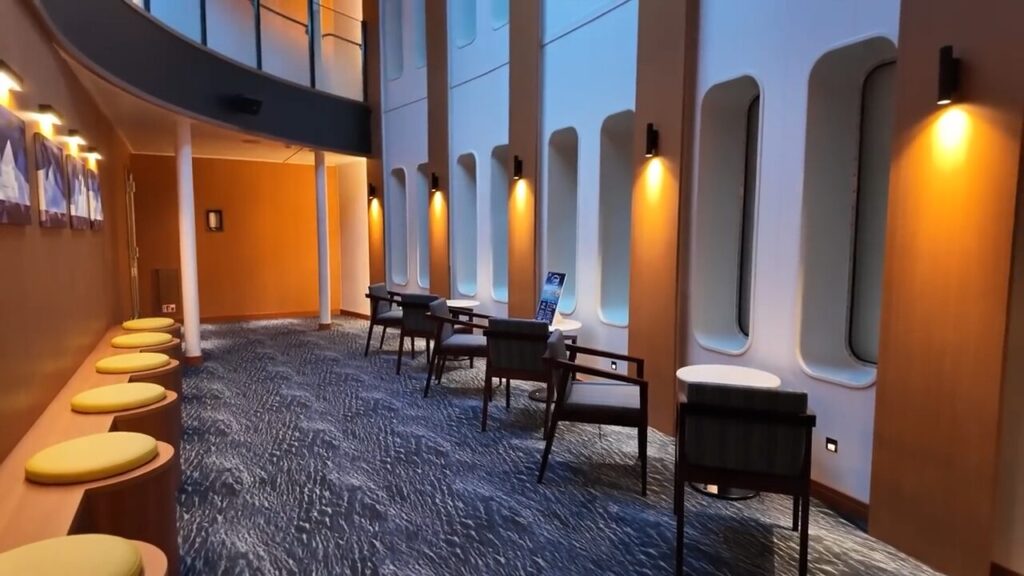
Next, we headed to the forward salon, and its layout genuinely surprised us: two full stories, unlike any ferry lounge we’d seen before. The space felt impressively spacious and comfortable throughout. A spiral staircase leads down to the lower level, and on clear days, the windows here open up to sweeping views outside. Unfortunately, the weather kept the windows shuttered during our visit.
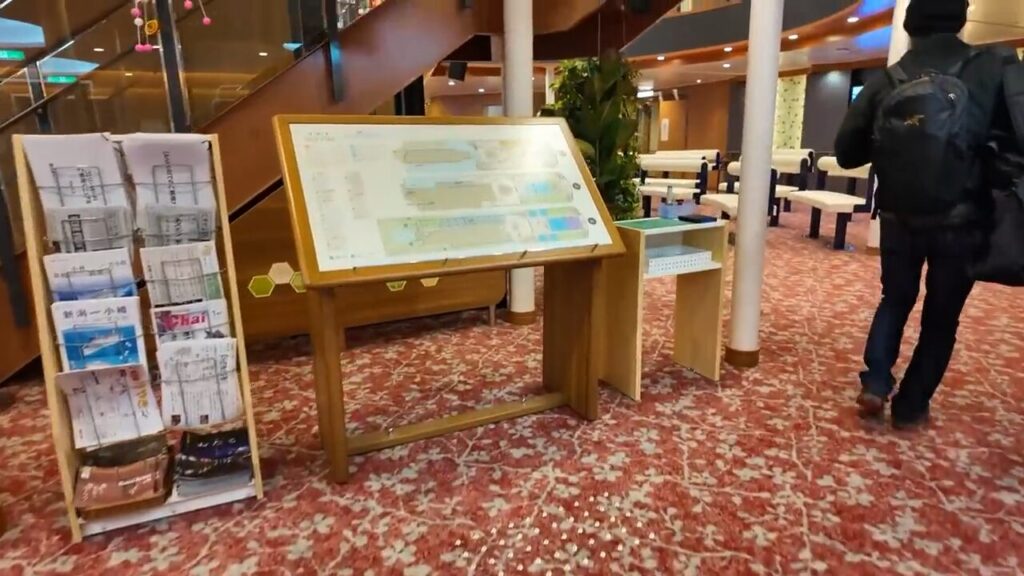
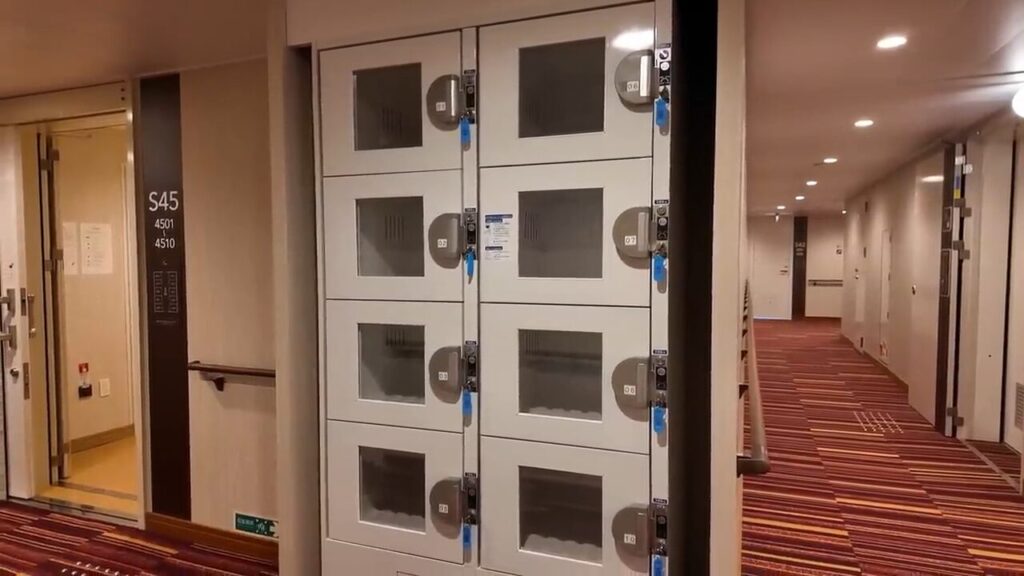
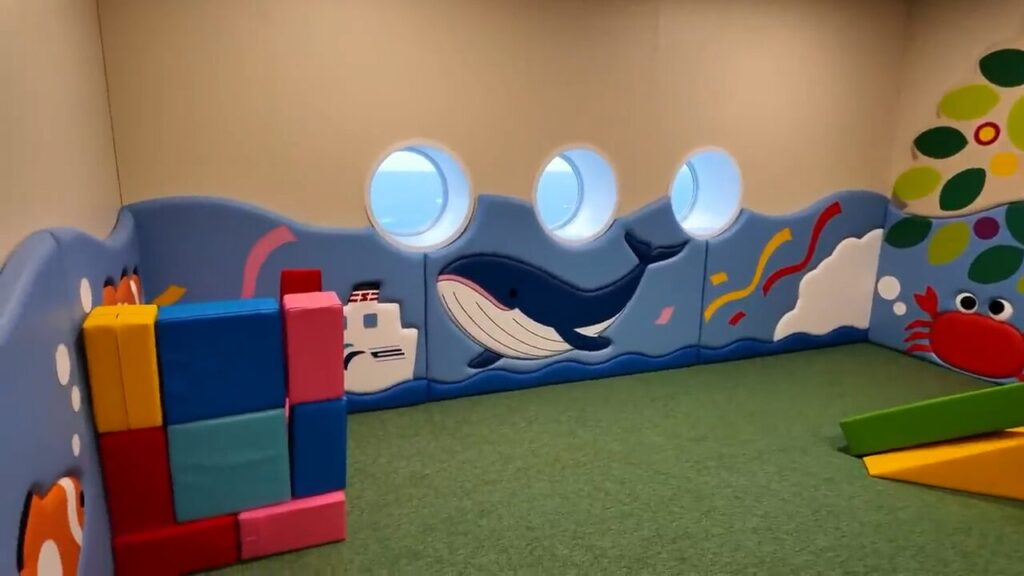
Along the corridor, we found both standard coin lockers and paid refrigerated lockers, handy for anyone bringing Hokkaido dairy products home. A kids’ area caught our eye too, with padded floors and walls and a stash of soft foam blocks for toys. It’s a smart setup for keeping children entertained through a 20-hour crossing. Nearby, the ship had the previous day’s newspaper, ferry pamphlets, and an information booklet about the Keyaki itself.
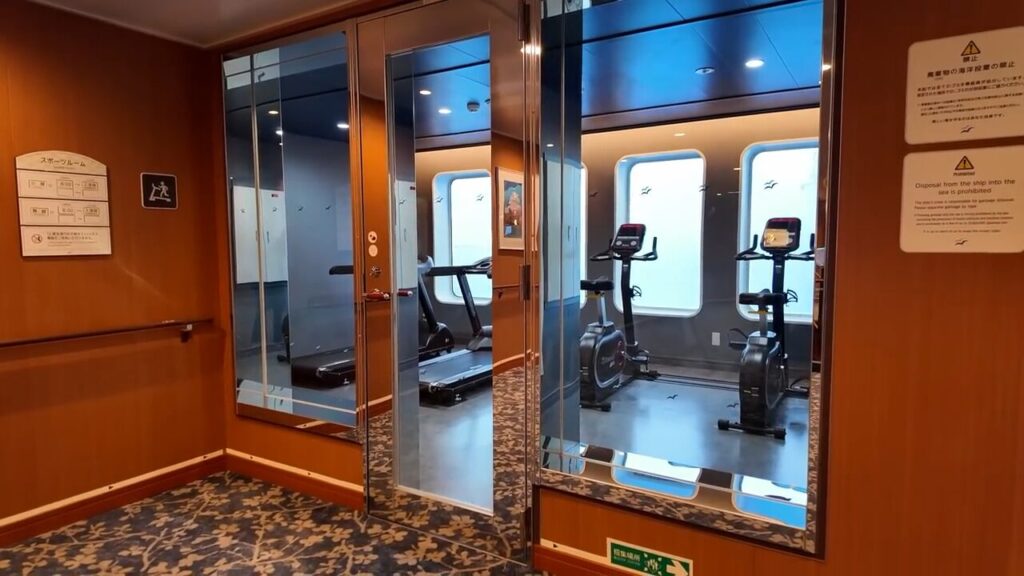
With the rooftop deck still closed for the day, we headed to the ship’s gym instead for a bit of exercise. On a 21-hour journey, having a proper workout space onboard turns out to be a genuine perk.
Projection Mapping in the Screen Room
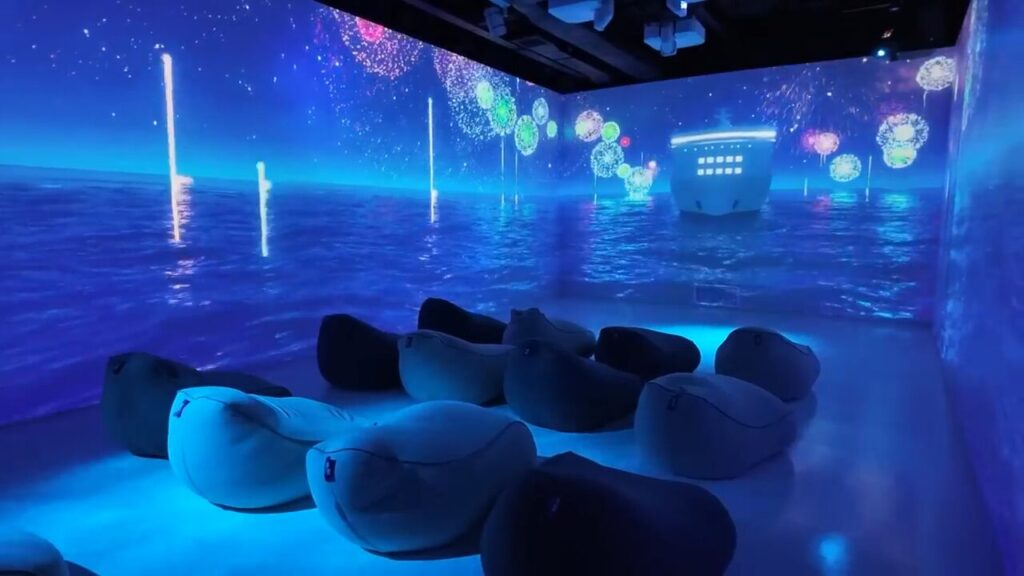
The ship’s screen room was running a projection mapping show when we arrived. Screens wrapped around three sides of the room, creating a surprisingly immersive effect, almost like stepping inside the visuals themselves. It was impressive enough to make us stop and watch the whole thing.
Souvenirs and New-Ship Merchandise
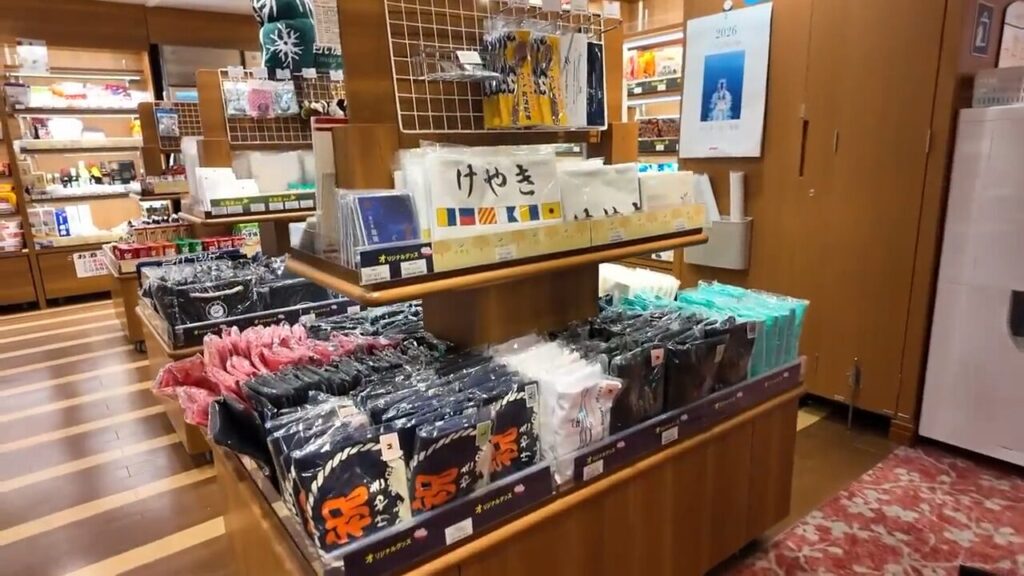
From there, we browsed the onboard shop near the entrance, stocked with souvenirs, daily necessities, and magazines. We picked up a Keyaki-branded keychain and a Hokkaido drink we’d never tried before. A capsule toy machine offering ferry-themed magnets caught our attention too, and our pull landed on a lilac-themed design.
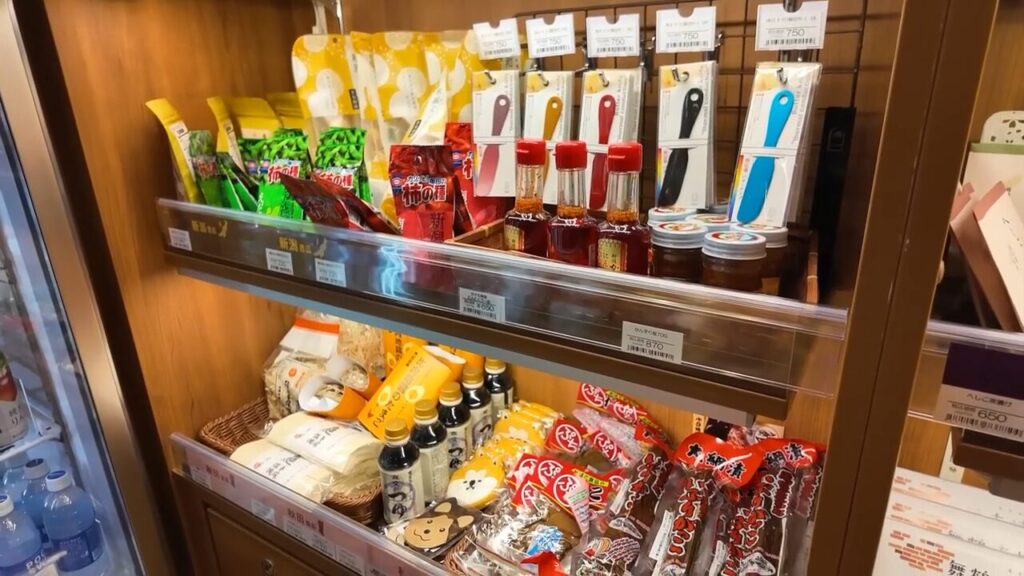
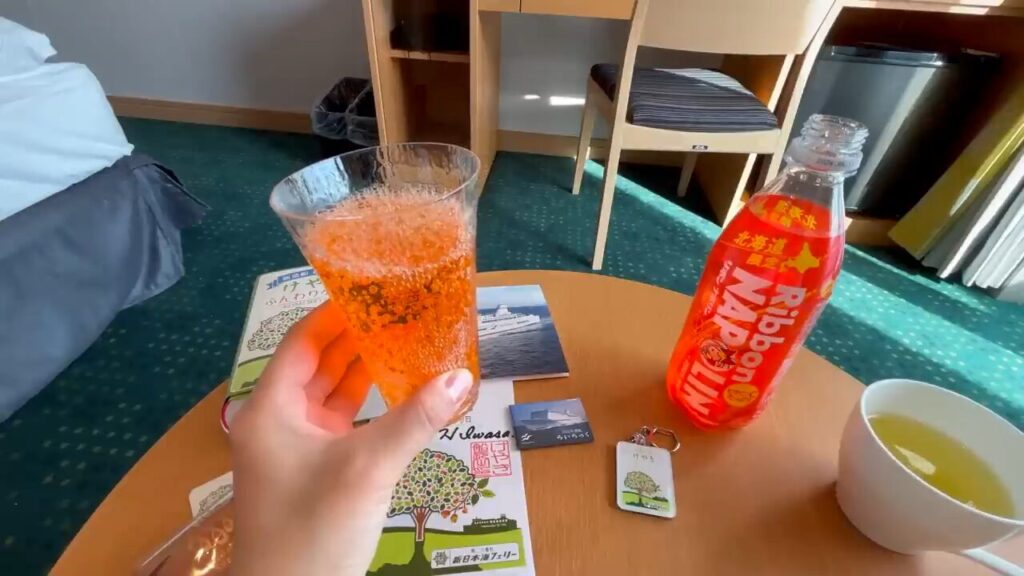
Back in the room, it was time to unwrap everything. A cake decorated with Keyaki branding turned out to be a commemorative treat celebrating the ship’s launch, packaged with two baked snacks and a memorial card inside. The cake was moist and genuinely delicious. The Hokkaido-limited drink looked like a carbonated orange soda but tasted more like a citrus energy drink.
As for connectivity, the ship’s Wi-Fi requires a paid pass, 1,500 yen for 24 hours of access. Once paid, streaming worked smoothly enough to watch YouTube without issues.

The Panoramic Outdoor Bath and Sauna
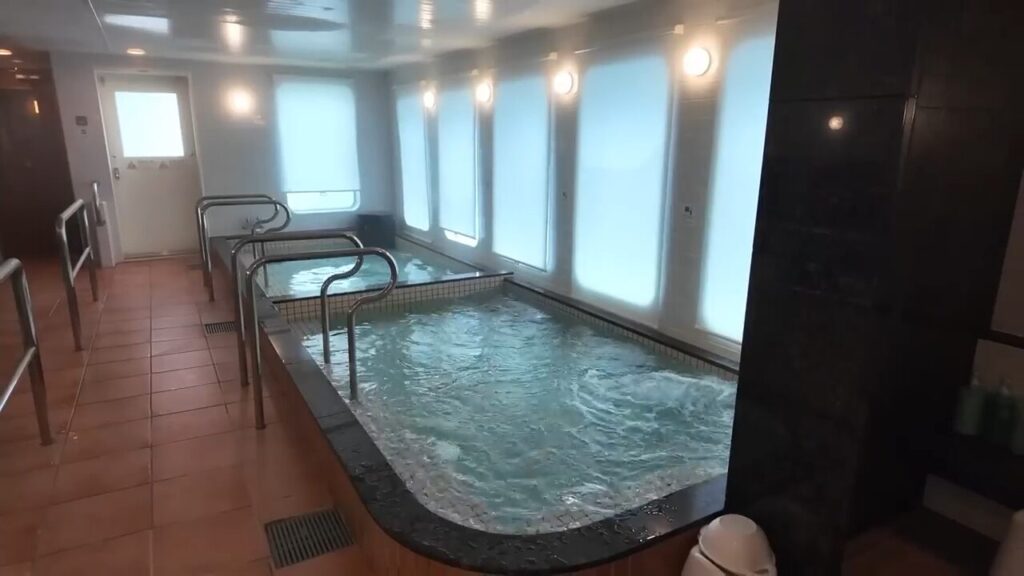
Communal baths stay open almost 24 hours a day on the Keyaki. Photography is normally off-limits in this area, but we received special permission to capture it for this feature. The changing room felt impressively spacious, complete with a full shower room.
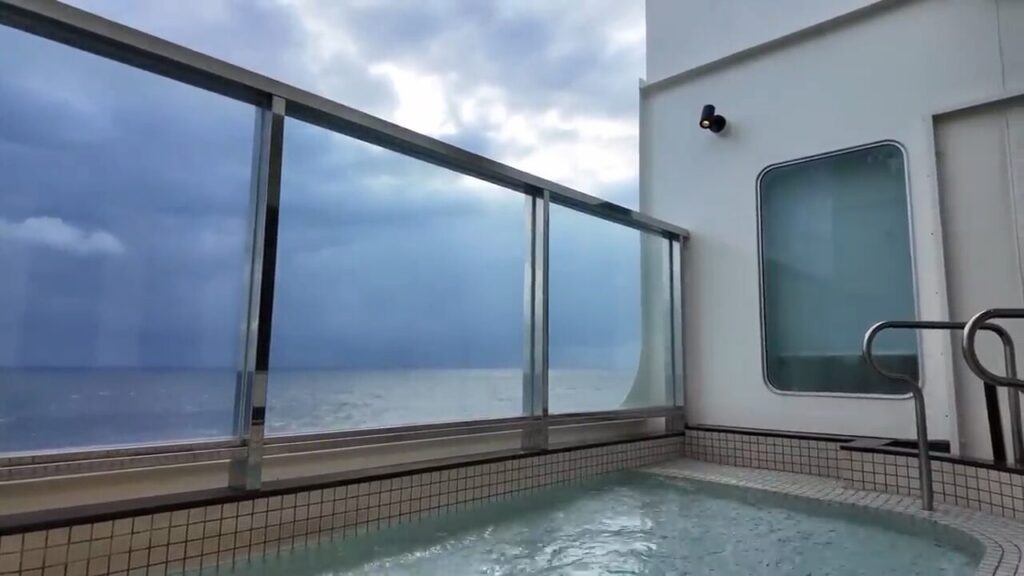
Past the main bath, a door leads to a separate panoramic bathing area, with sweeping ocean views. Honestly, the combination of that view and a hot bath felt like an incredible luxury at sea. Free shampoo, conditioner, and body soap were all provided. Three separate bathing areas in total meant plenty of room, even with a decent number of passengers around. A sauna rounded out the space too, a genuinely unusual find aboard a ferry. Spending part of a long crossing relaxing in the bath turned out to be one of the better ways to pass the time.
Lunch: Hokkaido’s Famous Pork Bowl
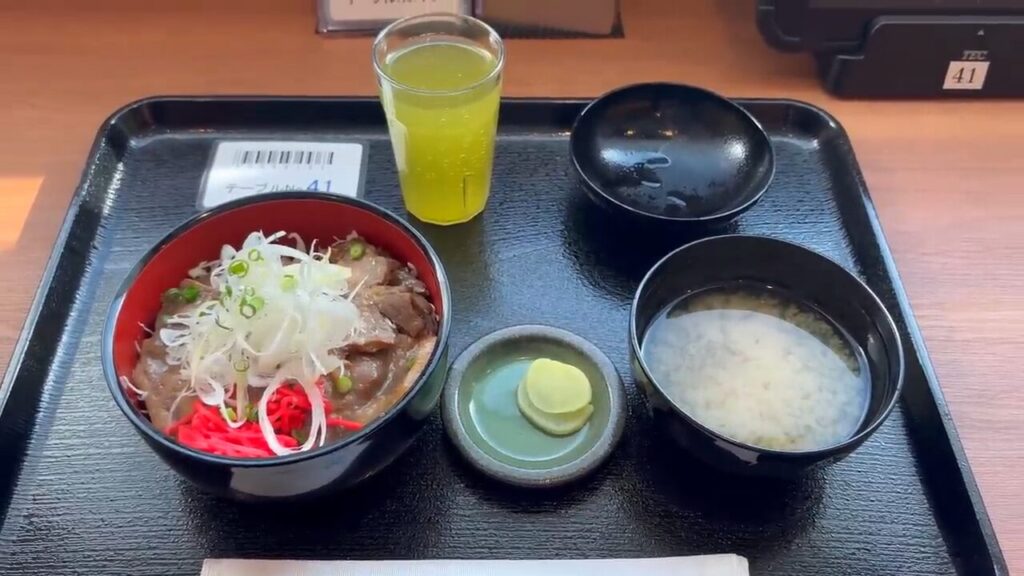
Despite earlier warnings about rough weather ahead, clear skies held for most of the day. Like breakfast, lunch came from the restaurant, and since we’d never tried Hokkaido’s butadon (pork bowl) before, that became the obvious choice. With fewer passengers around during this time slot, the food arrived quickly. The portion of pork was generous, and the dish felt genuinely filling.
Rough Seas and a Temporary Shutdown
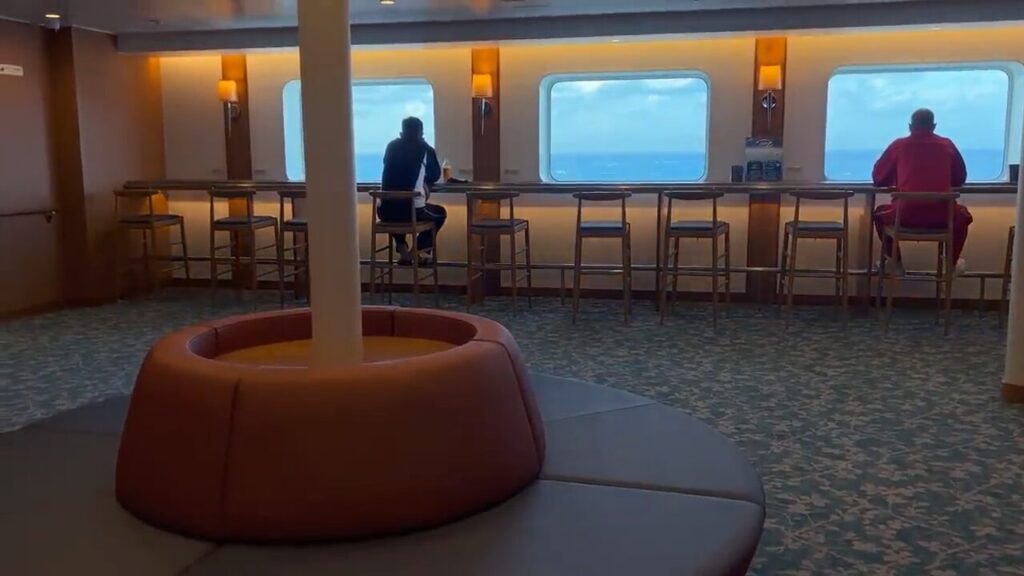
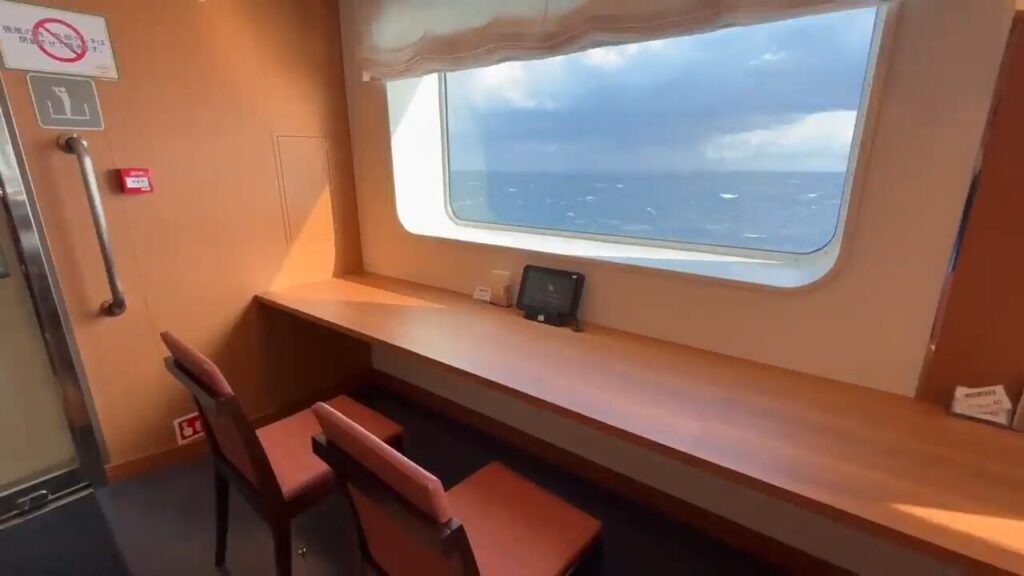
As evening approached, the weather gradually turned. The ship’s motion picked up noticeably, and by that point, the ice that had covered the terrace floor the night before had completely melted, a clear sign of how much warmer this stretch of the journey had become compared to Hokkaido.
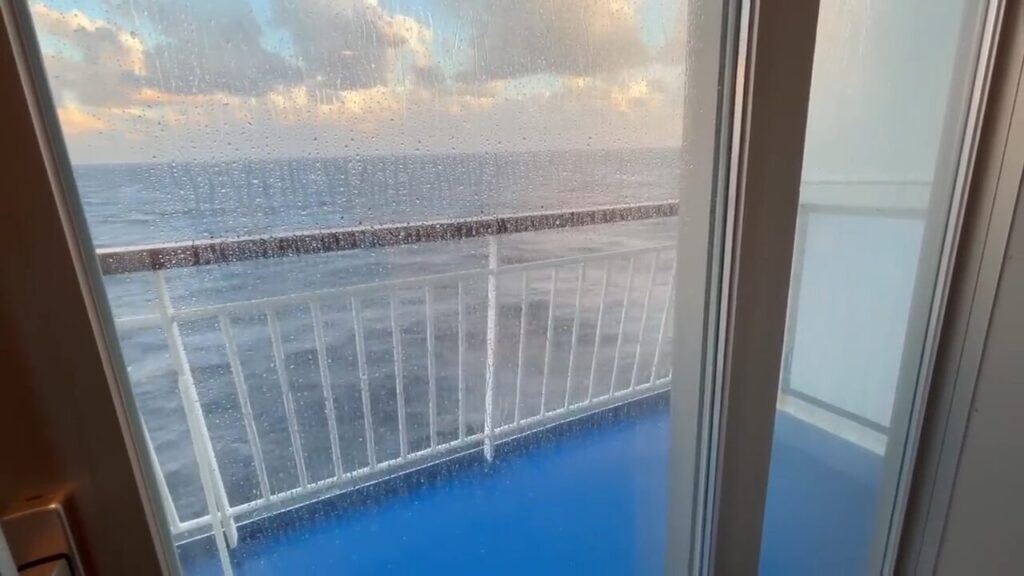
In an emergency, staff explained, the wall between adjoining rooms is designed to break through, though testing it ourselves, it didn’t look like something we could break with our own strength. Life jackets were stored beneath the sofa, and the table stayed bolted down to keep it from sliding during rougher seas.
As the ship’s motion intensified, the early signs of seasickness started creeping in. We decided to lie down in bed and ride it out as carefully as possible. Before long, both the baths and the elevator shut down entirely, which admittedly stirred a bit of concern about what lay ahead. We reached for strong motion sickness medication we’d picked up at a pharmacy beforehand, hoping it would get us through. According to the crew, an even rougher stretch of water was still ahead.
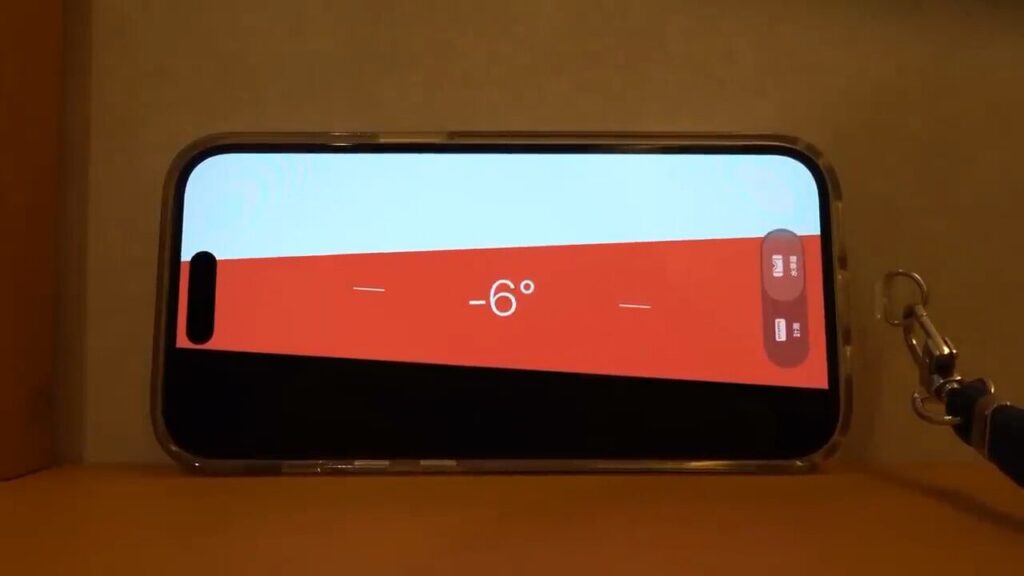
Riding Out the Storm to Maizuru
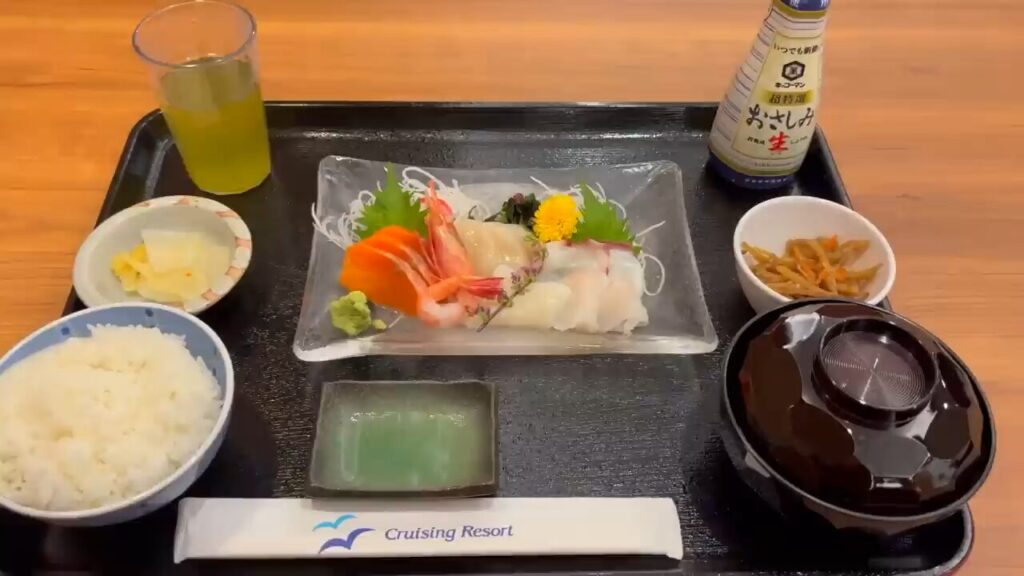
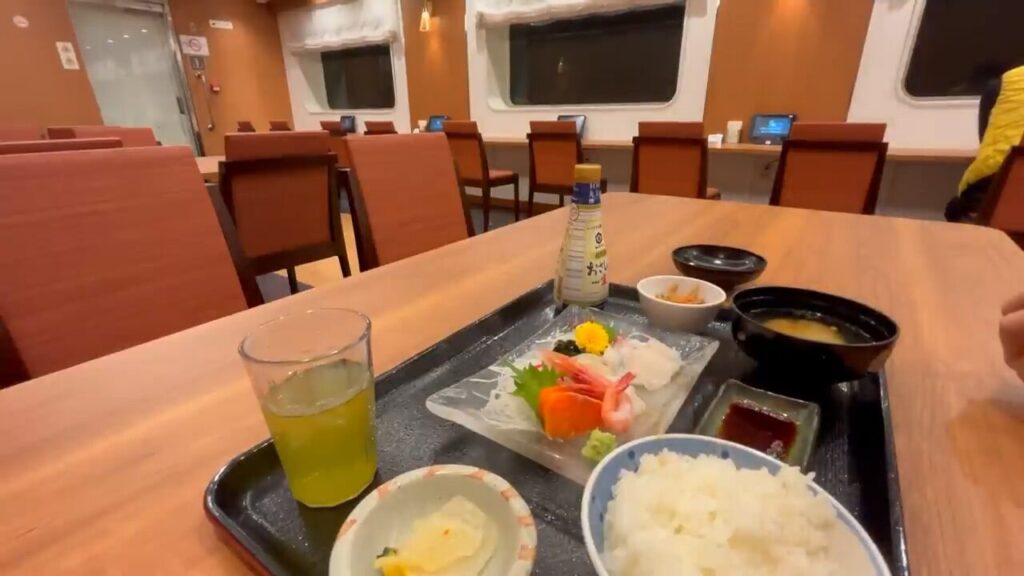
Despite the seasickness, we still wanted dinner badly enough to make the trip to the restaurant. That night’s menu featured a sashimi set meal, usually one of the first items to sell out, but this time it was still available without any trouble. The restaurant itself felt noticeably quieter than usual.
Partway through the meal, a sudden flash of light and sound caught us off guard: actual thunder and lightning, unusual enough for winter that it added a slightly unsettling edge to the evening. The ship ultimately docked in Maizuru about 30 minutes behind schedule. In the end, the weather turned out calmer than expected, closer to clear skies than the storm we’d braced for.
Practical Information and Final Thoughts
Ferry: Shin Nihonkai Ferry “Keyaki” (launched November 2025) Route: Otaru Port (departs 11:30 PM) to Maizuru Port (arrives 8:25 PM the next day) Duration: Approximately 20 hours 55 minutes Cabin tested: Deluxe A Room, top deck, 25㎡ with private terrace, bathroom, and toilet Onboard facilities: Restaurant, forward salon, gym, screen room, communal baths, panoramic bath, sauna, shop
Arriving in Maizuru felt like stepping into an entirely different climate than the one we’d left behind in Hokkaido. Next time, we’re hoping for calmer weather and a clear shot at the rooftop deck for the full crossing. Even with the rough seas near the end, this 21-hour voyage delivered a genuinely memorable mix of discovery and unplanned adventure.
Have you ridden an overnight ferry in Japan? Share your own route and experience in the comments below.
Comments