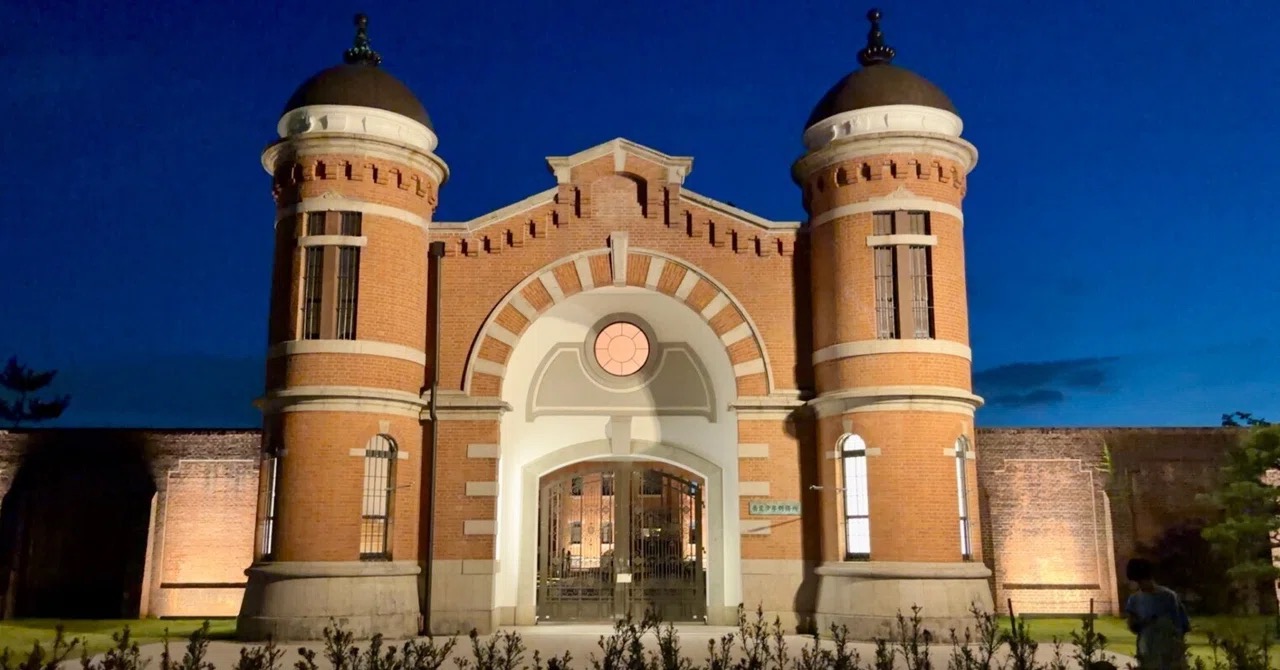
On June 25, 2026, Japan’s first-ever “jail hotel” officially opened its doors: HOSHINOYA Nara Kangoku. The former Nara Prison, which served as a historic correctional facility for over a century, has been masterfully transformed into a luxury hotel by Hoshino Resorts. Driven by a desire to see this legendary “Beautiful Prison” with my own eyes, I booked a 2-night, 3-day stay. To cut to the chase: this was by far the most expensive hotel I have ever experienced—but it was also, without a doubt, the most unforgettable. In this post, I will take you through my 3-day journey in vivid detail, styled almost like a visual photo diary.
From JR Nara Station to the Prison
The trip began at JR Nara Station. After about a 30-minute ride on the hotel’s direct shuttle bus, as the scenery outside the window gradually grew more pastoral, a stately red-brick building came into view.
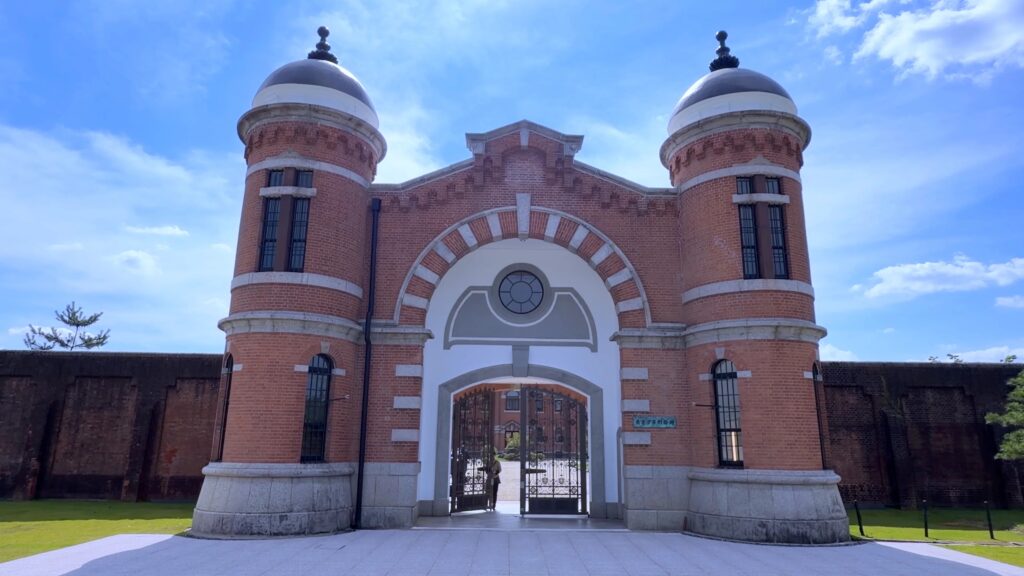
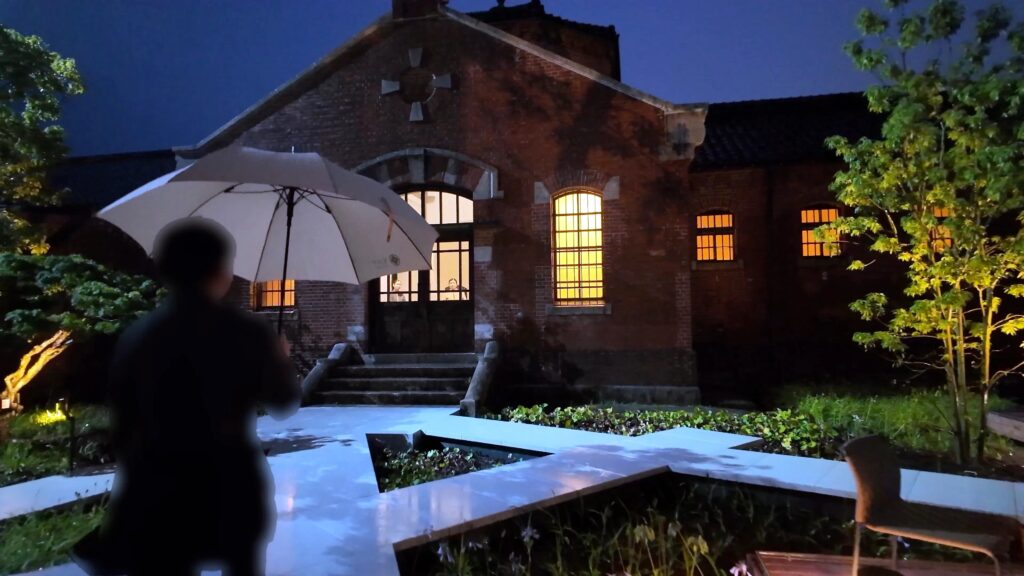
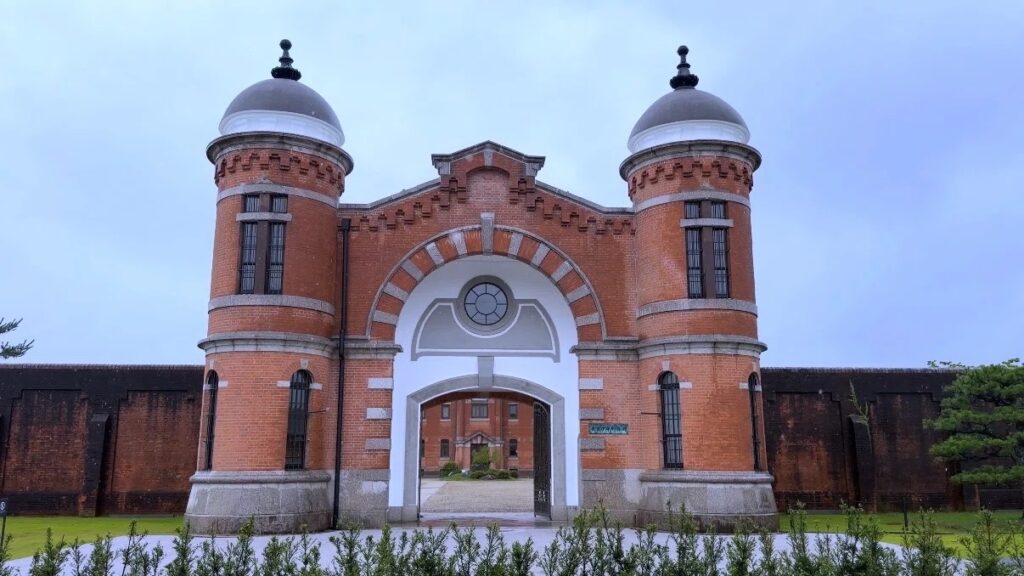
This is the former Nara Prison — known as the “beautiful prison” — now HOSHINOYA Nara Kangoku. My first impression stepping off the bus was simply “huge.” And “quiet.” There was none of the usual bustle you’d expect at a tourist spot — instead, an atmosphere that made you want to straighten your posture.
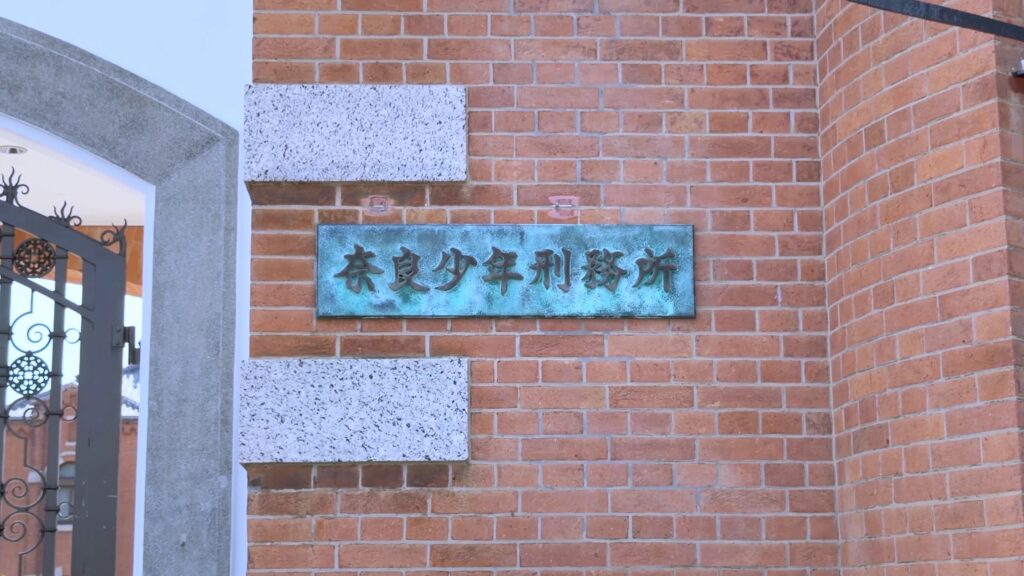
A 100-Year History, Reborn as a Hotel
Before getting into the stay itself, let me share a bit of the building’s history.
The former Nara Prison was built in 1908 and was actually in operation as the Nara Juvenile Prison until 2017. It wasn’t just some old building — until quite recently, it was still active.
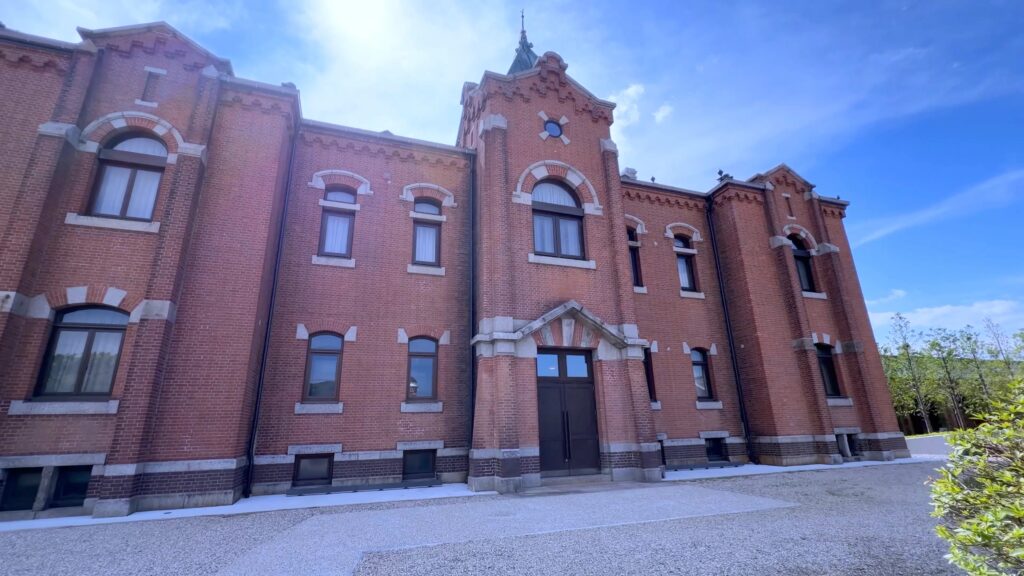
The prison’s origins trace back to a major challenge facing the Meiji government at the time. Japan was seeking to revise its unequal treaties with Western powers, and to do so, it needed to demonstrate to the international community that Japan was a nation governed by law — a humane, modern state. To that end, the government built Western-style modern prisons across the country, aiming to show, alongside judicial reform, that Japan was a “civilized nation.”
Around 1900, five prisons were completed in Nara, Nagasaki, Kanazawa, Chiba, and Kagoshima, which came to be known as the “Five Great Prisons of the Meiji Era.” Their radial layout, with cell blocks extending outward like spokes, was carefully designed to allow efficient surveillance with minimal staff. By adopting new Western penal systems while giving the buildings dignified Western-style exteriors, the design also aimed to showcase Japan’s modernization to the world.
However, the other prisons were later demolished one by one due to aging, and Nara Prison is the only one that survives intact today. It had a capacity of 680 inmates and around 200 staff, operating under 24-hour surveillance. Unlike a juvenile detention center, it held young offenders aged 17 to 25 who had committed serious crimes such as murder and robbery.
With this history behind it, the building was closed in 2017 due to aging and seismic concerns. The total cost of the seismic renovation project reportedly reached roughly 5.79 billion yen — even accounting for subsidies, clearly a massive undertaking. After a preservation and utilization project, the building took its next step in 2026, reopening as a luxury Hoshino Resorts hotel.
The hotel’s concept is “Questions from a Beautiful Prison.” Rather than simply preserving history, it’s presented as something to be experienced — and that seriousness of intent comes through in details throughout the property. The focus isn’t purely on luxury, but on the value of experiencing history itself.
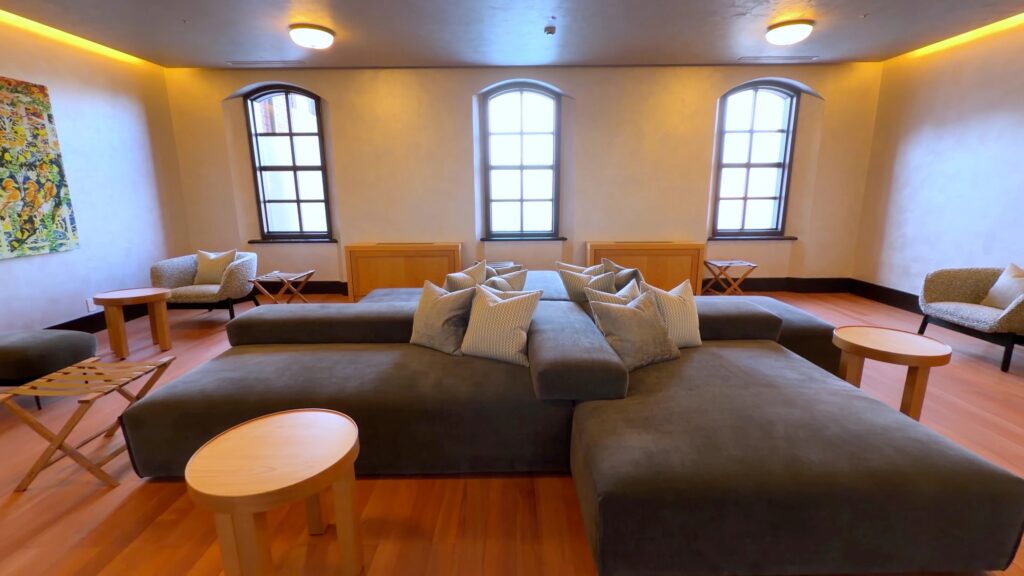
Check-in takes place at the Reception Lounge starting at 3:00 PM. When I booked, a minimum two-night stay was required, but I understand one-night stays are now available too.
The Former Central Watchtower, and My Room
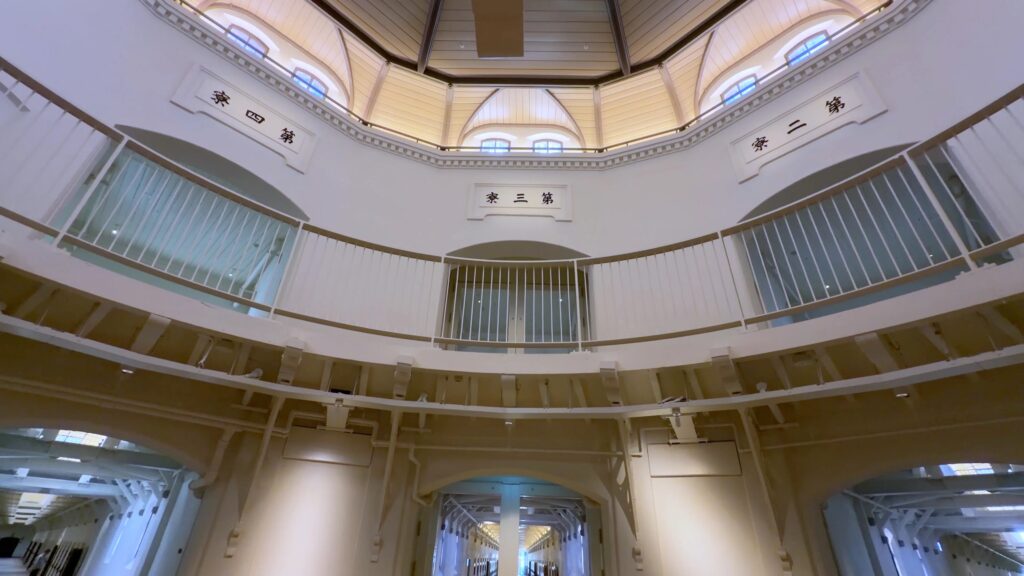
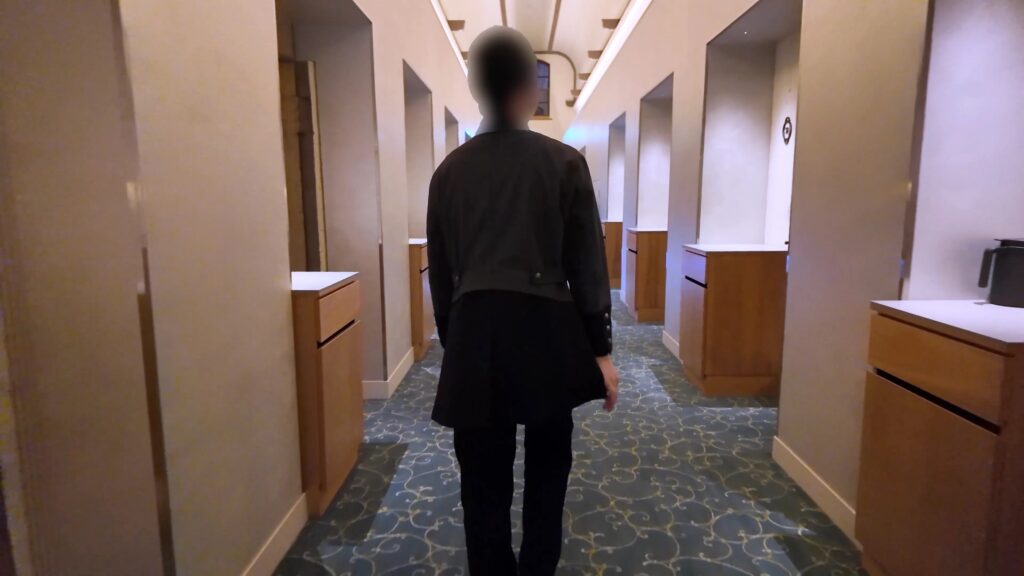
At the center of the building, the “Central Watchtower,” with cell blocks radiating outward, remains preserved exactly as it was. Designed to allow efficient surveillance with minimal staff, seeing it in person is genuinely overwhelming. The guest room corridor stretches roughly 70 meters, and around 50 solitary cells once lined this hallway.
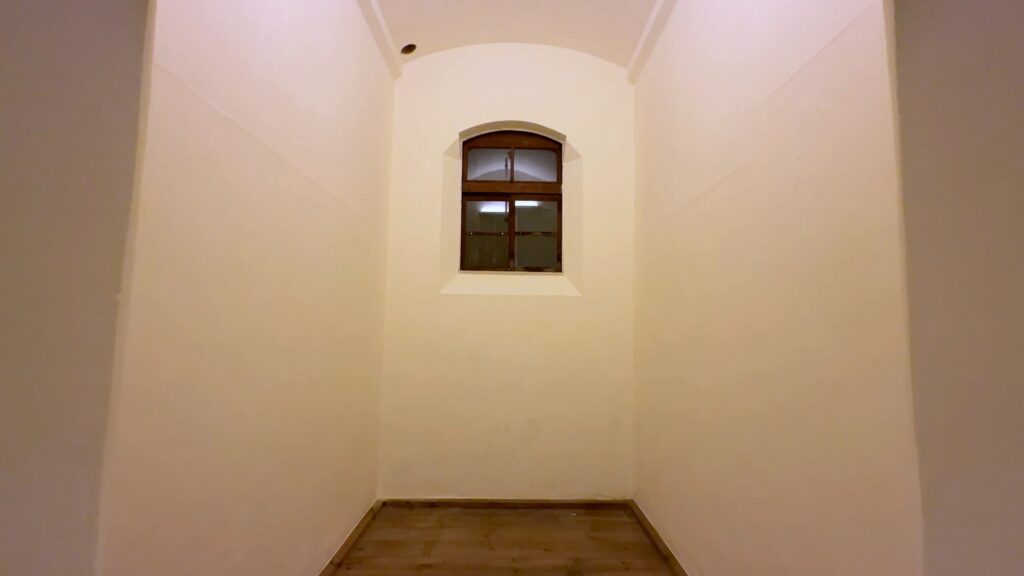
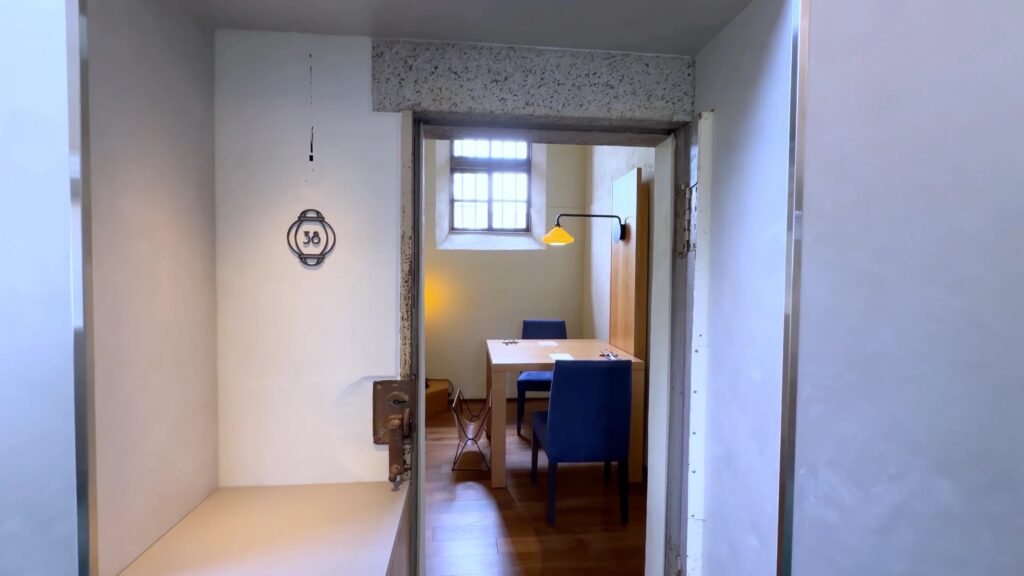
My room was No. 215. The prison originally had 500 cells, now renovated into 48 suite-style guest rooms. Nine of the original roughly 5-square-meter solitary cells were combined into a single room, so the ceilings are high and there’s little of the cramped feeling you might associate with a solitary cell.
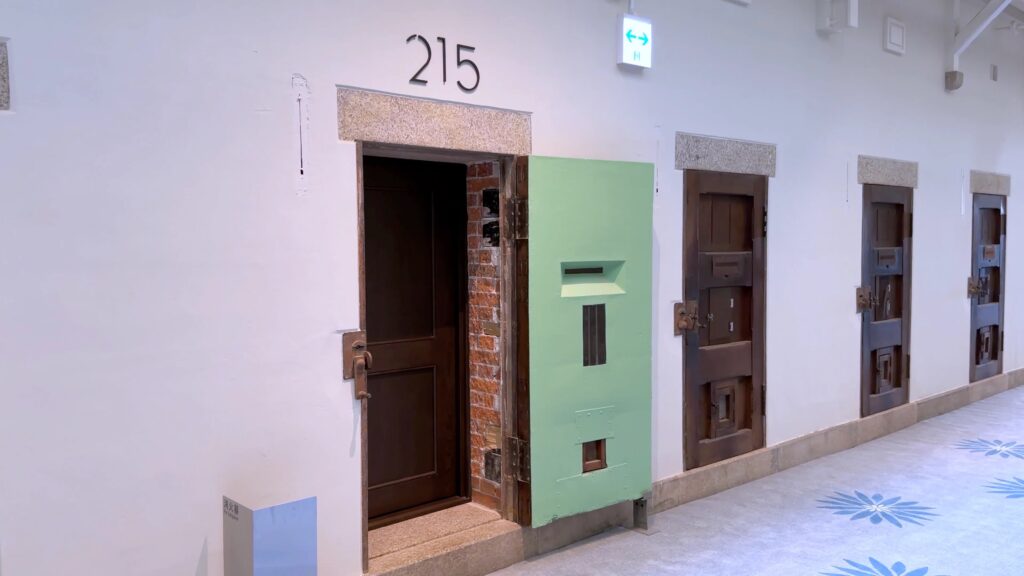
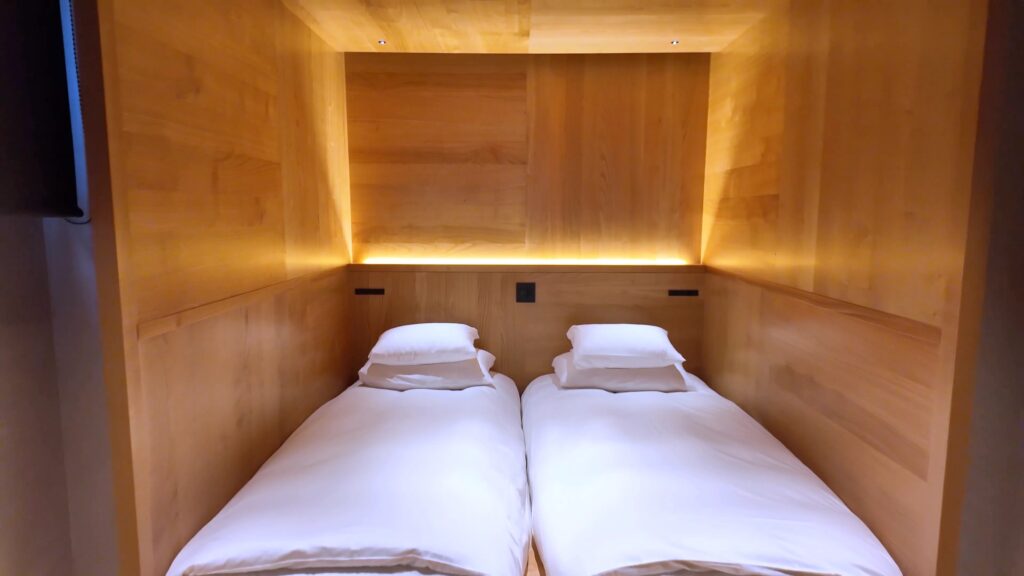
The bedroom contains only the essentials — a tote bag, sleepwear, and a safe — with a starkness that felt deliberate. The room retains its 100-year-old exposed brick and a 3.5-meter-high vaulted ceiling. Remarkably, these bricks were made and hand-laid by inmates as part of their prison labor. Few guest rooms let you feel the weight of history this closely.
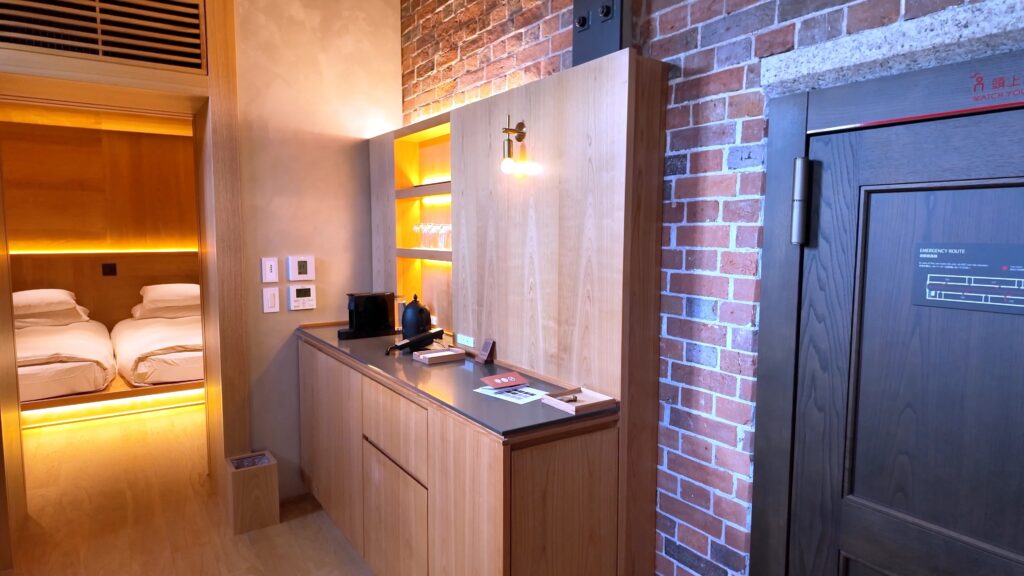
Notably, the rooms have no television and no clock. It felt like a deliberate way to gently cut guests off from everyday time.
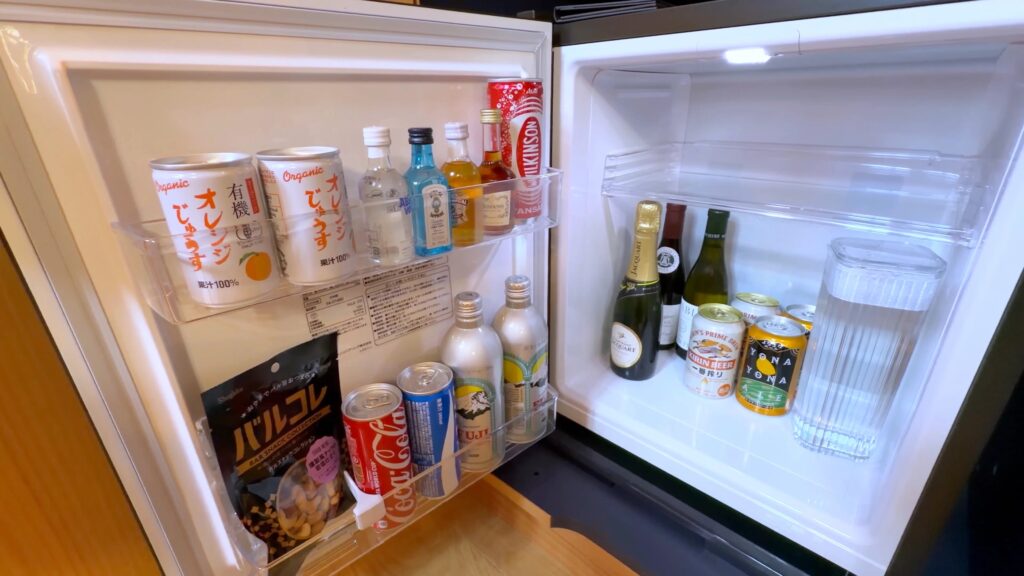
The dining room comes equipped with a coffee and tea set, a tissue box, and a Bluetooth speaker. The refrigerator was well stocked with drinks (sparkling water, whisky, orange juice, snacks, cola, champagne, beer, red and white wine, and more) — though everything except the bottled water is chargeable. A nice little hotel touch.
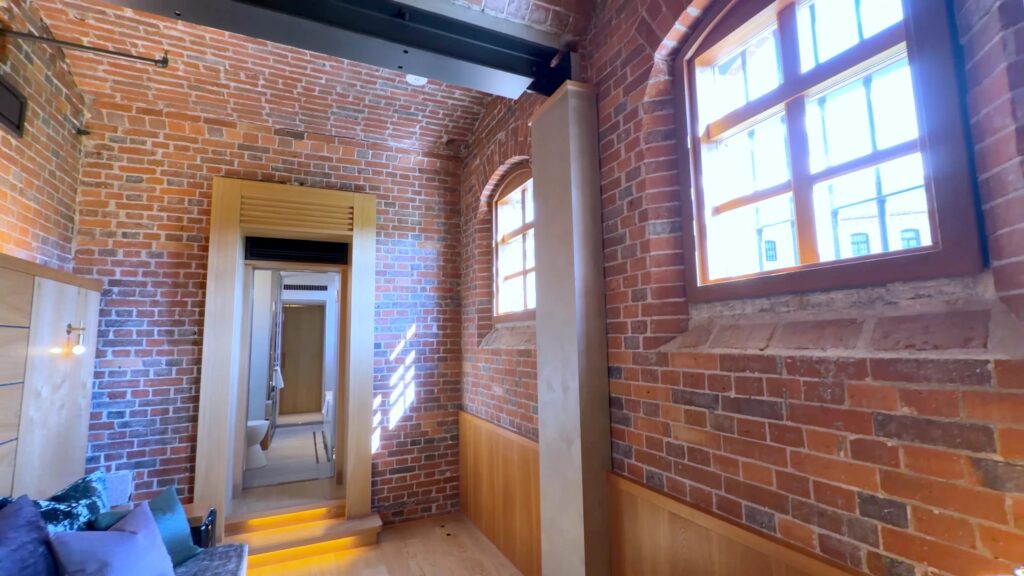
The windows remain in their original high positions, one per solitary cell — a design meant to prevent escape at the time, and the iron bars are original too. It felt strange to think that a design once meant to stop people from breaking out now exists purely as atmosphere.
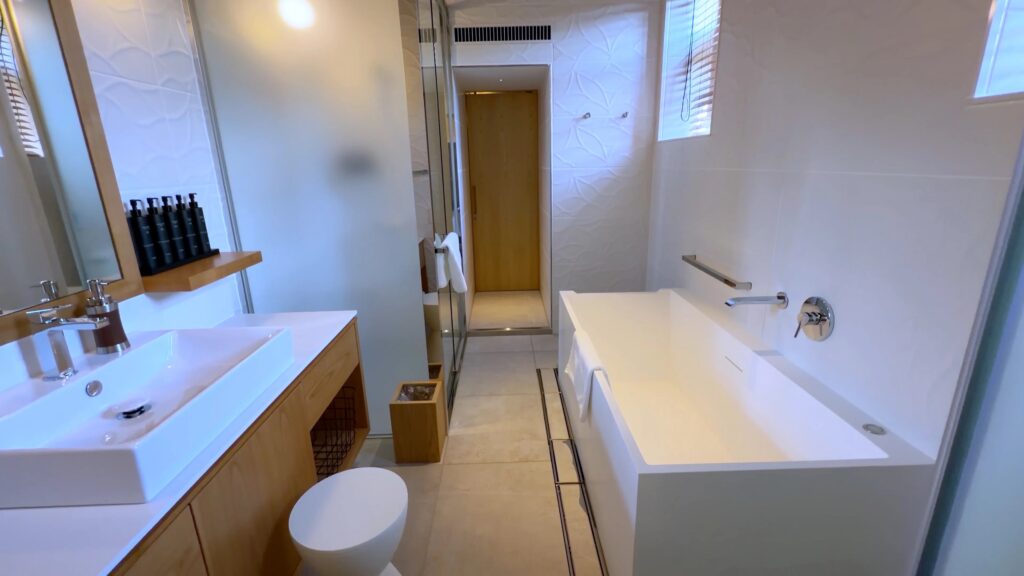
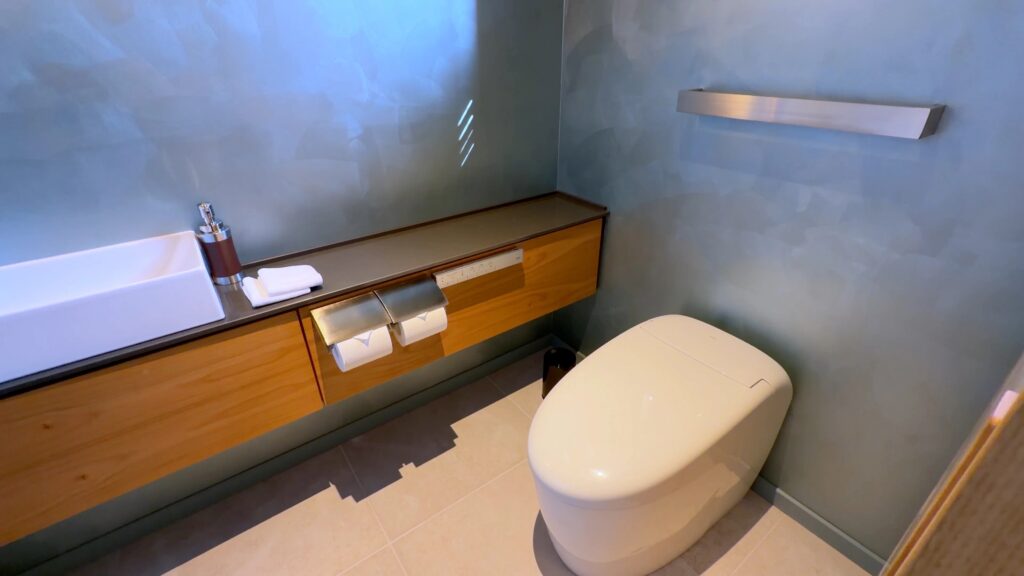
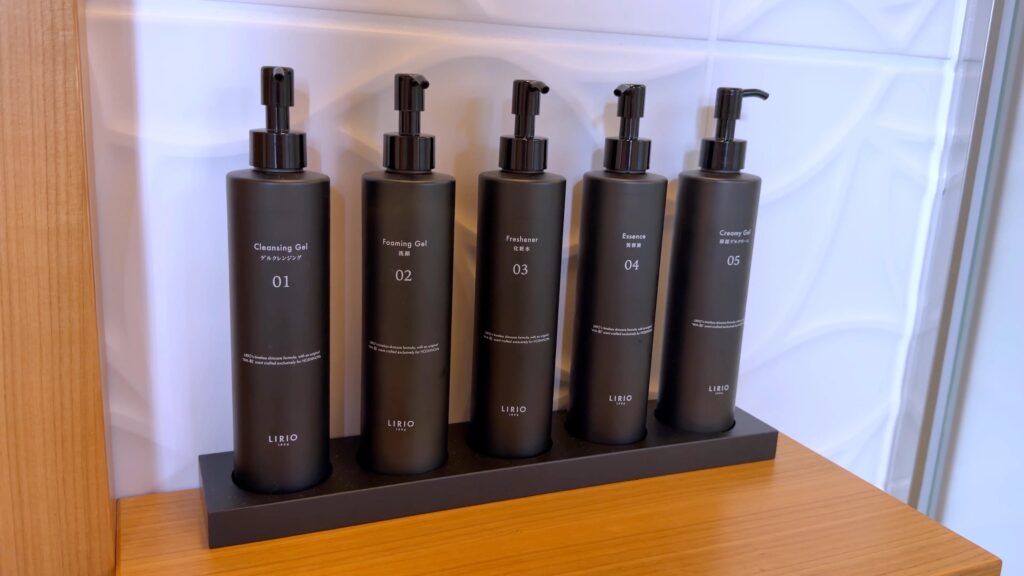
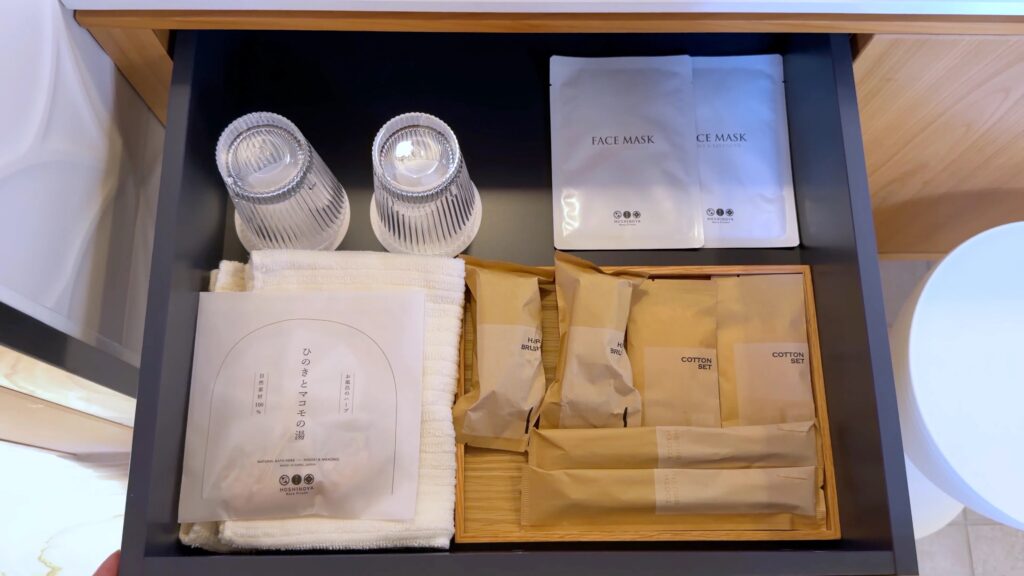
Past the living room, further in, is the bathroom, with the toilet in the very back room. Amenities include a toothbrush, comb, razor, face mask, and bath salts. The opposite drawer held a hair dryer and tissues, plus cleansing oil, face wash, serum, toner, and emulsion — more than enough even for a solo female traveler.
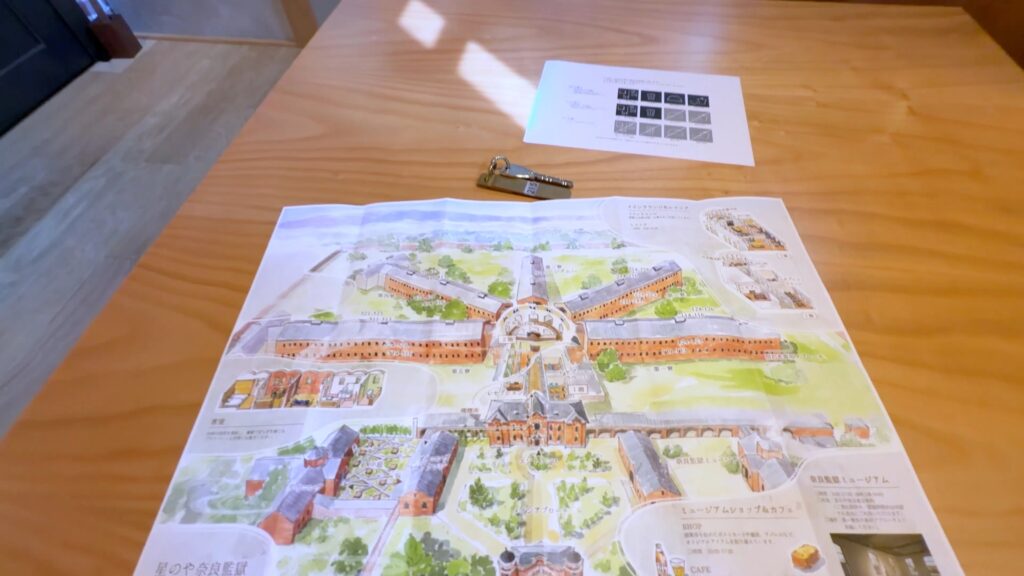
The hotel grounds cover a vast 106,307 square meters, so you’re given a map at check-in. Guests can visit the Nara Prison Museum without a reservation, but dinner and breakfast require booking by the day before. There are also activities available exclusively for guests.
Afternoon Tea in the Main Lounge
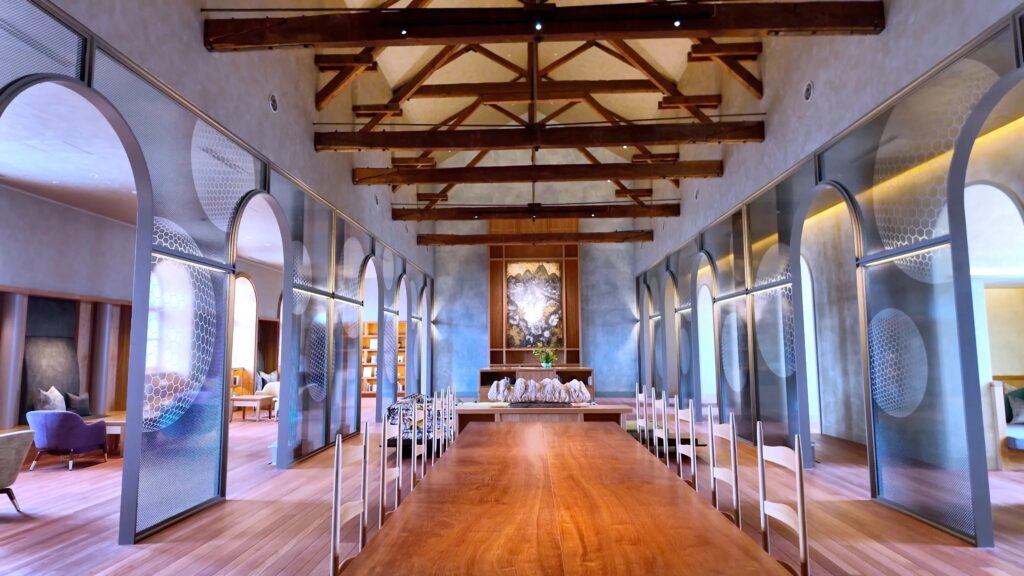
The wooden auditorium where inmates once gathered has been reborn as an elegant main lounge filled with European furniture. The moment I stepped into the spacious room, I couldn’t help blurting out, “This is huge!”
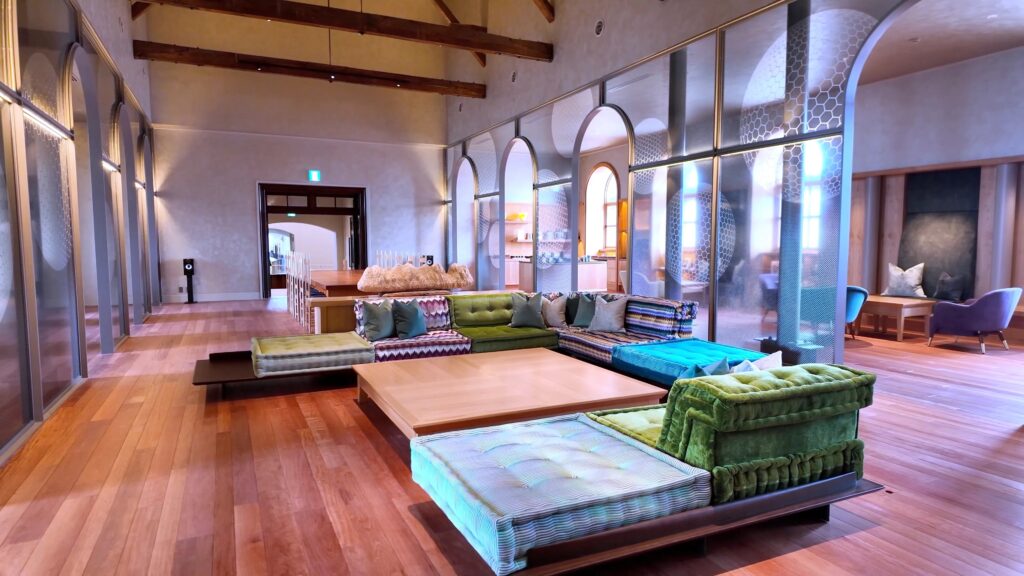
Here you can enjoy “Akane no Tea Salon,” where Nara-grown Japanese black tea is served free alongside sweets. There are four kinds of snacks in total — olive arare crackers, boule de neige cookies, konpeito candy, and kobana-mame beans — all refined in flavor. Three types of tea bags are available: green tea, roasted tea, and lemongrass tea, and — to my genuine surprise — Nara sake is included free-flowing as well.
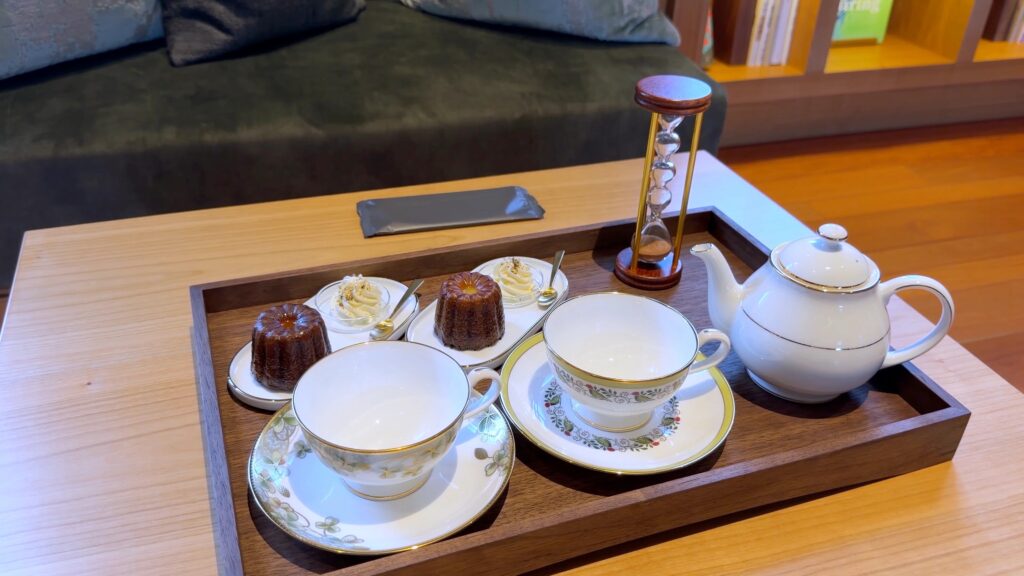
Honestly, it was a far more elegant experience than the word “prison” led me to imagine. I also had canelé, something I’ve only eaten a handful of times in my life, served generously with fresh cream on the side. The lounge is open 24 hours and offers drinks, snacks, newspapers, and magazines, so guests can drop by whenever they like.
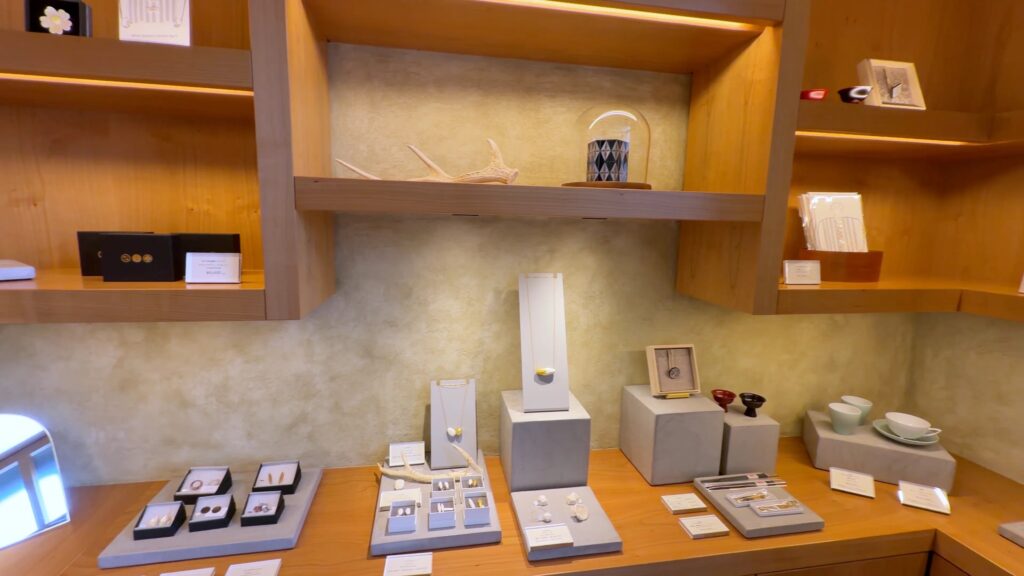
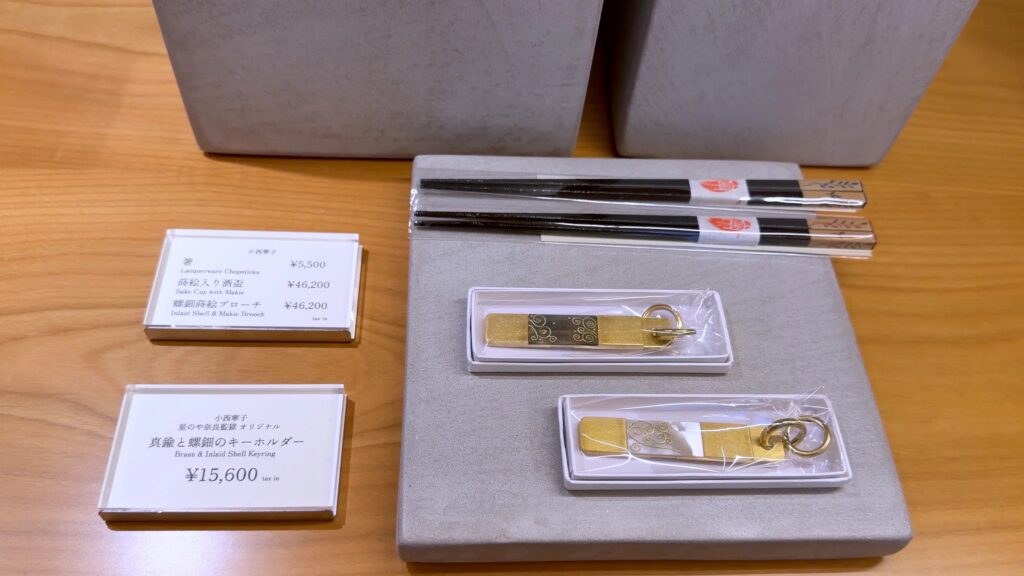
The attached shop sells perfume, accessories, and tableware inspired by Nara Prison, as well as loungewear and amenities used inside the hotel. There’s no staff stationed there, which actually made it easier to browse at leisure. This time I just window-shopped given my budget, but the lineup was tempting — and the prices matched.
A Special Dinner in the Former Visitation Room
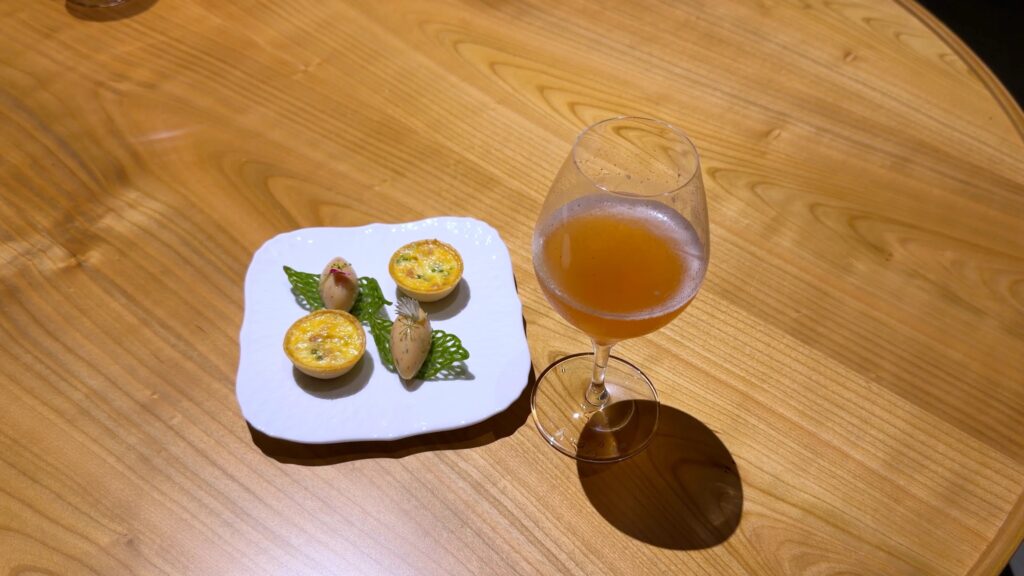
As evening fell, it was time for dinner. Guests who reserve dinner first gather in the dining lounge, where a welcome drink — a cocktail or non-alcoholic option — is served. I had a fruit-and-champagne cocktail, along with quiche lorraine and salmon brandade, which helped ease some of my nerves.
Once everything was ready, we moved to the dining room, held in a semi-private space that was once the visitation room. That night’s dinner theme was “Gastronomy Chronicle” — a culinary journey through the dawn of Western cuisine in Japan up through its future. The concept: taste the history of Nara Prison itself.
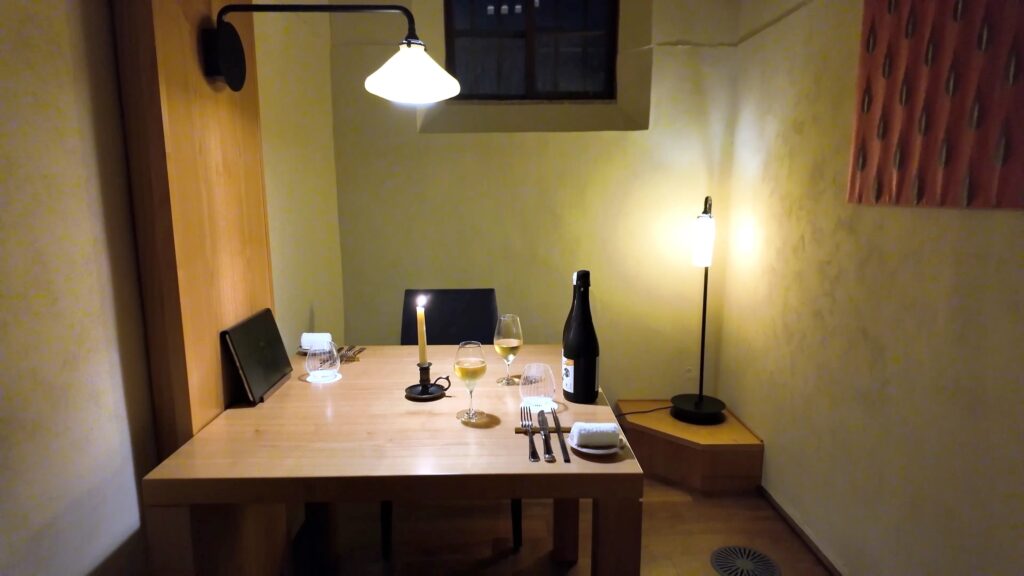
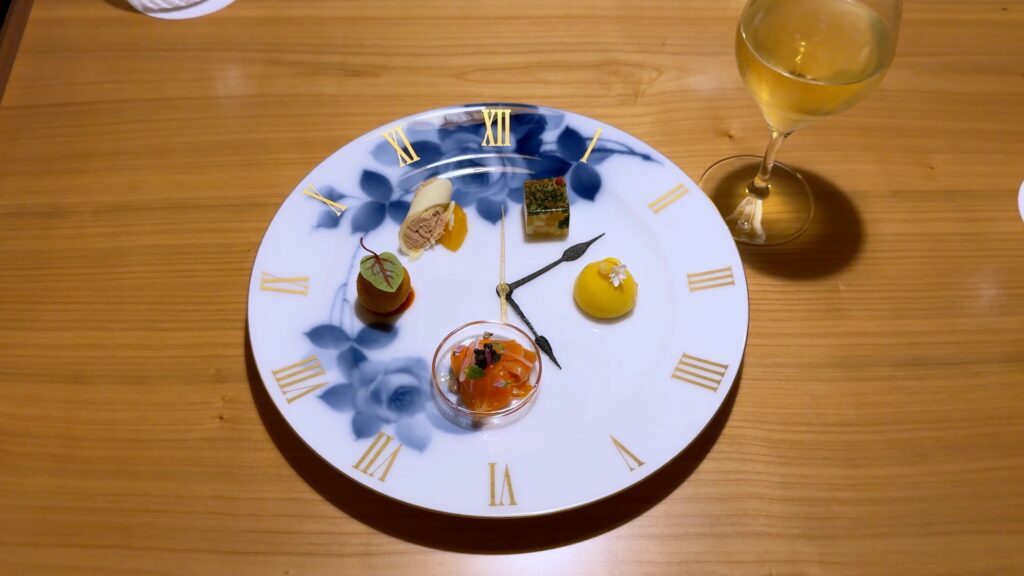
What I thought was a candle turned out to be foie gras terrine (representing the “dawn” era, called “Panaché of Beginnings”), and even the clock hands on the plate turned out to be edible — playful touches throughout. The tableware was by Okura Art China, and each plate was designed to express the entire course. Starting from the 1 o’clock position: seafood aspic, consommé jelly, potage soup, marinated salmon, and chicken croquette followed in sequence.
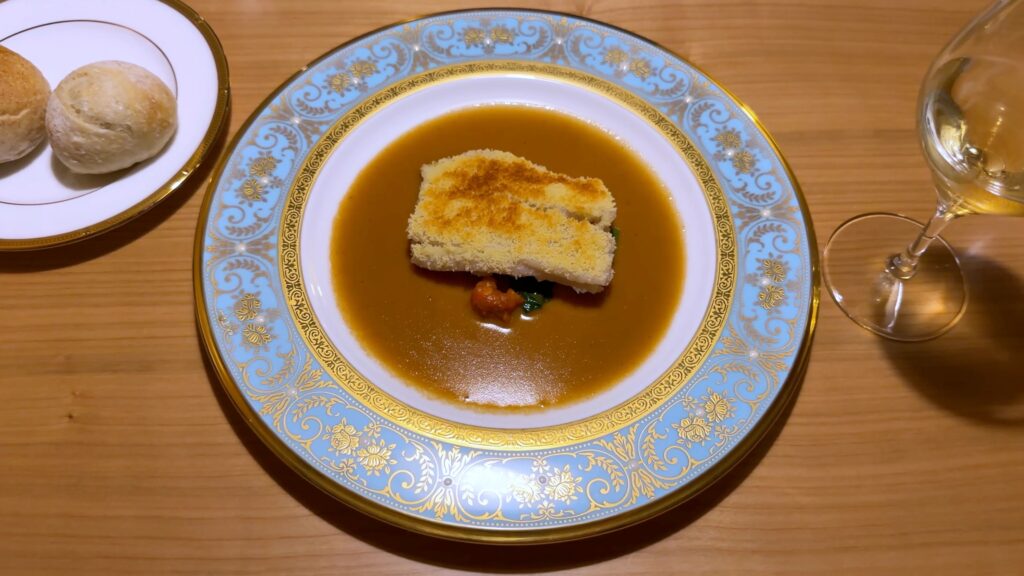
One especially memorable dish was the “braised sole with sauce Albert,” representing the “maturity” era — a tribute to the late chef Akira Inoue, a pioneer of French cuisine in Japan.
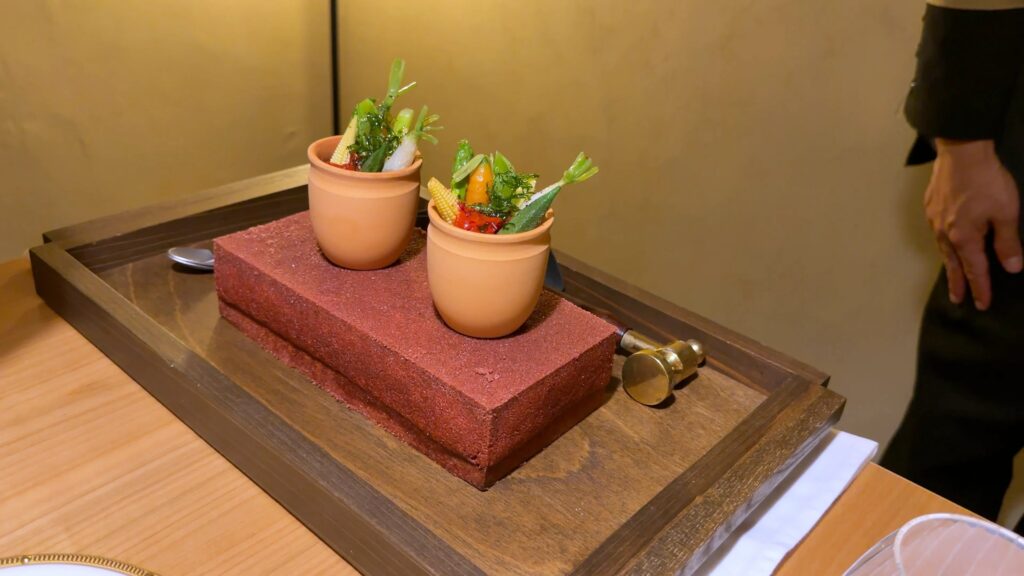
The dish representing the present day was plated to resemble red brick and a flower pot. What looked like brick was actually salt-baked, filled with beef fillet marinated in narazuke sake lees and truffle. The knife used incorporated traditional Echizen bladesmithing techniques from Ryusen Hamono, and the marbled beef was remarkably tender and genuinely delicious. The “flower pot” portion was eaten with a shovel-shaped spoon — another playful touch.
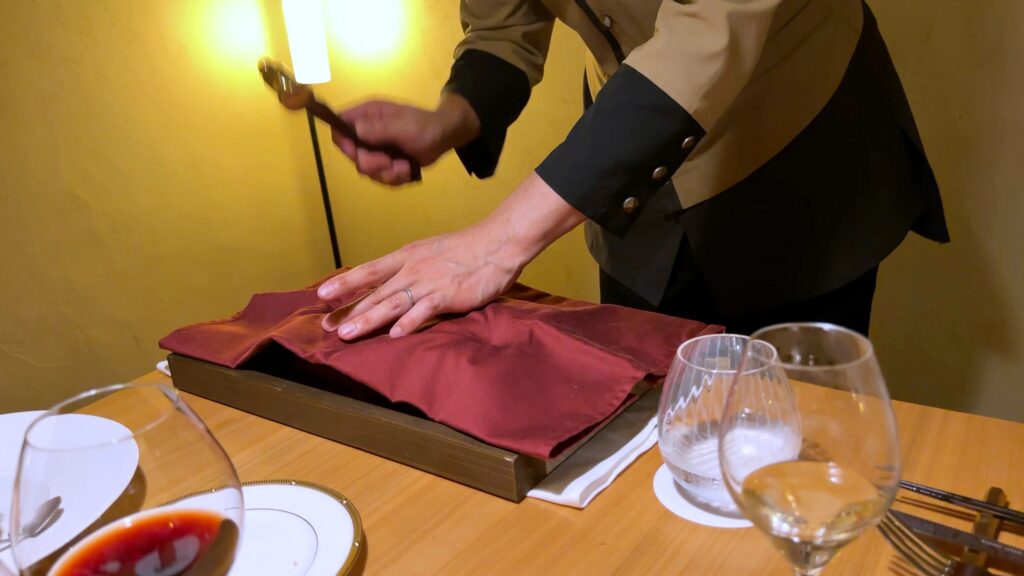
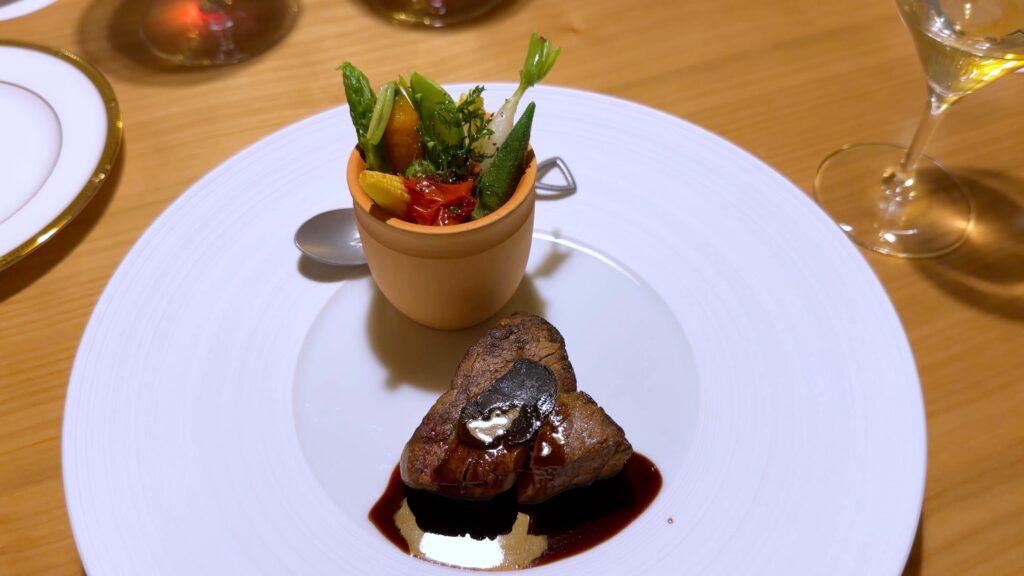
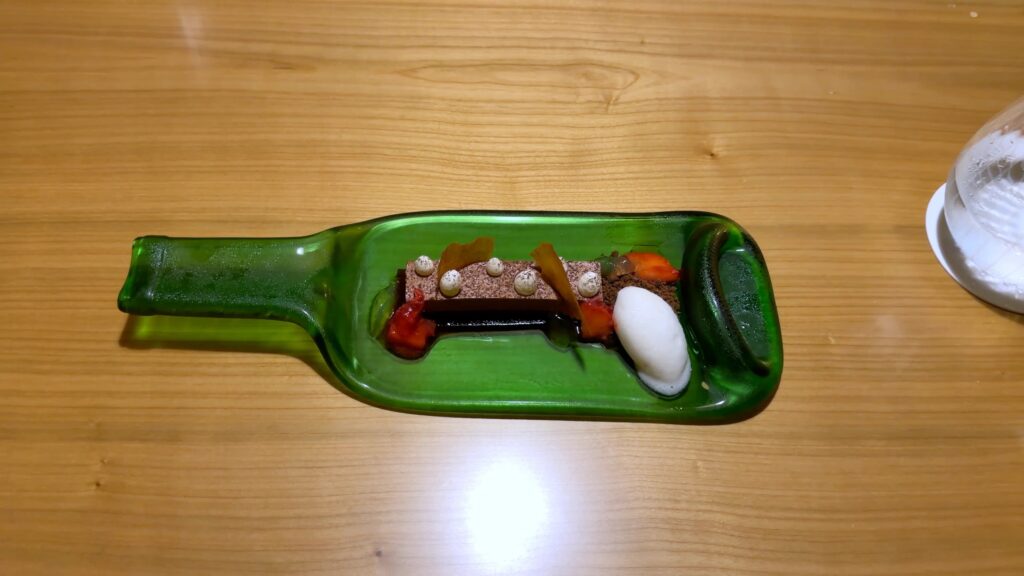
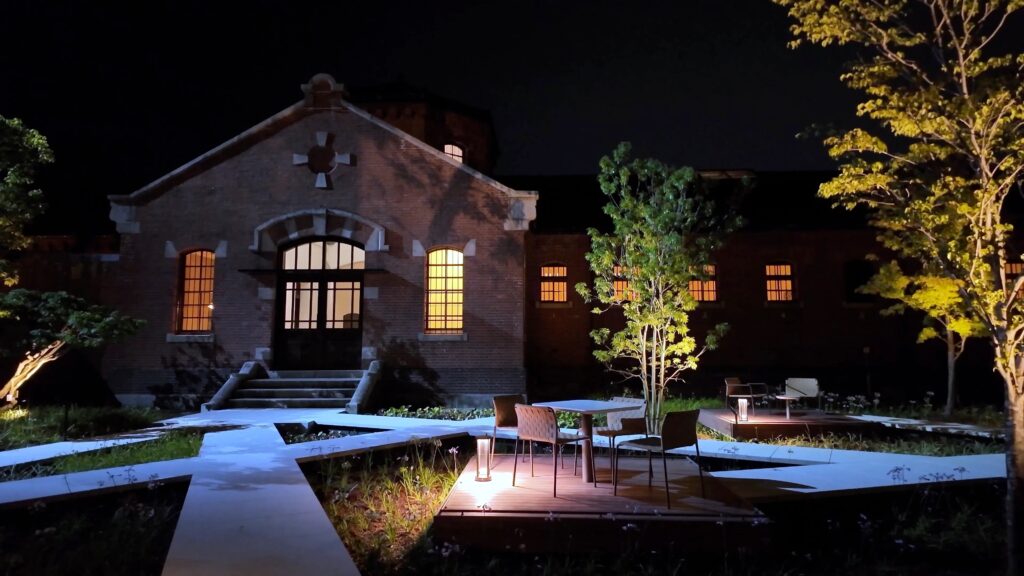
Dessert, representing the future, was called “Ring of Cacao.” At 22,000 yen, it more than justified its price. Delicious, and educational too — a dinner where I learned about Nara Prison’s history one course at a time. After leaving the dinner venue, the garden beyond is named “Prison Paradise,” lit to make the lighting resemble moonlight.
A Special Nighttime-Only Experience
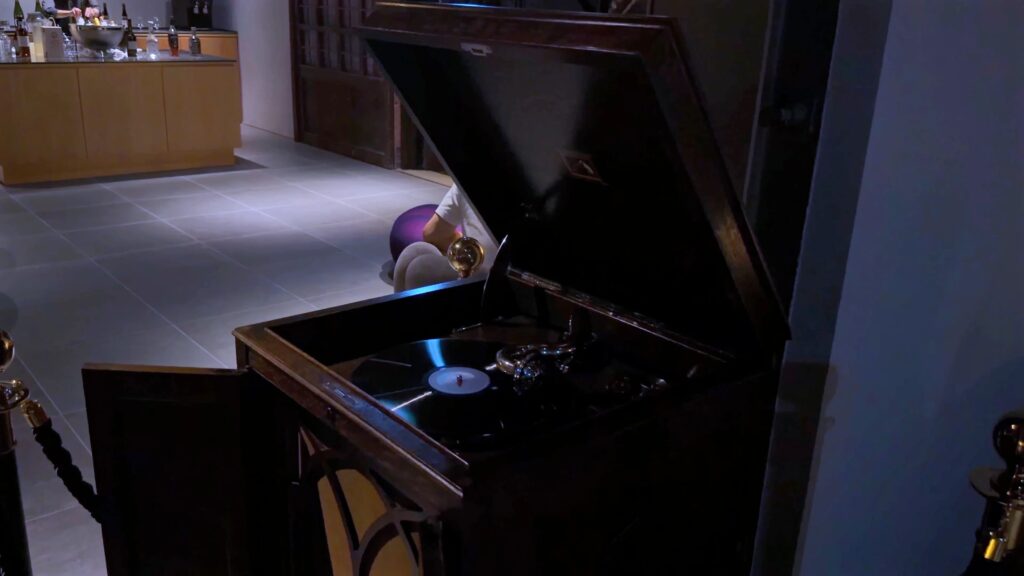
After dinner, we headed to “Soirée of Sound,” the evening lounge where classical music plays from a gramophone. It was hard to believe this space, once a prison storeroom, could feel this refined.
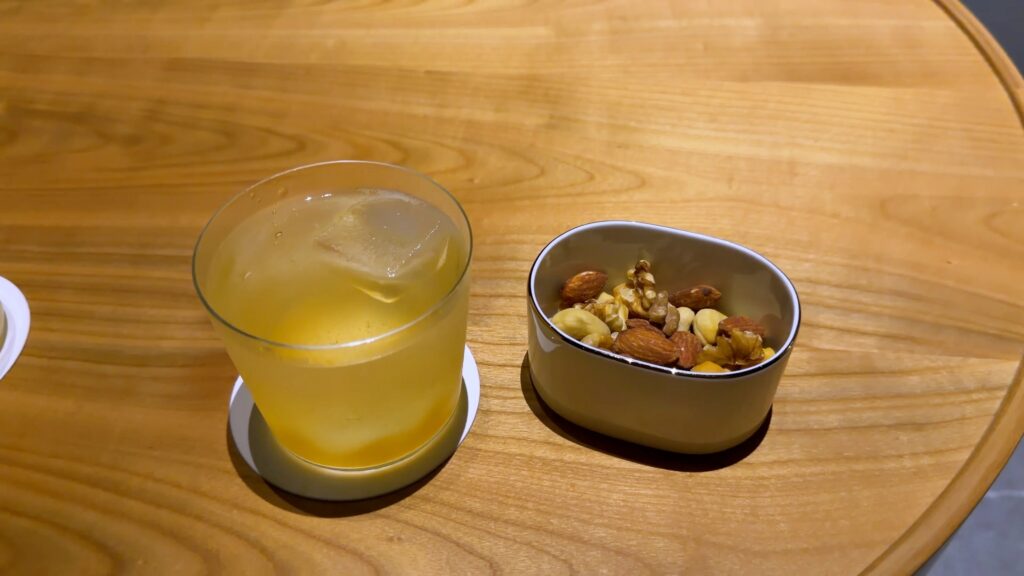
There were paid menu items, but this time I just had the cheapest option — smoked mixed nuts — along with a complimentary original cocktail.
At night, the Prison Museum opens specially for overnight guests only — a privilege exclusive to those staying at the hotel.
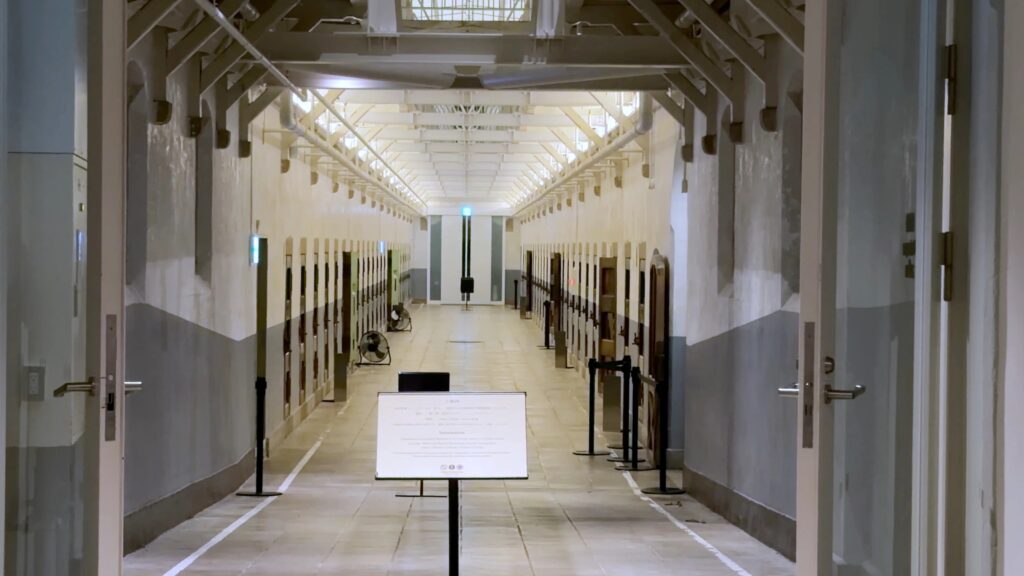
The preserved area of Dormitory No. 3 keeps the juvenile-prison-era buildings deliberately unrenovated, and you can view all 96 solitary cells. There’s no matting on the floors, and the space still carries the air of that era — a completely different tension from seeing it in daylight. Naturally, you can’t touch any of the exhibits.
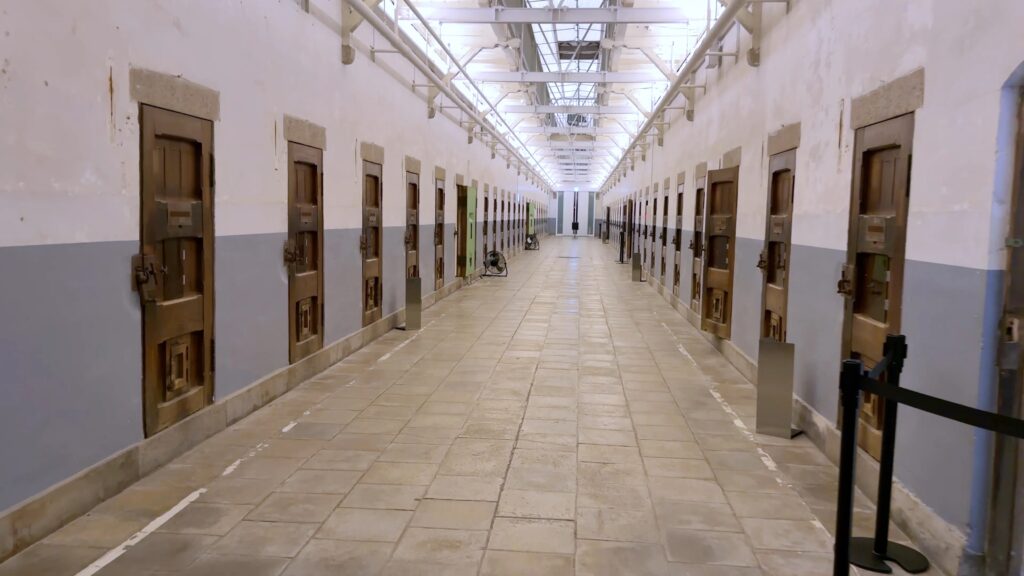
Each cell door has a small “observation window” so guards could check on inmates from the corridor. Cells were, in principle, single occupancy. I heard that while the brick construction was sturdy, it let in drafts in winter and insects in summer — a striking contrast with the former solitary cell I’d be sleeping in that night. Notably, the inner doors had no handles; they could only be opened from the outside.
Breakfast: A Chronicle of East and West
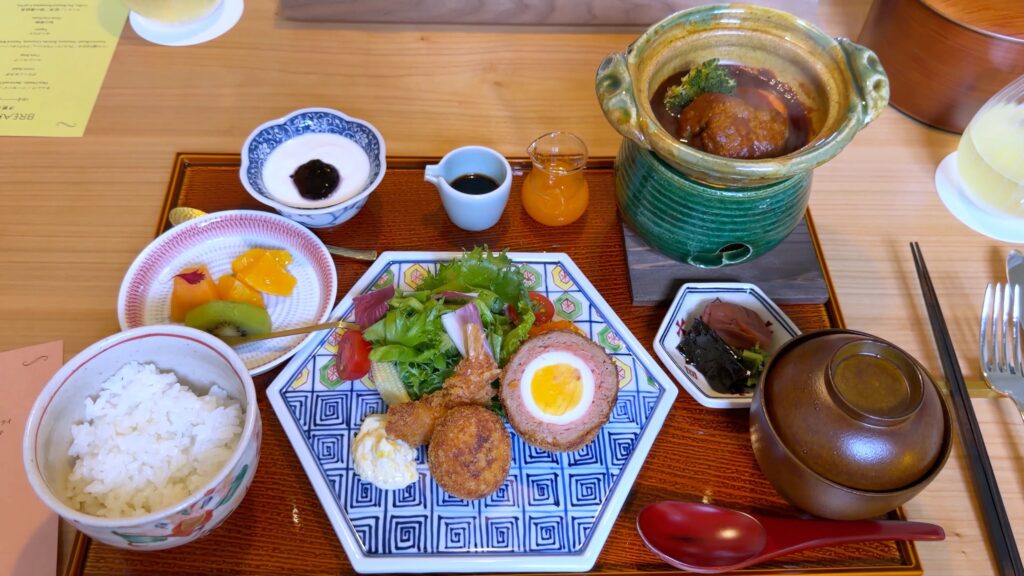
The next morning’s breakfast was also served in the lounge. The Western breakfast was a modern take on the fried dishes popular during Japan’s Westernizing Meiji era — Scotch eggs, ebi fry (fried shrimp, said to have originated in Japan), crab cream croquettes, and more, all lined up and thoroughly filling.
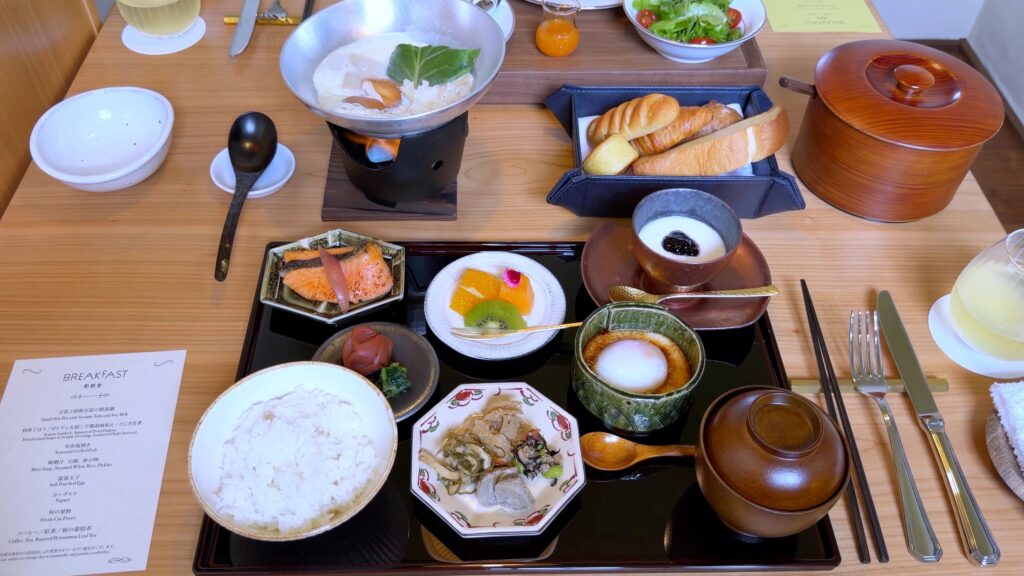
It combined Western and Japanese elements — the Japanese breakfast centered on soy milk hot pot, paired with grilled salmon and various side dishes. Breakfast, too, was quite upscale — the kind of meal you could only have here.
Daytime: The Prison Museum
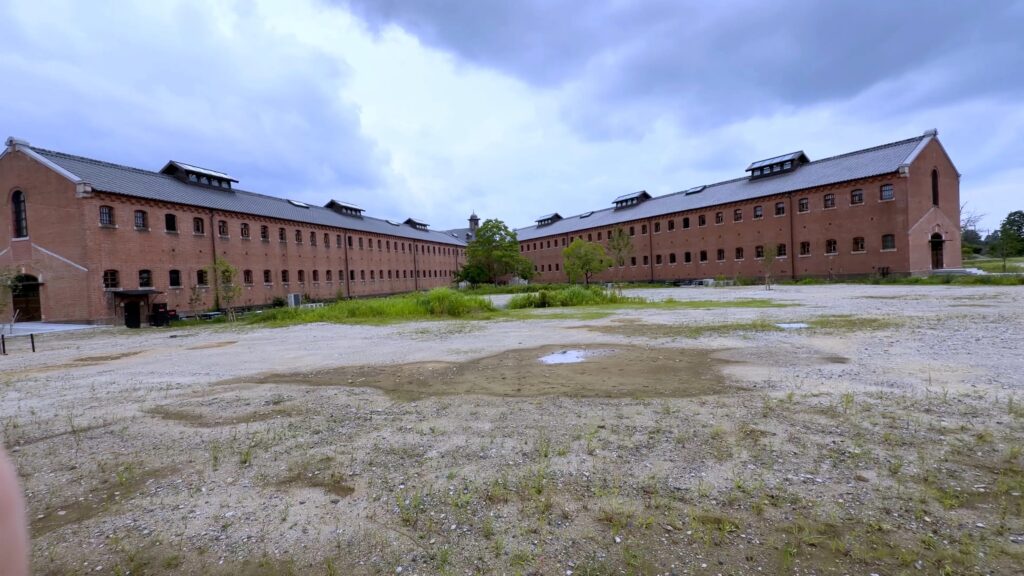
After breakfast, I walked through a corridor reserved for guests to reach the “Nara Prison Museum.” The corridor leads abruptly out into the outside world, and that shift was interesting in itself.
The Nara Prison Museum opened on April 27, 2026, and the architecture itself is the main exhibit. It normally requires advance reservations, but overnight guests can enter anytime. While the museum is open, you can also go up to the second floor of Dormitory No. 3, offering an even deeper look at the former Nara Prison.
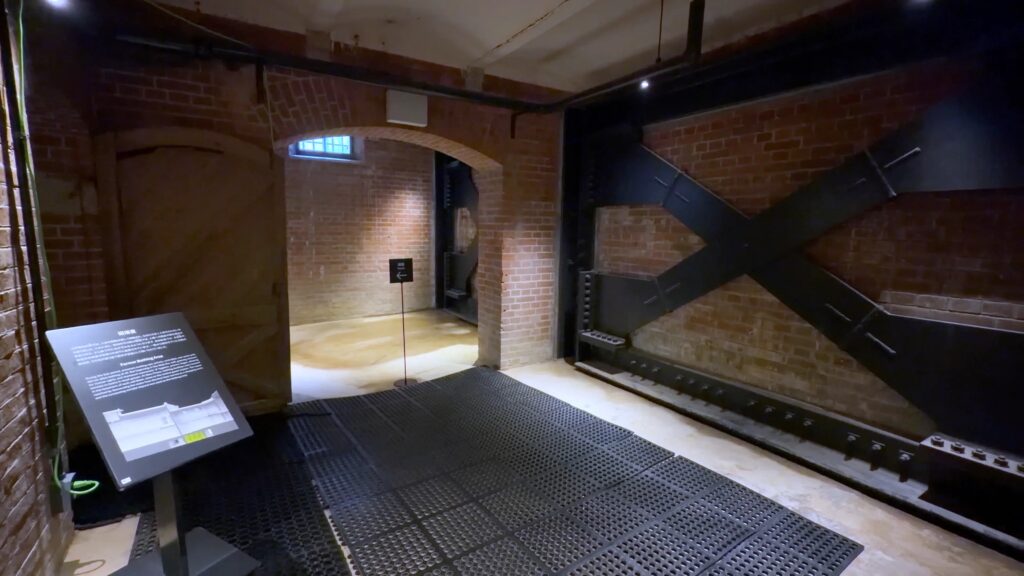
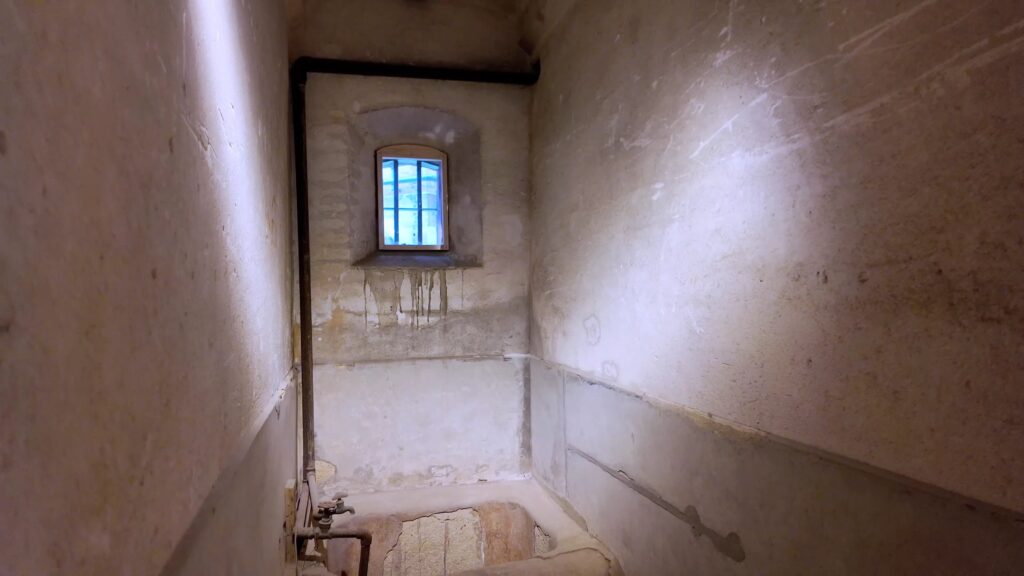
In the basement, a bathhouse remains that conveys the harsh conditions of the era. The tub is quite small, with no curtain — inmates bathed in turn, at set times, following set procedures. It had a slightly dungeon-like atmosphere.
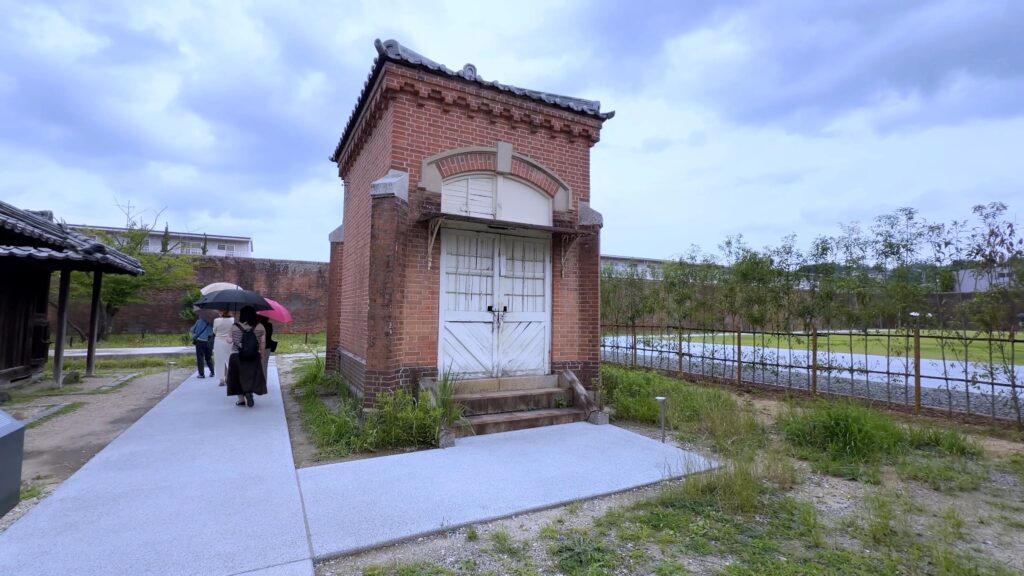
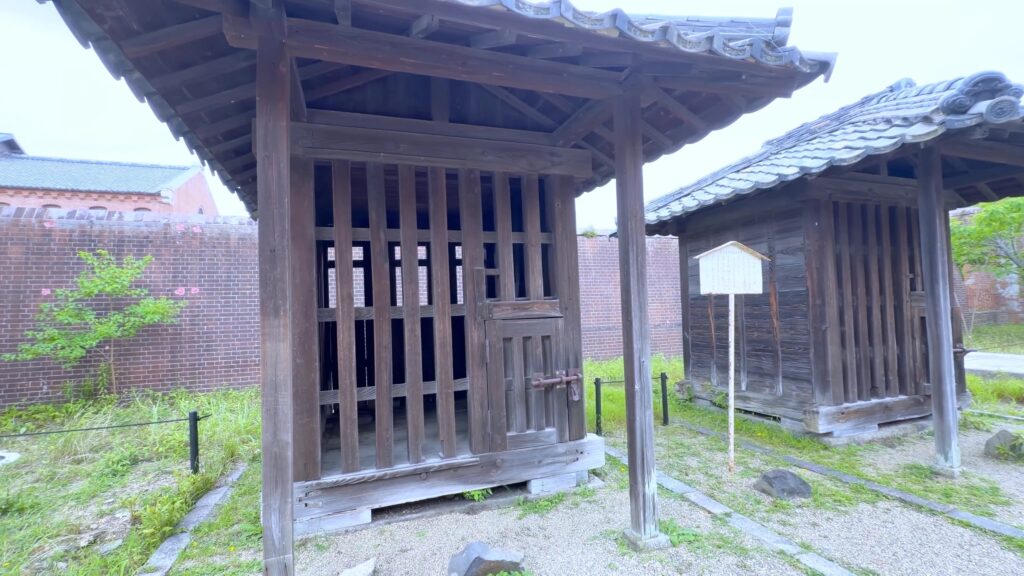
Also preserved is “Gisukan,” a wooden jail from the Edo period that predates the former Nara Prison. Named for its resemblance to a cricket cage, this roughly 1.5-tatami-mat holding cell shows that conditions in earlier eras were even harsher — sobering just to imagine.
Building B has easy-to-follow exhibits on daily life in present-day prisons. The meals shown from various prisons looked well-balanced and generously portioned — some even looked genuinely appetizing.
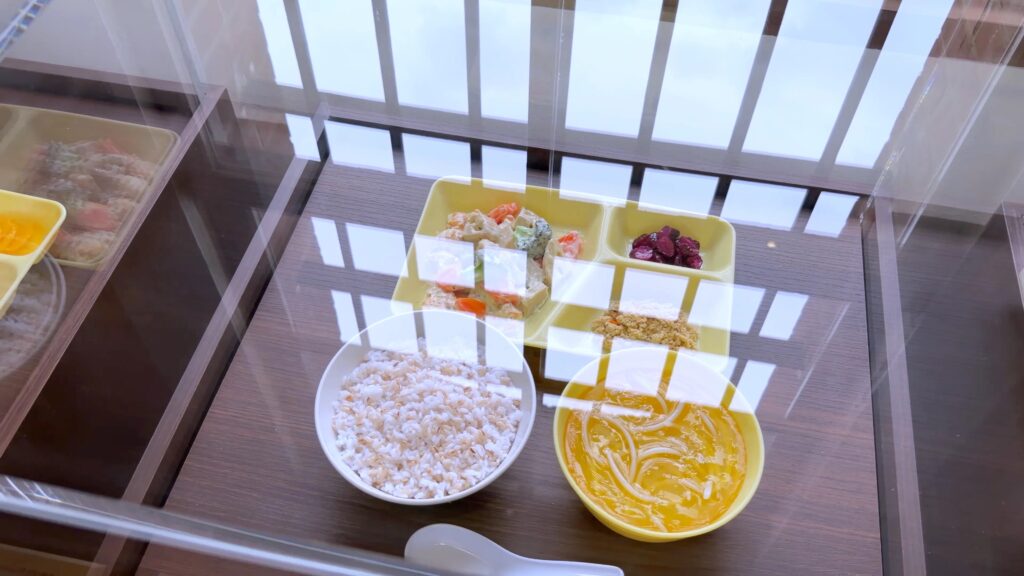
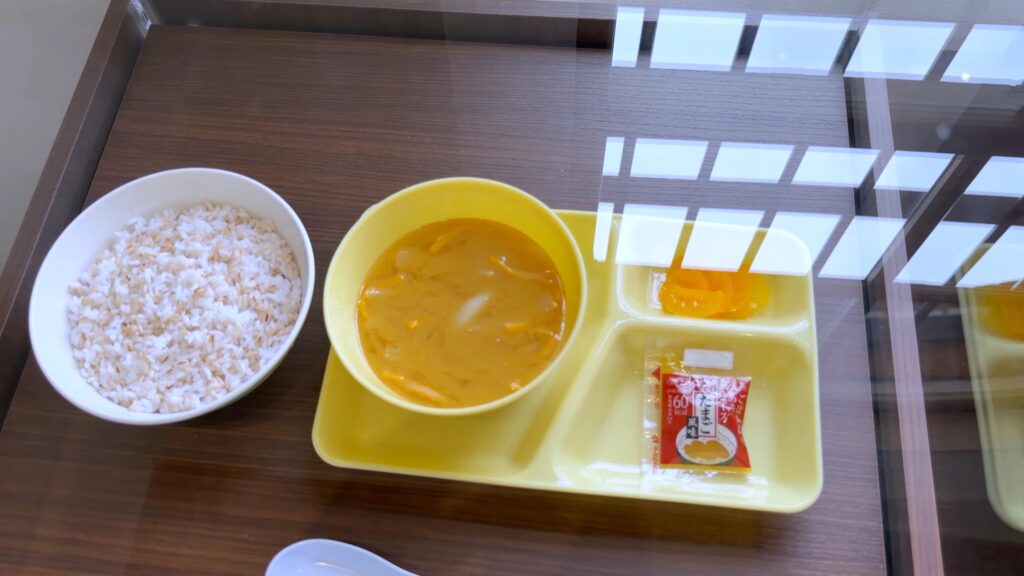
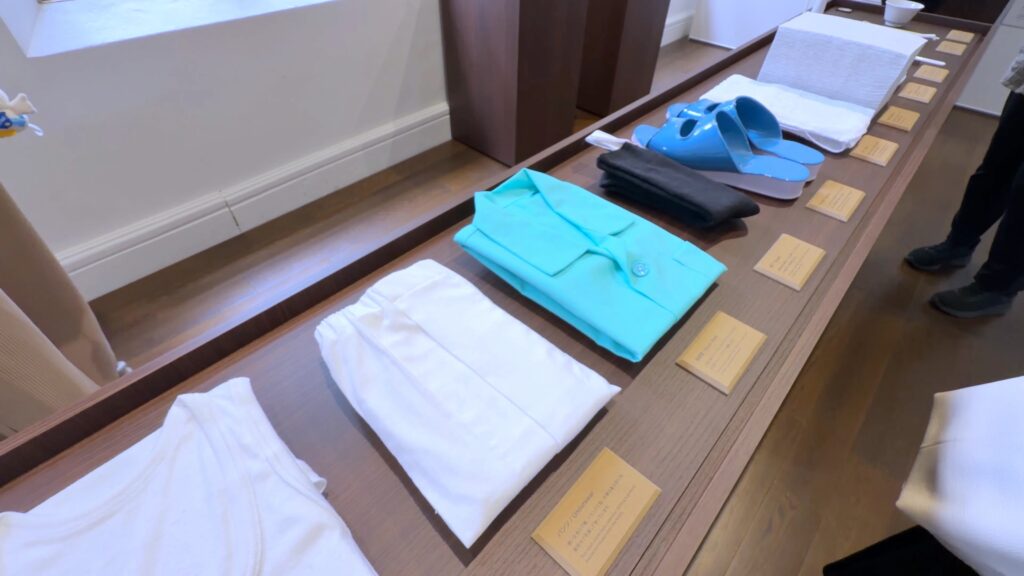
Surprisingly, inmates can even have snacks and New Year’s osechi food, and apparently have free time on holidays. Supplies and amenities given at intake are also specified in detail — a fairly comfortable-sounding routine, though the rules themselves are quite strict. Monthly wages were 4,556 yen, and there was even a pension system. It’s clear that many worked here toward rehabilitation, spending their time this way. Drawings and writing by inmates were also on display.
One panel noted that many young people at Nara Juvenile Prison carried burdens like bullying, abuse, and poverty. It made me reflect that people may not be defined by some flaw in themselves, but rather shaped by the environment they were placed in.
Shopping at the Shop & Café
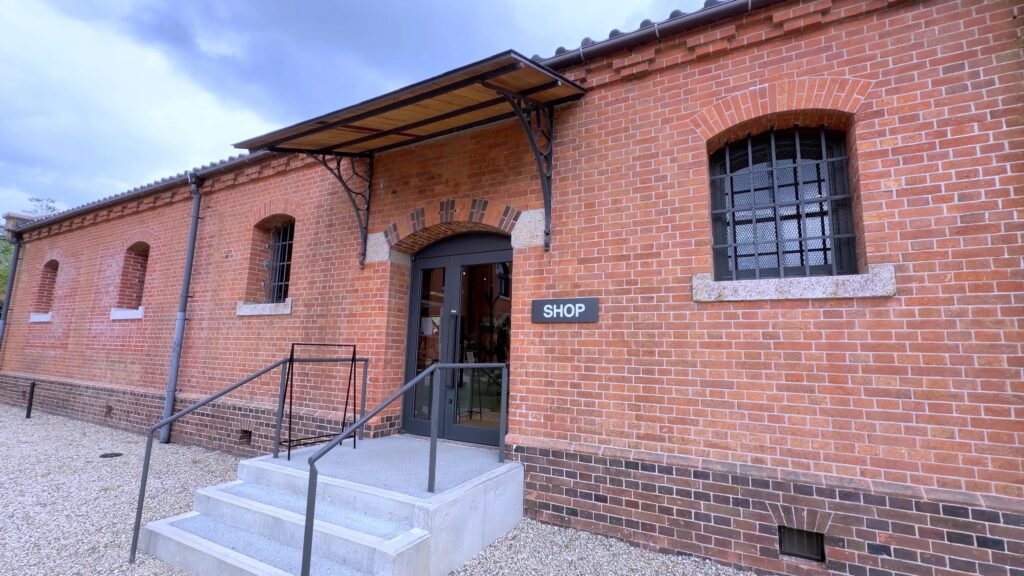
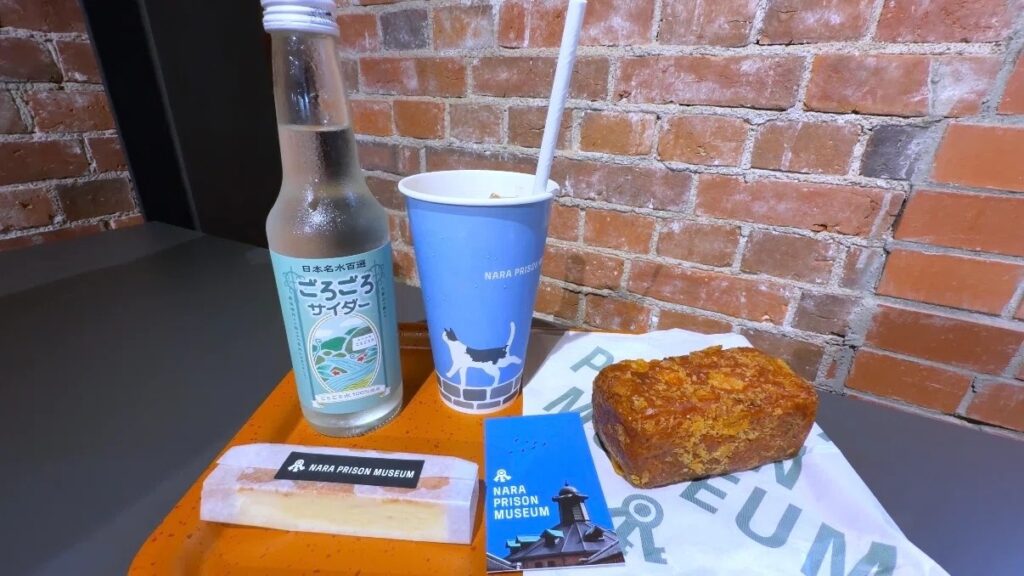
The Nara Prison Museum also includes a shop and café converted from a former barbershop. The café’s signature item is the “Brick Curry Bread” — a square bun shaped after the red-brick building. For lunch, I had this curry bread along with cheesecake, a cider, and a café latte. It genuinely looked like a brick, which was adorable, and the crisp bread with curry inside was incredibly good. The cheesecake was also square, brick-themed, and equally excellent. Everything was delicious — a thoroughly satisfying lunch.
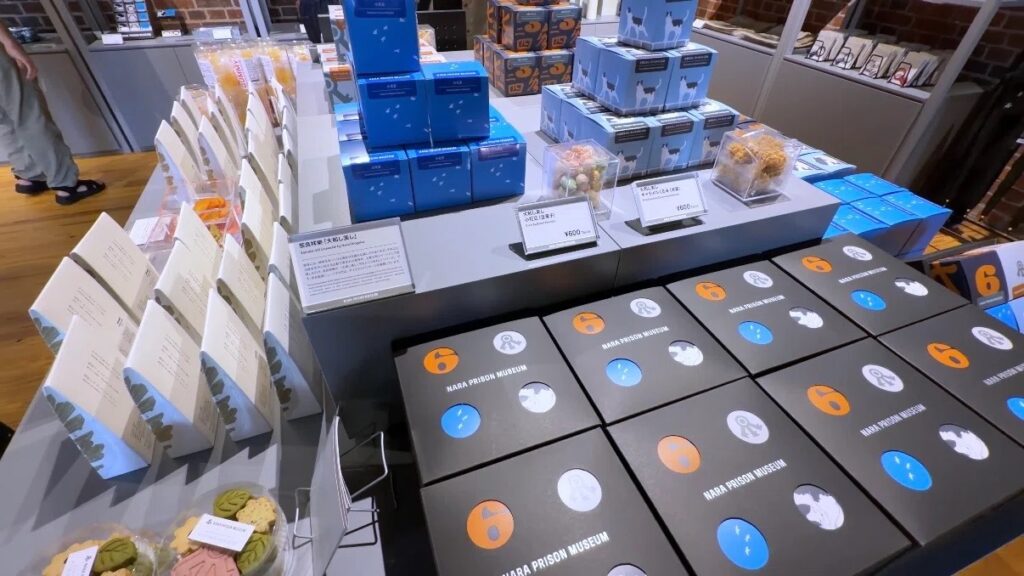
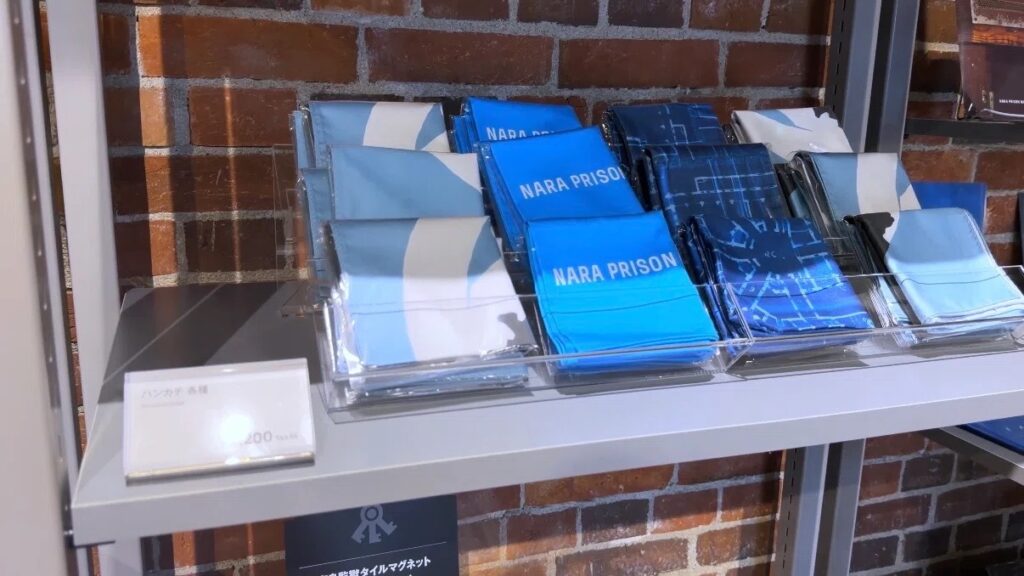
After eating, I browsed the souvenir corner — limited-edition logo goods themed around the former Nara Prison’s history and red-brick architecture, as well as “prison labor products” like woodwork and bags made in prisons across the country. Sweets from the hotel’s lounge are also sold here.
About the Cost
For this stay — two nights, three days, one room for two people — the total came to 164,656 yen. Without question, the most expensive hotel I’ve ever stayed at.
I actually spent so much that on the last day, I made do with cup noodles. Oddly enough, eating cup noodles in the room somehow made the experience feel even more “prison-like.” Checkout was at 12:00 PM.
Honestly, the price gave me a lot of pause. But having actually stayed there, I’m genuinely glad I went.
In Closing
At first, the concept of the “Beautiful Prison” felt a bit like a catchy tagline. But after actually staying there, I could feel that the value wasn’t just in luxury — it was in the experience of history itself.
The weight carried by a place that was once a prison, and the comfort of a hotel — two things that should be at odds — somehow coexisted without feeling out of place, making for a strangely memorable stay. Sleeping surrounded by bricks laid by inmates’ own hands over a century ago, looking out at gardens they likely trimmed themselves, eating in places where they once worked — that’s an experience no other hotel can offer.
If you’re curious, I’d recommend starting with just a visit to the Nara Prison Museum. A stay can always come later.
Comments