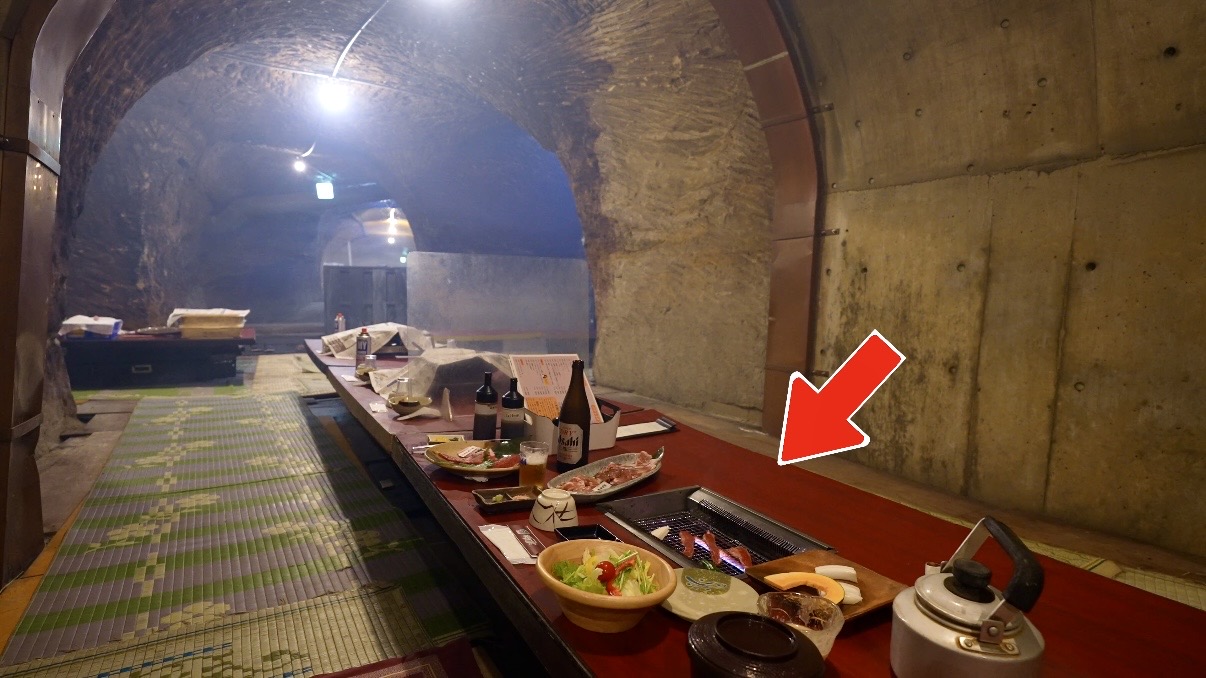
Hidden in the countryside of Tsu City, Mie Prefecture, sits one of the strangest and most memorable ryokan (traditional Japanese inns) in the country. At Mado Onsen Ryofuso (磨洞温泉 涼風荘), both the dining hall and part of the hot spring baths are built inside a real cave — a former sand quarry dating back to the Edo period. As far as we know, it’s the only ryokan in Japan where you can eat dinner inside an actual cave.
We spent one night here to see what this one-of-a-kind stay is really like, from a lobby full of taxidermy to a solo yakiniku dinner deep underground. Here’s the full experience, for anyone planning a trip to Mie or looking for an offbeat ryokan in Japan.
Table of Contents
- What Is Mado Onsen Ryofuso?
- Getting There and Check-In
- A Startling Welcome: Taxidermy Everywhere
- The Guest Rooms: Showa-Era Charm
- The Hot Springs: Cave Baths, Rock Baths, and a Garden Bath
- Dinner in a 250-Meter-Long Cave
- The History of the Cave: An Edo-Period Sand Quarry
- A Few Honest Notes Before You Go
- The Private “Pirate’s Bath” at Night
- Breakfast: A Traditional Japanese Morning Set
- Practical Information and Final Thoughts
What Is Mado Onsen Ryofuso?
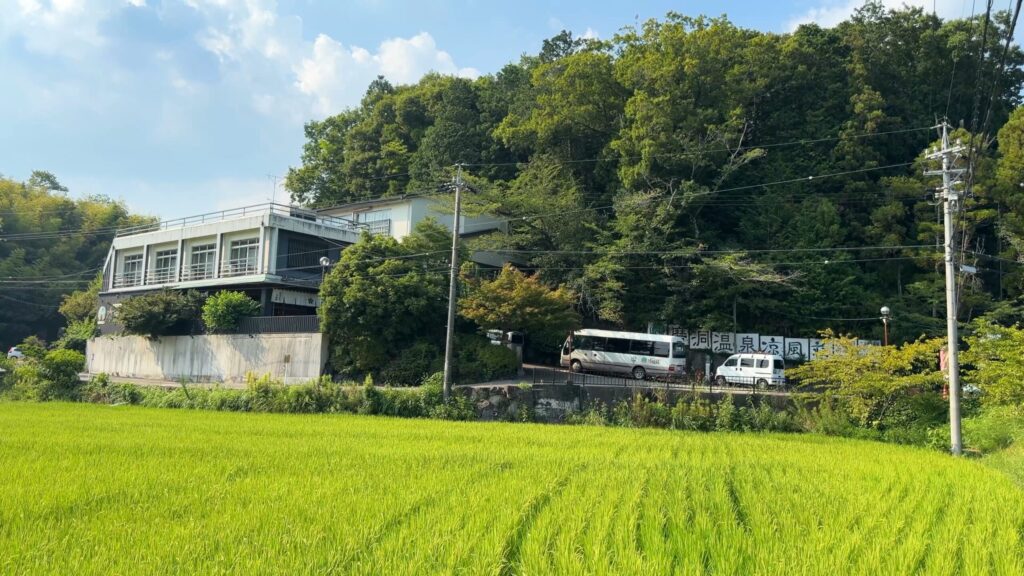
Founded in 1962, Mado Onsen Ryofuso is a family-run ryokan in Tsu, the capital city of Mie Prefecture, about 40 minutes by train from Nagoya. Its defining feature is a natural cave on the property, once mined for “migakizuna” (polishing sand) used to scrub pots and bowls since the Edo period. Today, part of that cave has been converted into a dining hall known as the “Underground Paradise,” while another section houses one of the ryokan’s private cave baths.
Getting There and Check-In
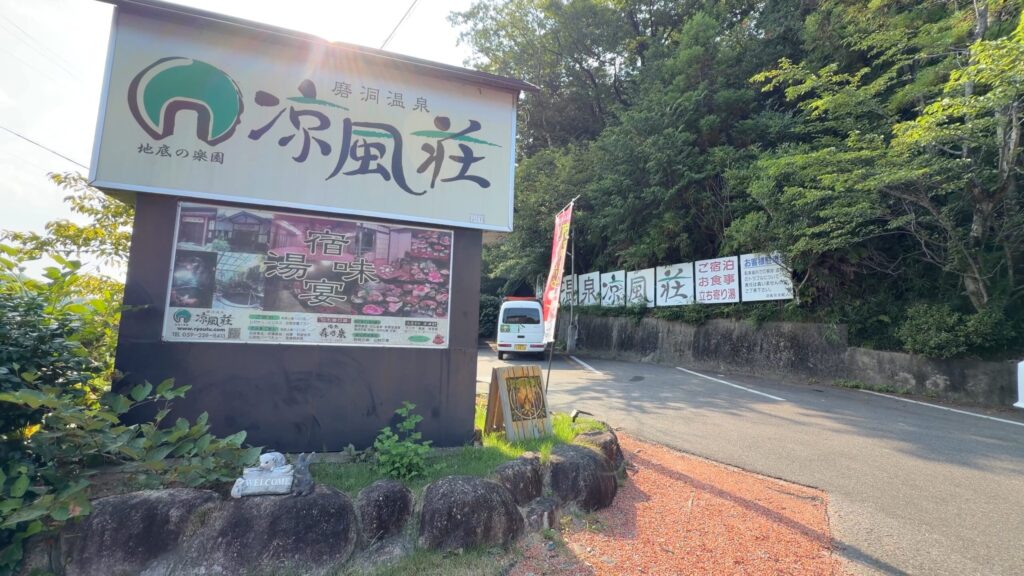
The ryokan is about a 30-minute walk from Tsu Station — a scenic but fairly long walk with luggage, so a taxi is worth considering if you’re carrying bags. Check-in starts at 3:00 PM, and guests check in via a ticket machine before receiving their room key at the front desk. Rates are dynamic and can vary by season, so it’s often possible to find the room for less than the standard listed price.
A Startling Welcome: Taxidermy Everywhere
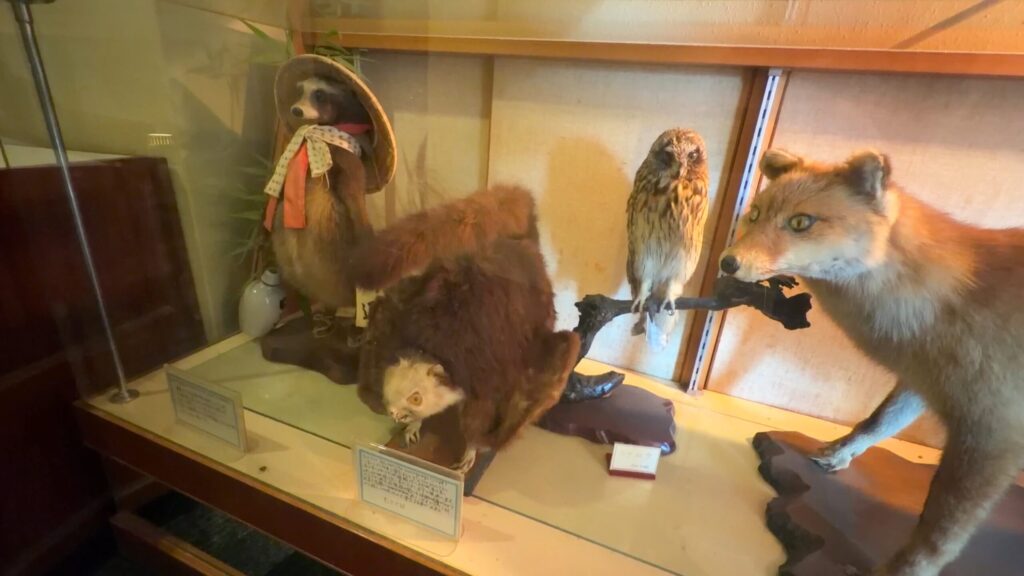
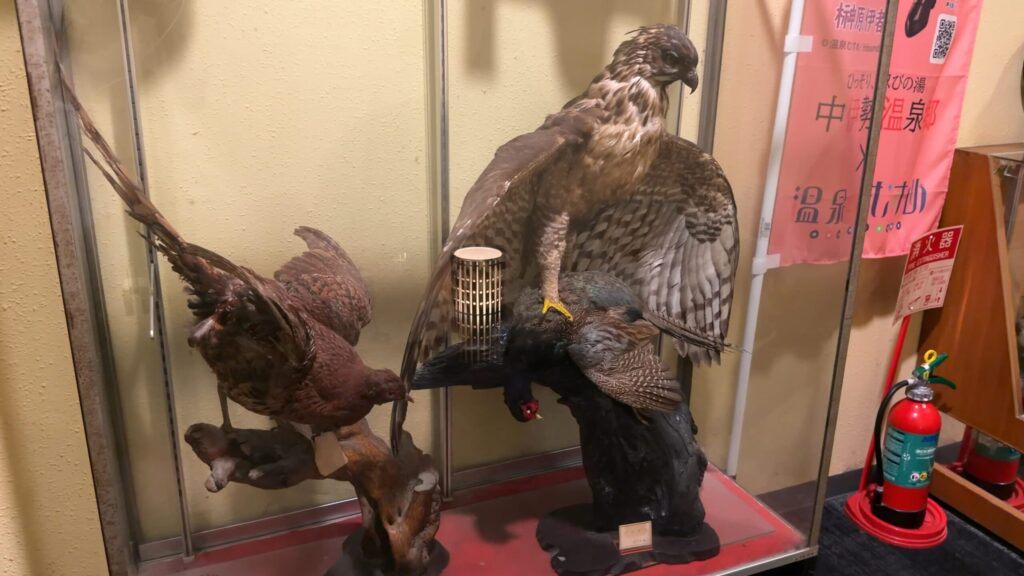
Walk through the entrance, and the first thing you’ll notice isn’t the cave — it’s the taxidermy. Dozens of mounted animals line the hallways, along with an enormous wasp nest reportedly found in the garden. No one seems entirely sure why, though it’s rumored to be a former owner’s personal collection. It’s an unexpected and slightly eerie way to start the stay, and it sets the tone for just how unconventional this ryokan really is. The hallway leading to the shared restroom passes directly through this “taxidermy zone,” so a late-night bathroom trip comes with a bit of a scare built in.
The Guest Rooms: Showa-Era Charm
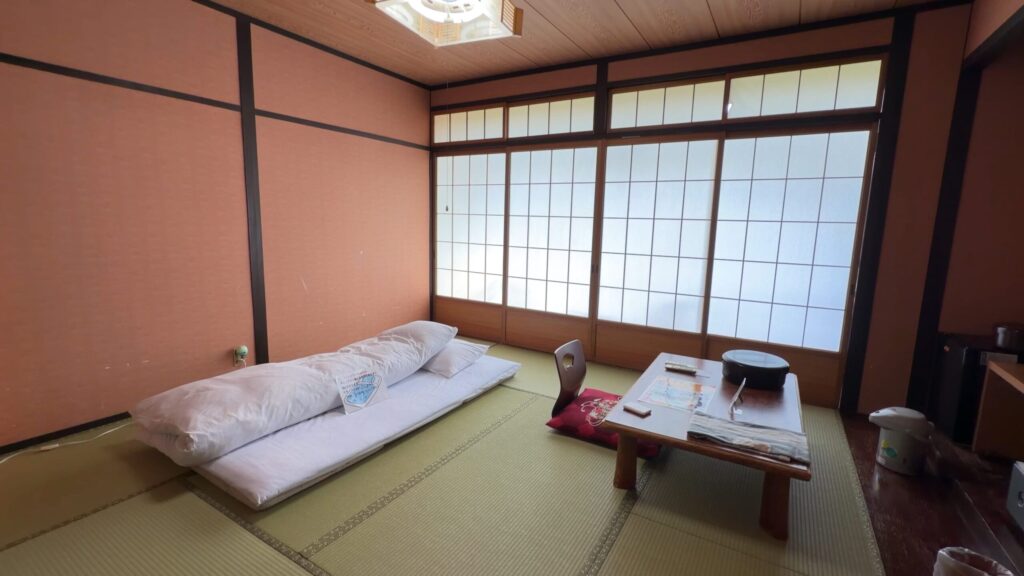
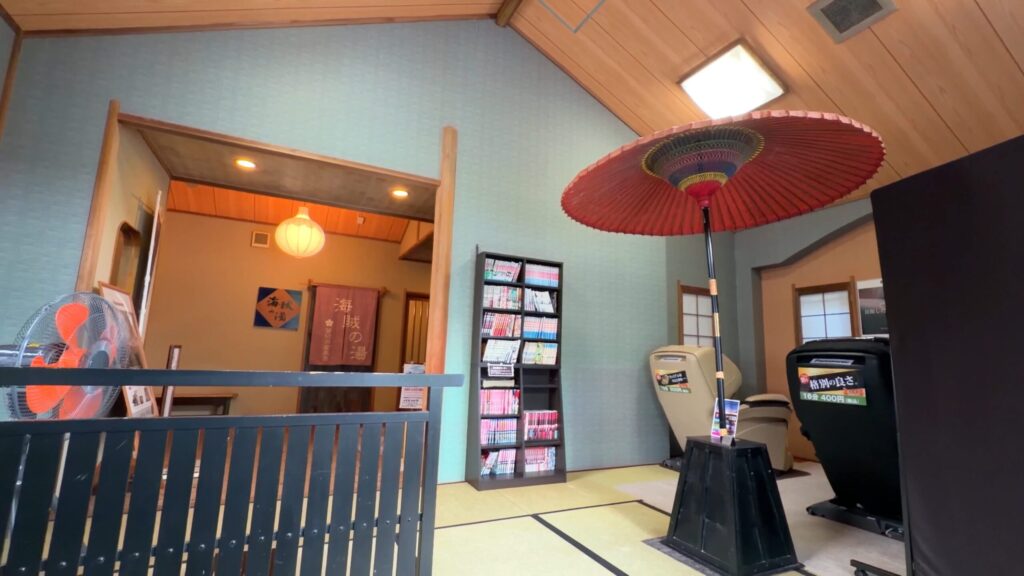
Guest rooms are located in the main building, constructed during Japan’s Showa era, on the second floor. The room we stayed in — Room 208 — looked out over quiet farmland and rolling hills. The building itself has clearly been expanded and renovated many times over the decades, resulting in a maze-like layout of hallways and staircases that adds to the sense of adventure. Common areas include a lounge with a giant electric fan, a well-worn foot-reflexology mat, and a small manga library — all charmingly retro touches. There are no shops nearby, but the ryokan has vending machines on-site, along with a small gift shop selling local polishing sand, handmade souvenirs, drinks, and ice cream.
The Hot Springs: Cave Baths, Rock Baths, and a Garden Bath
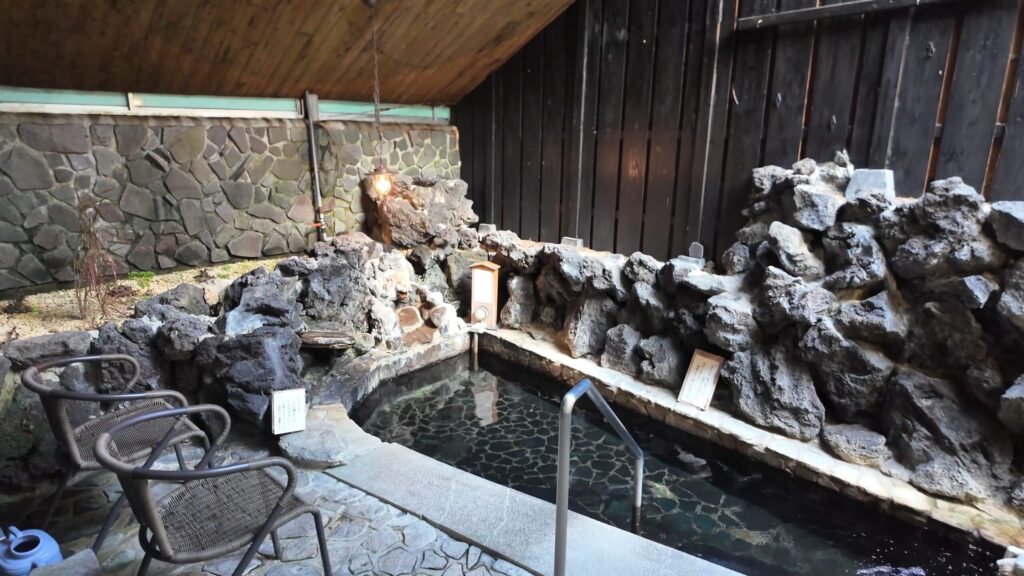
The hot spring facilities are located in a separate annex building. The large communal bath (daiyokujo) rotates monthly between two natural hot spring sources unique to Tsu. Elsewhere on the property, guests can soak in a rock bath built with “Fuji stone” — lava rock sourced from Mount Fuji — or a garden-style bath decorated with potted plants. There’s also an open-air bath for warmer months, though be warned: it’s genuinely outdoors, insects and all. On the day of our visit, the temperature in Tsu hit 36.3°C (97°F), making the open-air bath a memorably intense experience. Day-trip bathing (without an overnight stay) is also available for visitors who just want to try the springs.
Dinner in a 250-Meter-Long Cave
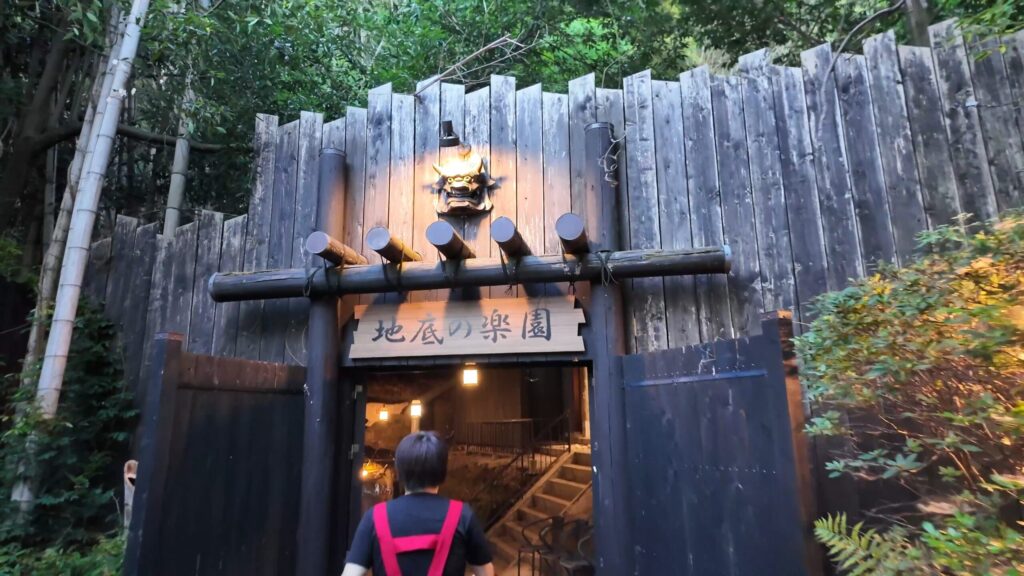
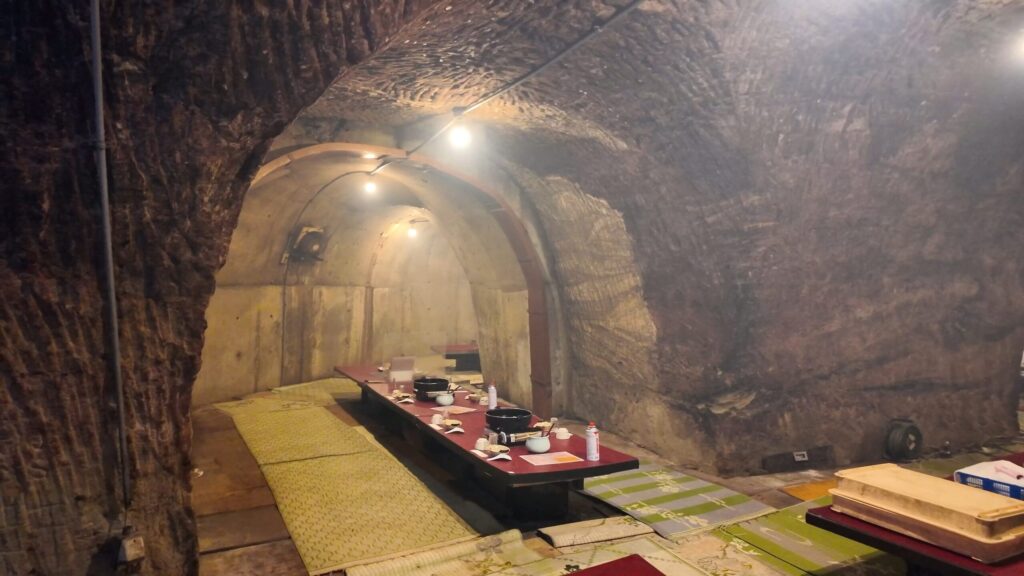
The highlight of any stay here is dinner. Guests leave the main building and walk a short distance to the entrance of “Underground Paradise Cave Dining Hall” — and the scale of the cave is genuinely surprising. It stretches roughly 250 meters and stays noticeably cooler than the outside air, making it a comfortable place to eat even in the height of summer.
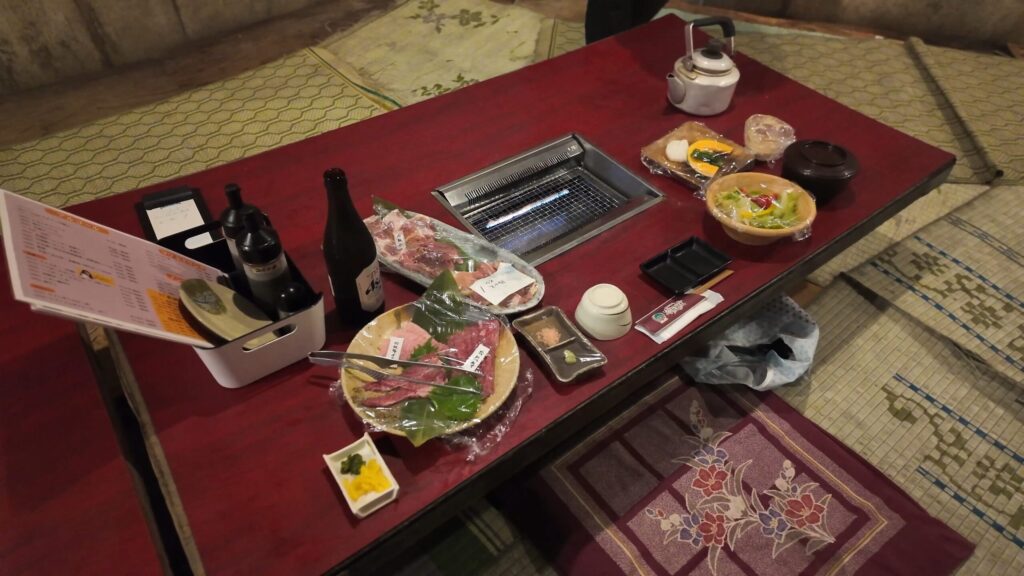
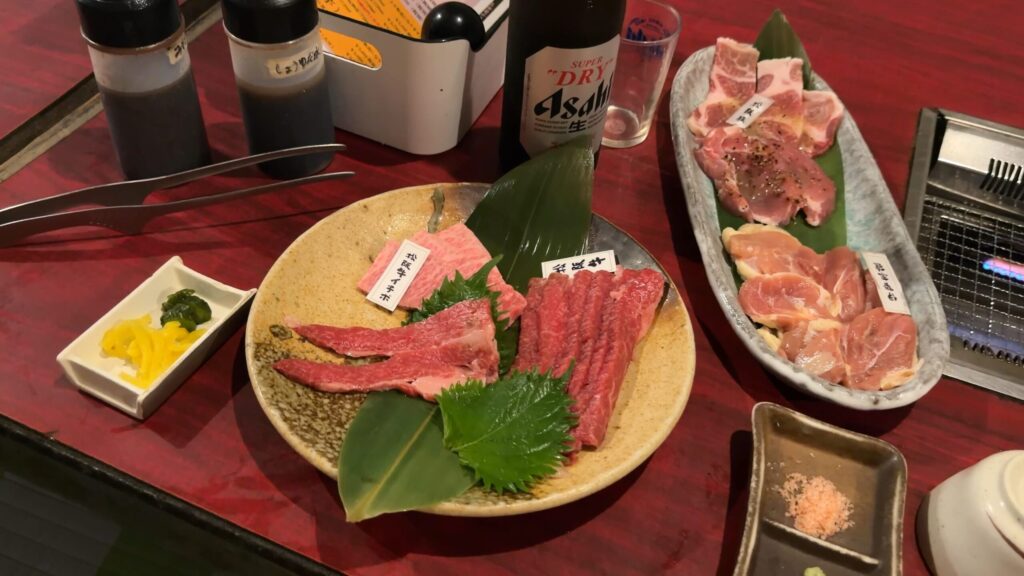
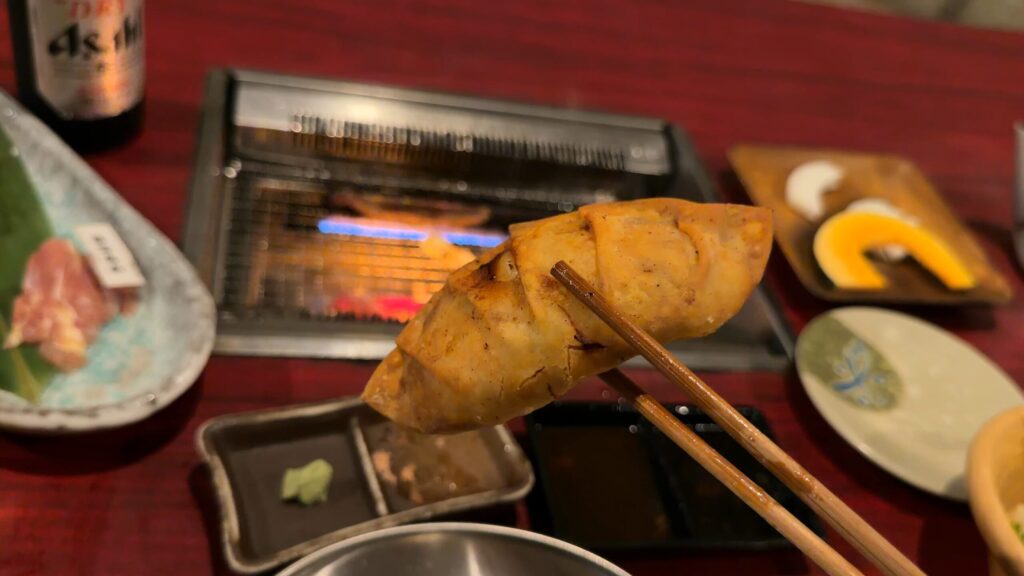
Dinner is served as a solo yakiniku (Japanese barbecue) course, grilled at your own table. The beef is Matsusaka beef, one of Japan’s most prestigious wagyu brands, served alongside local Mie-grown chicken and pork, a sesame-dressing salad, fresh vegetables, and freshly fried “Tsu gyoza,” a local specialty dumpling. Eating Matsusaka beef seasoned simply with rock salt, in the middle of an actual cave, feels less like a hotel dinner and more like something out of an adventure film. The meal finishes with orange slices and almond tofu pudding for dessert.
The History of the Cave: An Edo-Period Sand Quarry
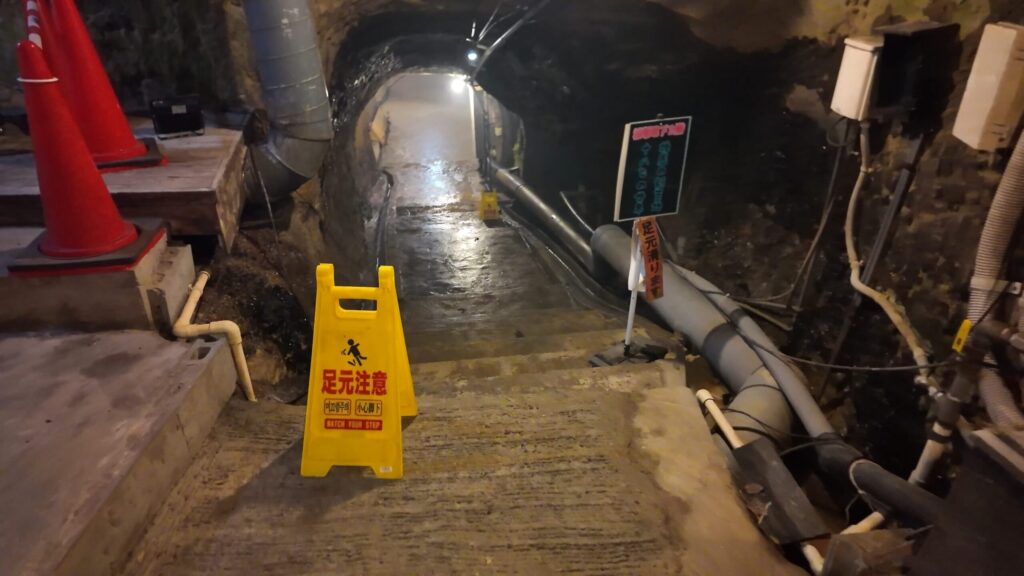
After dinner, it’s worth exploring deeper into the cave. This tunnel network was originally excavated by hand during the Edo period to mine “migakizuna,” a fine sand once used across Japan for scrubbing cookware. The main dining cave alone stretches about 250 meters — entirely dug by hand.
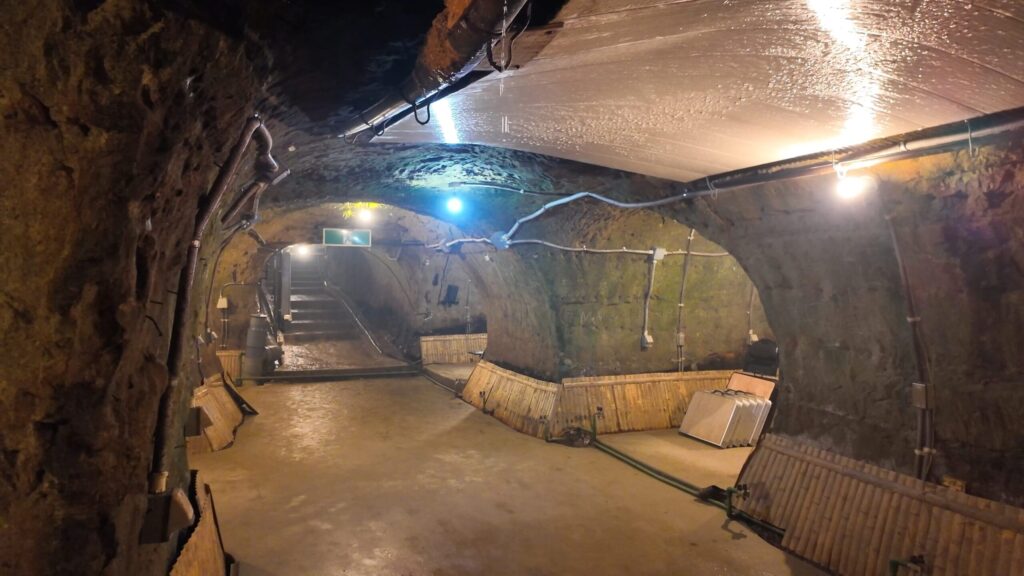
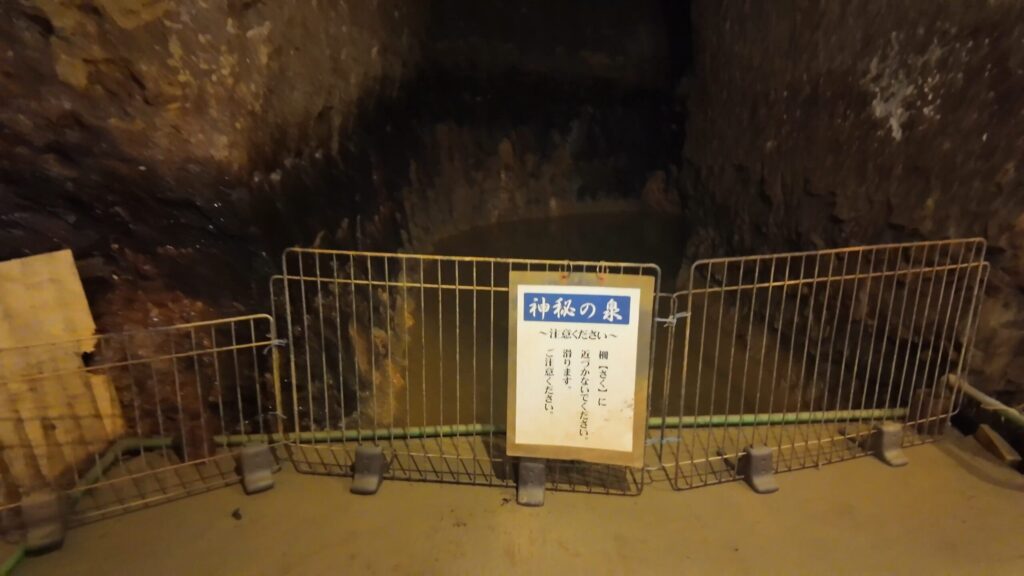
At its largest, the full cave system extended roughly 20 kilometers, and historical records suggest sections were even used as a military factory and hospital during wartime. Much of that original network has since collapsed, and today the deeper sections are used mainly for storage, with standing water in some areas. At its peak, roughly 20,000 tons of polishing sand were extracted from the site each year; production has slowed considerably since, partly because the sand is now known to scratch cookware over time.
A Few Honest Notes Before You Go
As much as we loved the experience, a stay here comes with a few quirks worth knowing about in advance — nothing that ruined the trip, but good to set expectations.
It’s genuinely rural, especially in summer. The ryokan sits surrounded by farmland and hills, and with that countryside setting comes plenty of insects outdoors once the weather warms up. If bugs aren’t your thing, it’s worth packing accordingly, especially for the open-air bath.
The region gets quite hot. Tsu, and Mie Prefecture more broadly, can see intense summer heat partly due to the Foehn wind effect, which pushes warm air down from the mountains. Temperatures well above 35°C (95°F) aren’t unusual in midsummer, so if you’re visiting between July and September, be prepared for a genuinely hot stay.
Guest rooms are air-conditioned, but the hallways aren’t. The common areas and corridors rely on standing fans rather than central air conditioning, so moving between your room, the baths, and the dining area can feel noticeably warm — part of the building’s older, retro character, but worth knowing if you’re sensitive to heat.
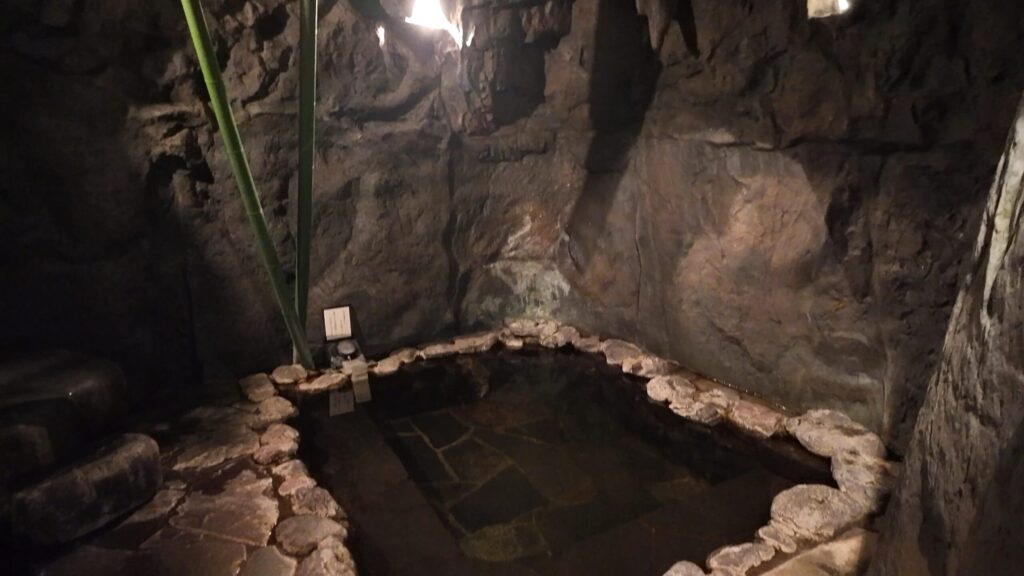
The private cave bath runs hot. This isn’t about water temperature — the bath itself is very pleasant — but rather the cave’s limited ventilation, which traps heat inside the enclosed space. It can feel close to a sauna at times, so shorter soaks or breaks may be more comfortable than one long session, particularly in summer.
None of this takes away from how memorable the stay is, but if you’re heat-sensitive or visiting during peak summer, it’s worth keeping in mind and dressing/packing accordingly.
The Private “Pirate’s Bath” at Night
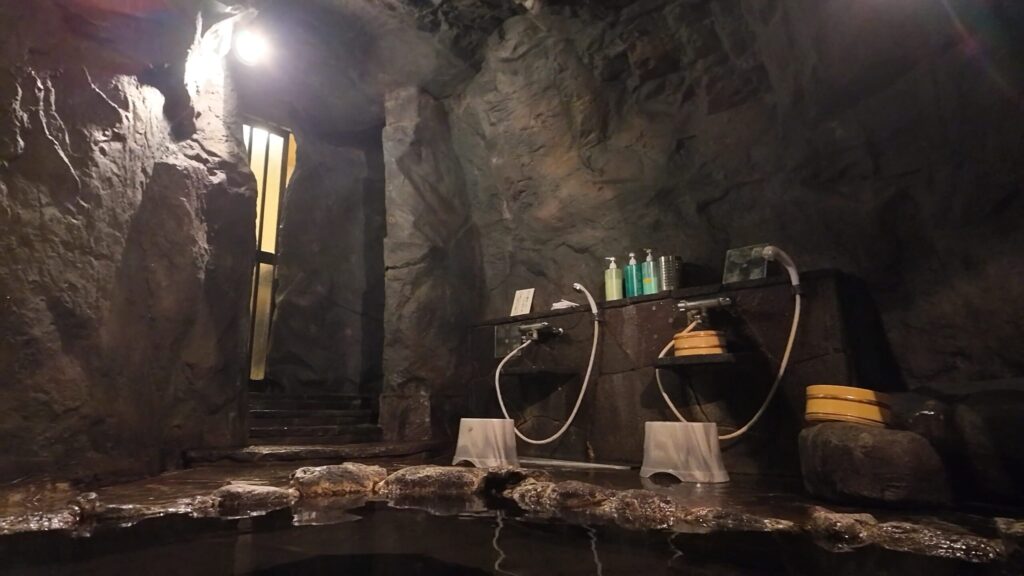
To end the evening, we booked a private cave bath called the “Pirate’s Bath” (Kaizoku no Yu), available for a 45-minute reservation. Modeled after a smooth, sea-cave aesthetic, the bath is deep and genuinely relaxing — though the enclosed cave heat makes it feel almost like a sauna. It’s a fitting, slightly surreal way to close out a very unusual day. For dessert, we picked up an ice bar from Imuraya, a well-known Japanese ice cream brand that was actually founded right here in Tsu.
Breakfast: A Traditional Japanese Morning Set
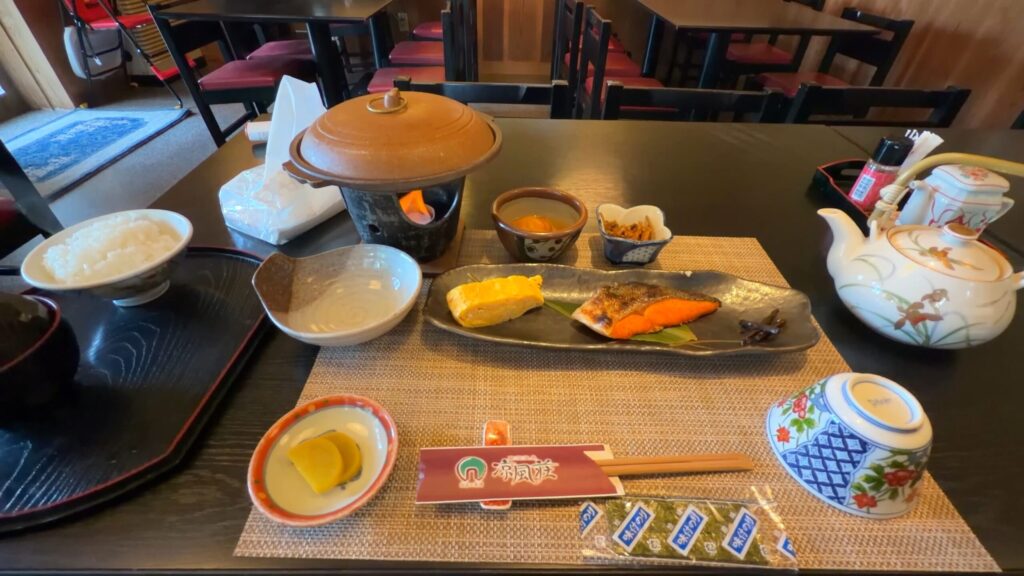
Breakfast is served the next morning at a separate dining room just outside the main building. The set includes grilled salmon, tamagoyaki (Japanese rolled omelet) with a slightly sweet seasoning, simmered side dishes, and grilled vegetables — a comforting, traditional start before checking out.
Practical Information and Final Thoughts
Name: Mado Onsen Ryofuso (磨洞温泉 涼風荘) Location: Tsu City, Mie Prefecture, Japan Founded: 1962 Highlights: Cave dining hall, cave hot spring baths, private baths, large communal bath, day-trip bathing available Access: About a 30-minute walk from Tsu Station (taxi recommended with luggage)
From a lobby full of taxidermy to a candle-lit cave dinner and a genuine piece of Edo-period mining history, Mado Onsen Ryofuso is unlike any other ryokan in Japan. If you’re planning a trip to Mie Prefecture and want an experience that goes well beyond a typical hot spring stay, this cave ryokan is well worth the detour.
Have you stayed at an unusual ryokan in Japan? Share your own offbeat travel finds in the comments below.
Comments