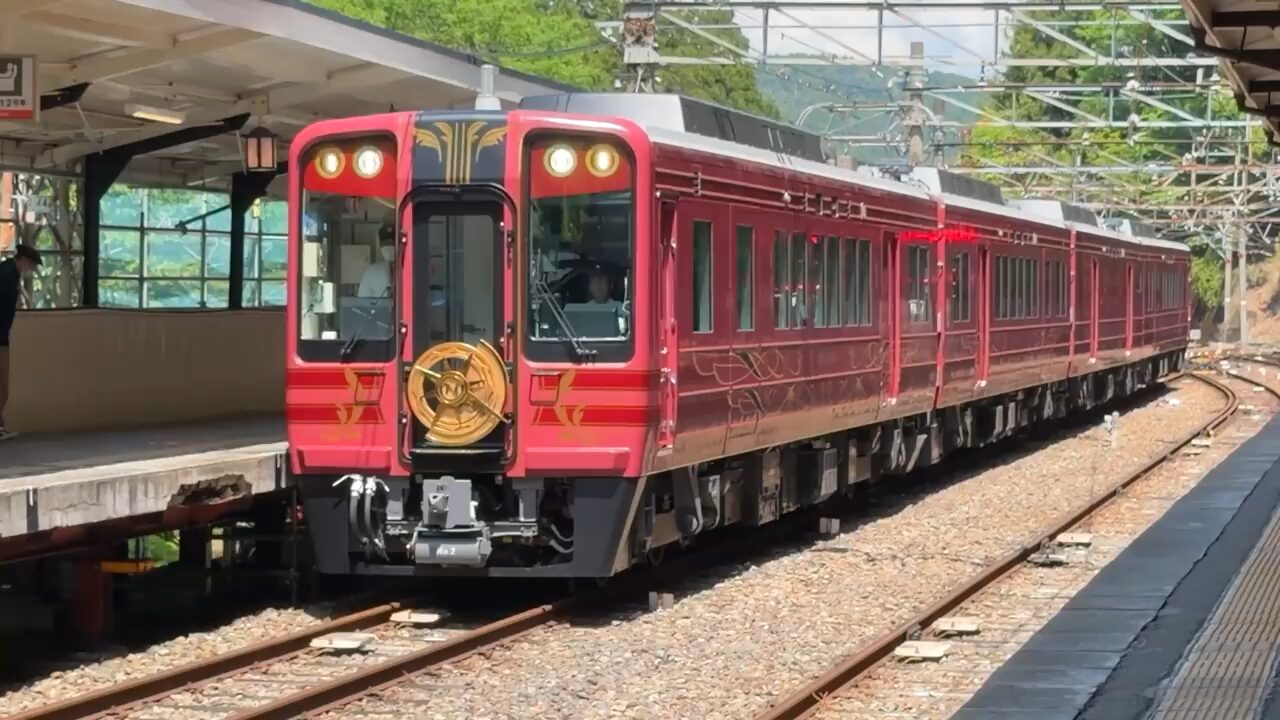
Gokurakubashi Station is a quiet terminus in Koya Town, Wakayama Prefecture — and the starting point for GRAN Tenku, one of Japan’s newest sightseeing trains. Operated by Nankai Electric Railway, GRAN Tenku only runs four times a day and began service on April 24, 2026.
GRAN Tenku’s Design and Japan’s First Dining Car in 100 Years
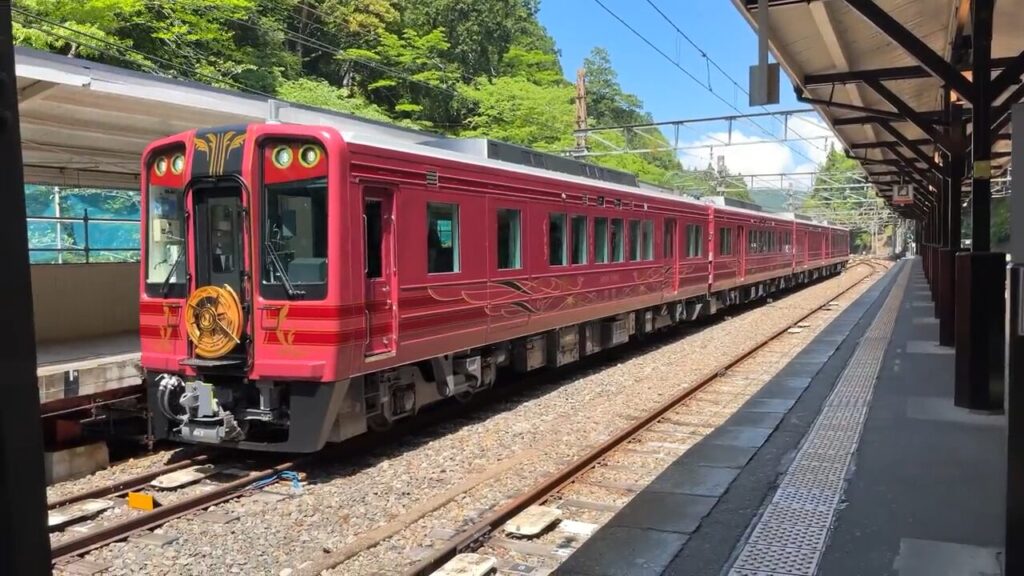
Built from a heavily modified 2000-series commuter train, GRAN Tenku marks the revival of a proper dining car for the first time in a century — and honestly, it feels less like a train and more like a hotel on rails. I picked up a slightly upgraded reserved-seat ticket for the roughly 90-minute GRAN Tenku journey between Namba and Gokurakubashi.
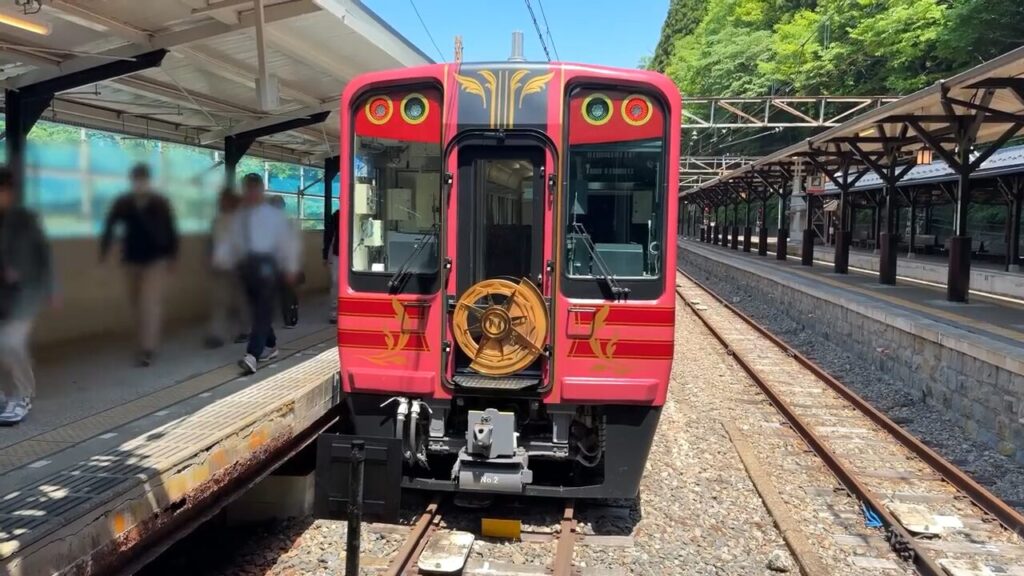
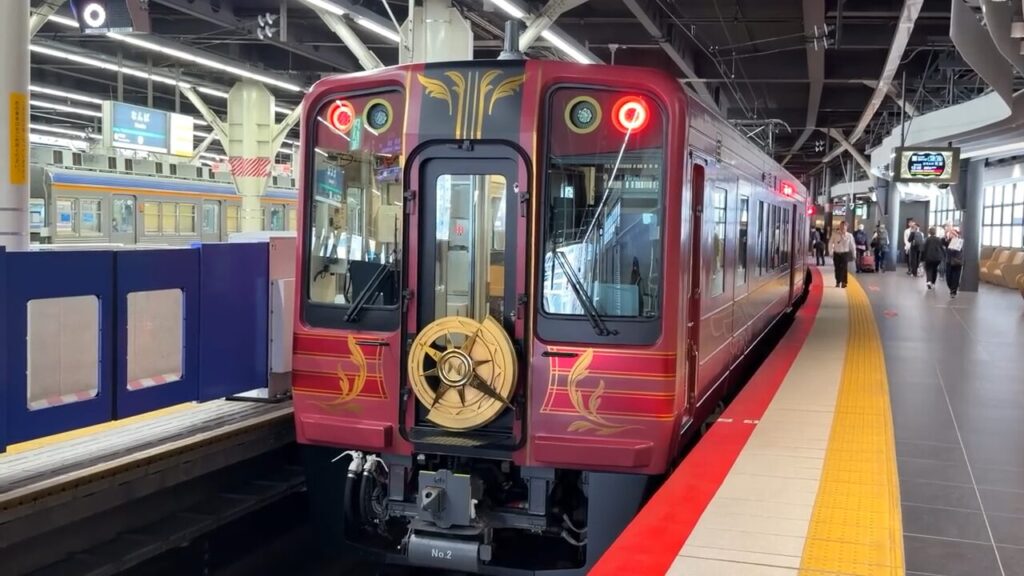
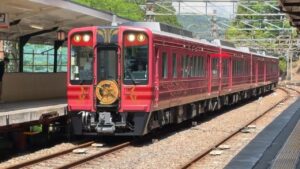
Waiting at Gokurakubashi Station, GRAN Tenku No. 1 approached with a deep crimson body visible from a distance — a color inspired by the Konpon Daito pagoda at Mount Koya’s Danjo Garan complex. With only four round trips a day across four fully reserved cars, GRAN Tenku is a genuinely rare train to catch.
The headmark design incorporates a “travel compass” motif, working in the initials of the towns along the line: Namba, Koyasan, Wakayama, and Kansai Airport. Riding GRAN Tenku requires both a passenger ticket and a separate reserved-seat ticket, purchased in advance.
The train is split into four very different cars: the Relax Seat in Car 1, the Wide View Seat in Car 2, the Lobby Lounge in Car 3, and the Gran Seat in Car 4. I explored each one over the course of the trip.
GRAN Tenku Gran Seat Review: Car 4’s Premium Seating
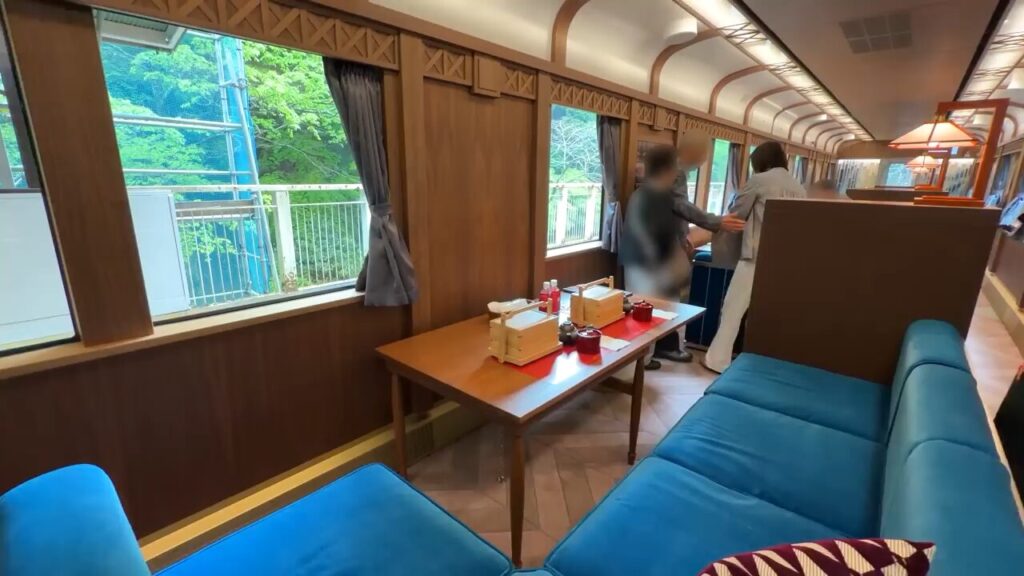
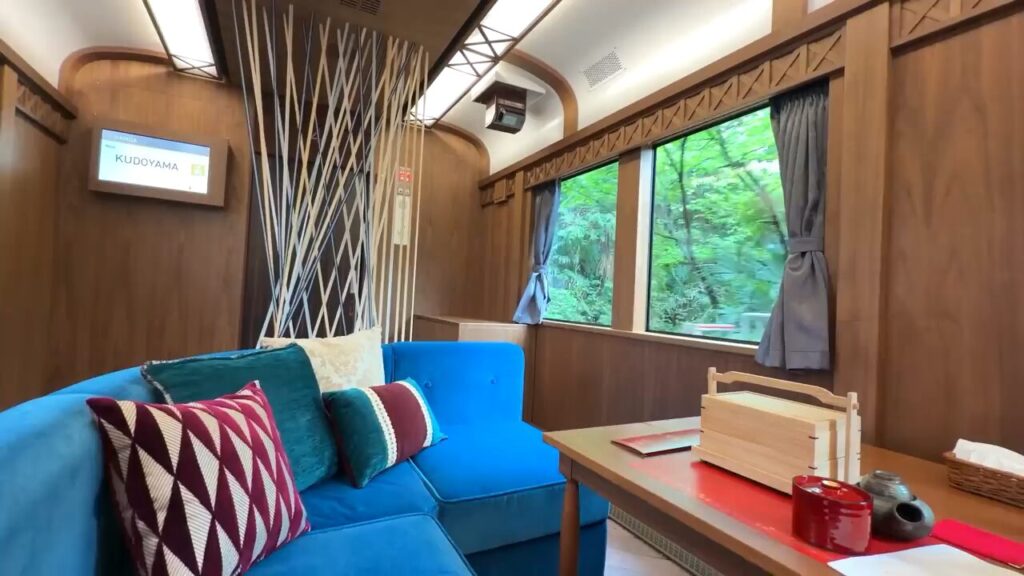
My GRAN Tenku journey started in the Gran Seat, a section only accessible to passengers who’ve booked it specifically. The sofa seating, built for up to four people, is remarkably spacious — comfortable enough that I said “this is seriously luxurious” out loud the moment I sat down.
Four noticeably high-quality cushions sit on the sofa, and opening the seat below the cushion fabric reveals a small hidden chair underneath — a playful, almost Matryoshka-doll-like touch. The ceiling has security cameras and each seat comes with a power outlet. Curtains are available for privacy, though I skipped them to enjoy the scenery.
Gran Seat passengers receive a welcome service of original konpeito candy and mineral water — even the bottled water, candy, and wet towel are branded for GRAN Tenku, a small but satisfying detail. Meals can be booked separately, but I opted for the full plan with food and free drinks included. A dedicated attendant serves the Gran Seat car, so ordering without leaving your seat is easy — and with the number of overseas visitors on board, the menu is available in English too.
GRAN Tenku Dining Car Menu: 12-Course Lunch Review
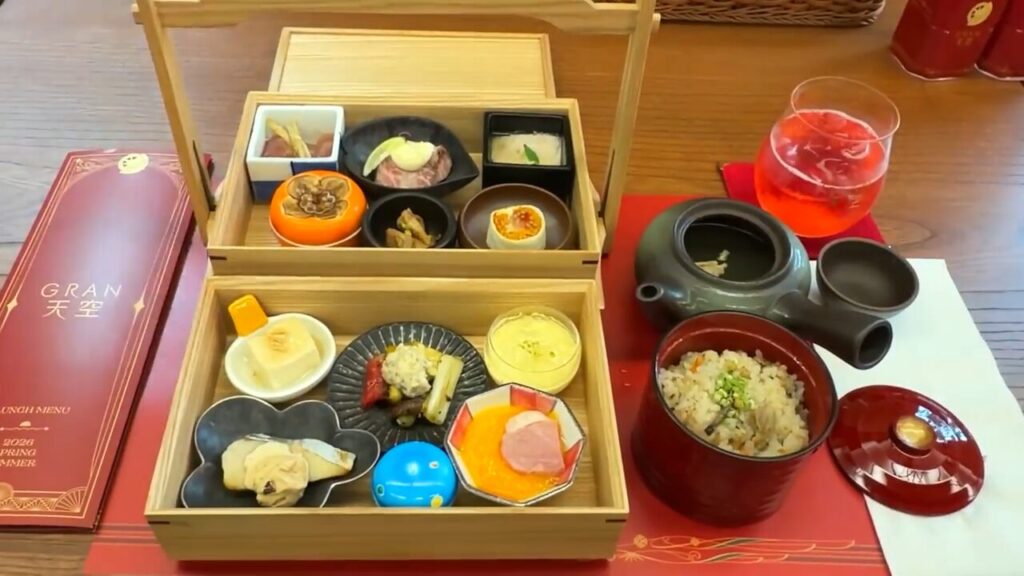
Then came the part I’d been looking forward to most. The GRAN Tenku menu changes by time of day — morning, lunch, or afternoon tea — and mine was the lunch course. The moment it arrived, I was struck as much by the presentation as the food itself: lacquered boxes, thoughtful tableware, real attention to detail.
A small pamphlet explained each dish, and the course features 12 creative plates built around local ingredients from southern Osaka and Wakayama. For my free drink, I went with plum wine and soda — having unlimited alcohol included is a genuinely nice touch.
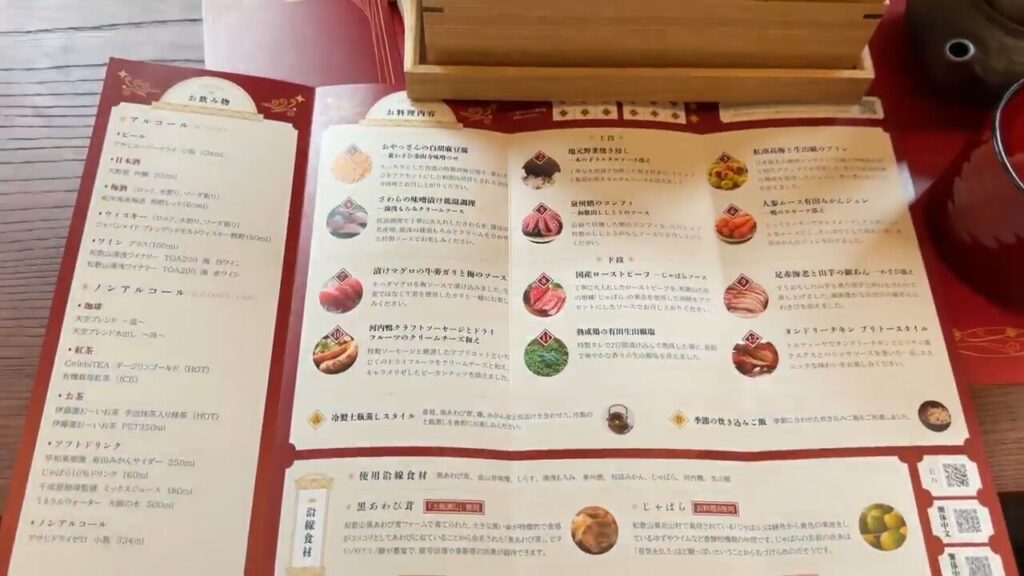
The first tier alone brought a string of new flavors: domestic roast beef with jabara citrus sauce, marinated tuna with burdock and plum, red-legged shrimp with yam and wasabi sauce, tandoori chicken in burrito style, aged chicken with fresh sansho pepper salt, and Kawachi duck sausage with dried fruit cream cheese. Every dish felt unfamiliar yet surprisingly delicious — I couldn’t put my chopsticks down.
Next came sesame tofu with leaf wasabi miso, slow-cooked mackerel in a moromi cream sauce, grilled local vegetables with mushroom tartar, octopus confit with shishito pepper sauce, carrot mousse with mandarin jelly and smoked duck, and a red plum pudding with fresh sansho pepper, served alongside seasonal mixed rice. It leaned distinctly Japanese in flavor, and the mountain section of track made for a slightly bumpy but memorable dining experience aboard GRAN Tenku.
A cold dobinmushi-style dish with black abalone mushroom, citrus peel, and chicken rounded things out. Between the number of courses and the overall experience, the time flew by.
A 5-Minute Stop at Kudoyama Station
Partway through the meal, GRAN Tenku paused for exactly five minutes at Kudoyama Station — enough time for many passengers to step outside for photos.
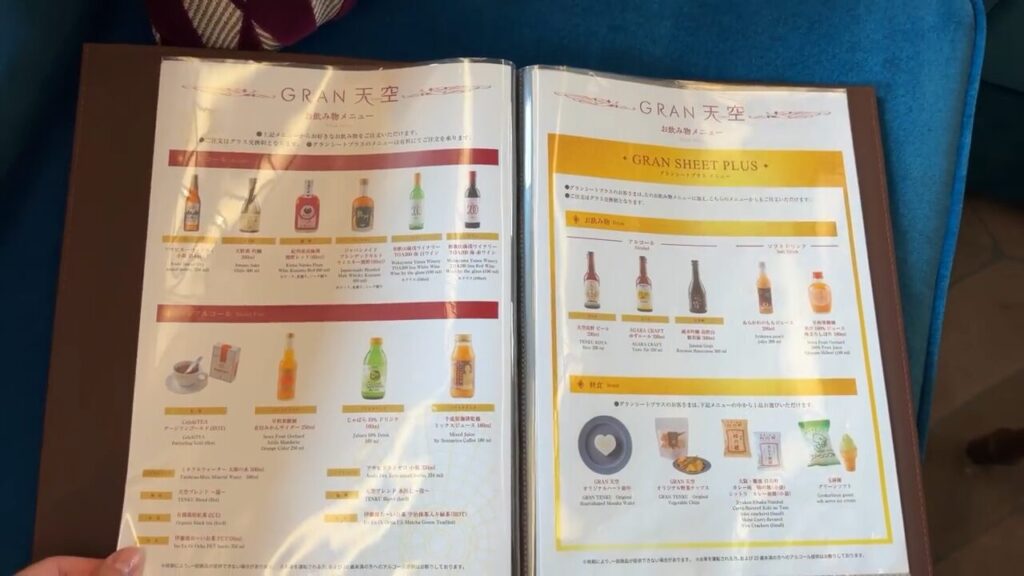
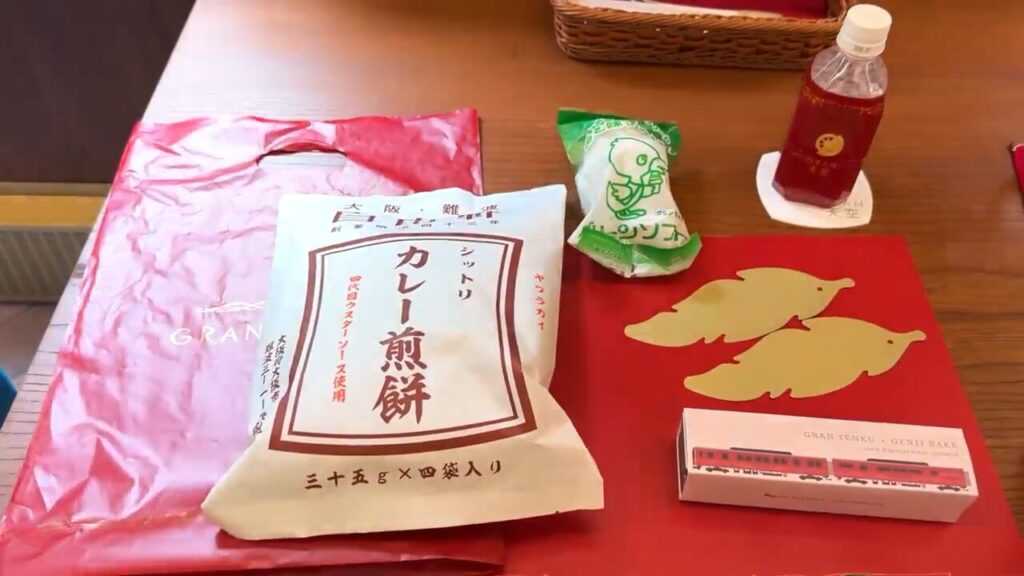
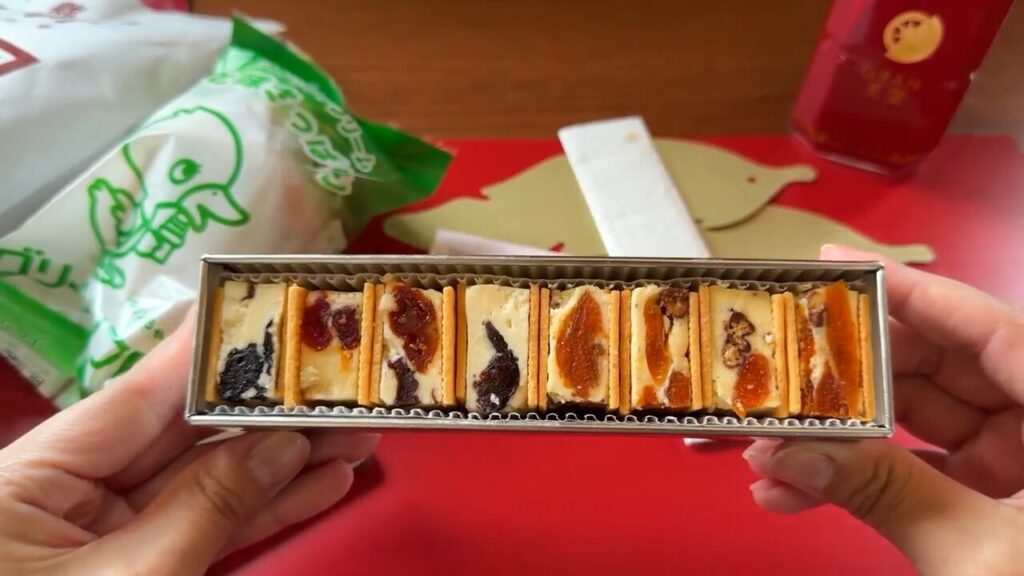
Afterward, I browsed the paid snack menu: curry-flavored rice crackers, soft-serve ice cream, and the GRAN Tenku butter sandwich set (8 pieces, 2,300 yen). Kept chilled, the sandwiches looked as good as they tasted — four raisin and four apricot-pecan, both excellent.
I also tried the “Green Soft” matcha soft-serve from Gyokurin-en, a well-known Wakayama shop — the matcha filling hidden inside was a nice surprise — along with curry rice crackers from Jiyuken, a popular Namba curry restaurant turned snack.
Gran Seat Plus: The Most Popular Seat on GRAN Tenku
At the very back of Car 4 sits Gran Seat Plus, a step up from the standard Gran Seat with better views and, reportedly, the most requested seat on the entire train. William Morris tile work decorates the walls — beautiful enough that I found myself staring.
Before long, GRAN Tenku had arrived at Namba Station. It was the kind of ride that makes you want to stay on board a little longer.
GRAN Tenku’s Wide View Seat: A Traditionally Japanese Ride
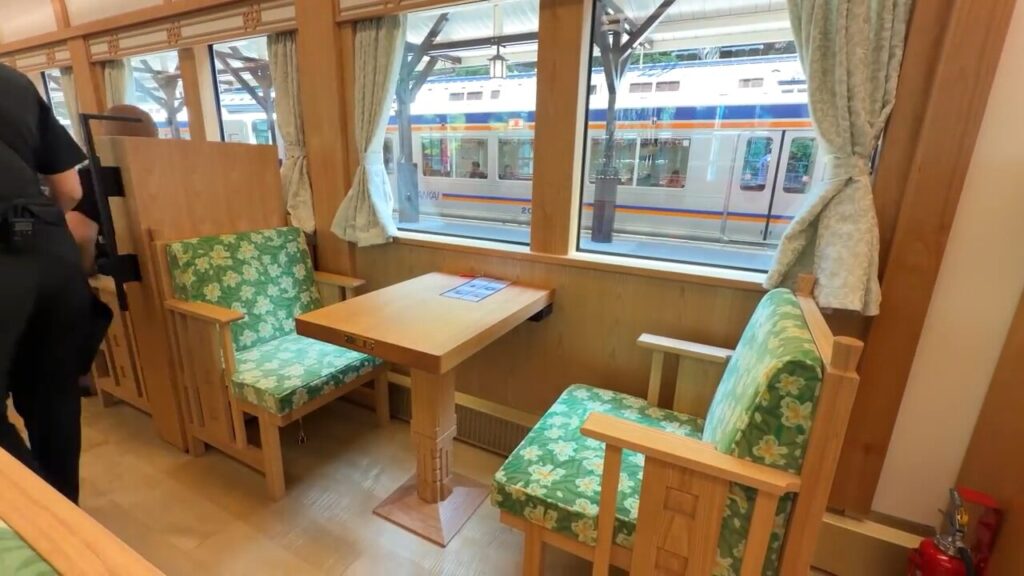
I also rode the Wide View Seat in Car 2, starting again from Gokurakubashi since I couldn’t book a reserved seat from Namba that day.
This car offers both table and counter seating, 30 seats total, positioned close to the windows for unobstructed views. Wood-finished tables and seating give the whole car a distinctly Japanese feel, complete with power outlets — and even the curtain colors change from car to car.
GRAN Tenku’s Lobby Lounge: Open to Every Passenger
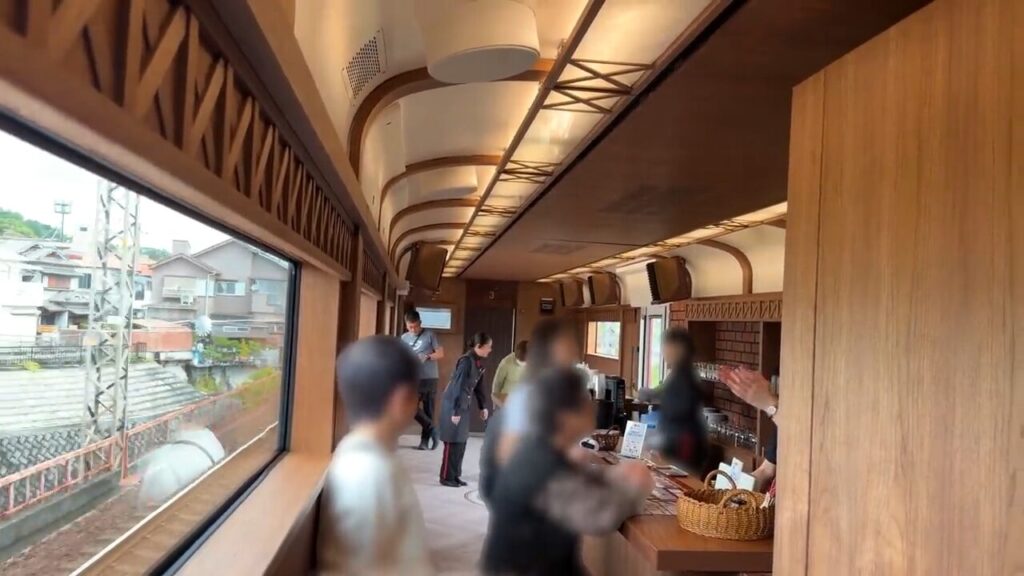
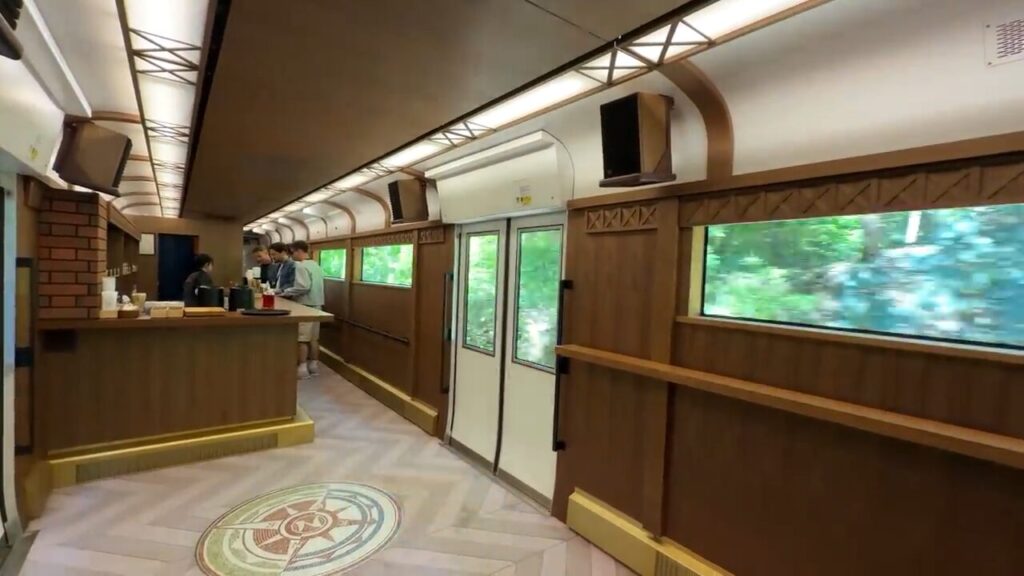
Car 3’s Lobby Lounge is open to all GRAN Tenku ticket holders, regardless of which car they’re seated in. The Tenku emblem seen on the exterior is embedded in the floor at its center.
The service counter hadn’t opened yet when I stopped by, but the open lounge area nearby offers excellent views. Passengers can take photos with the Tenku sign or stamp a commemorative card using a machine — simple enough for kids and adults alike.
The Car 3 washbasin uses a tin bowl crafted through Osaka’s traditional Naniwa suzuki metalworking technique, adding a touch of craftsmanship. There’s also a compact restroom.
From 540 Meters to 5: A Dramatic Descent
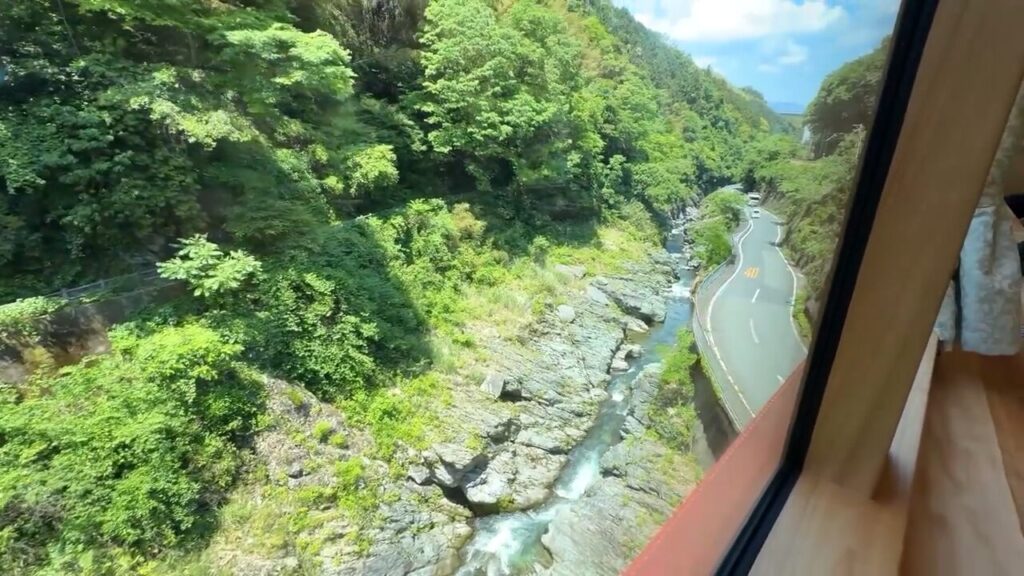
The scenery is one of the biggest draws of riding GRAN Tenku. Along the way, the train passes the Koyanoshita Station hotel building I’d stayed at once before, sparking a wave of nostalgia. Watching the elevation drop from roughly 540 meters at Gokurakubashi to just 5 meters at Namba, cutting straight through the mountains, is genuinely dramatic — a real sense of Japan’s rugged natural landscape.
A Small Detour at Onigiri Stand Kudo
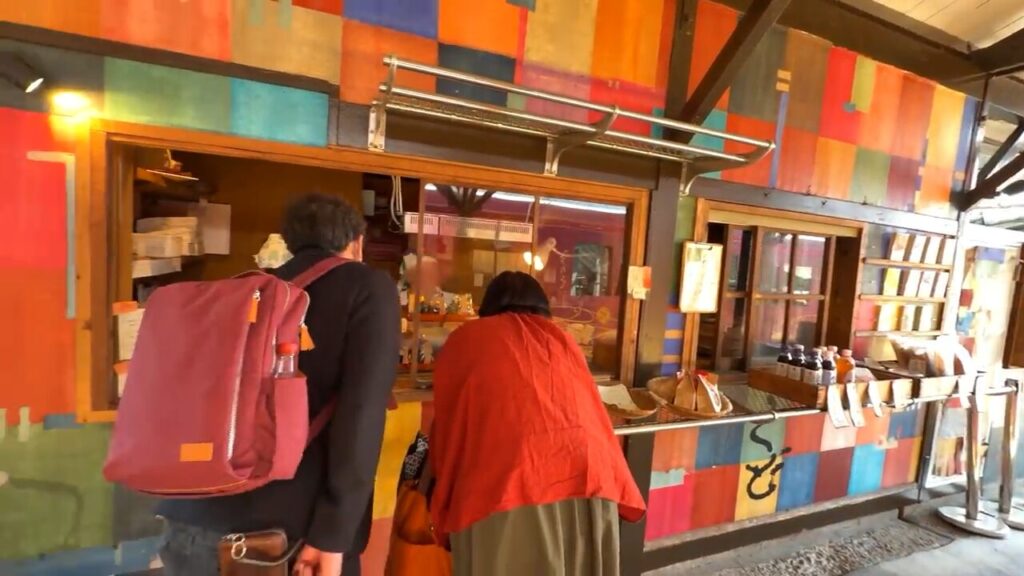
Back at Kudoyama Station for another five-minute stop, I made a dash for the “Onigiri Stand Kudo” on the platform.
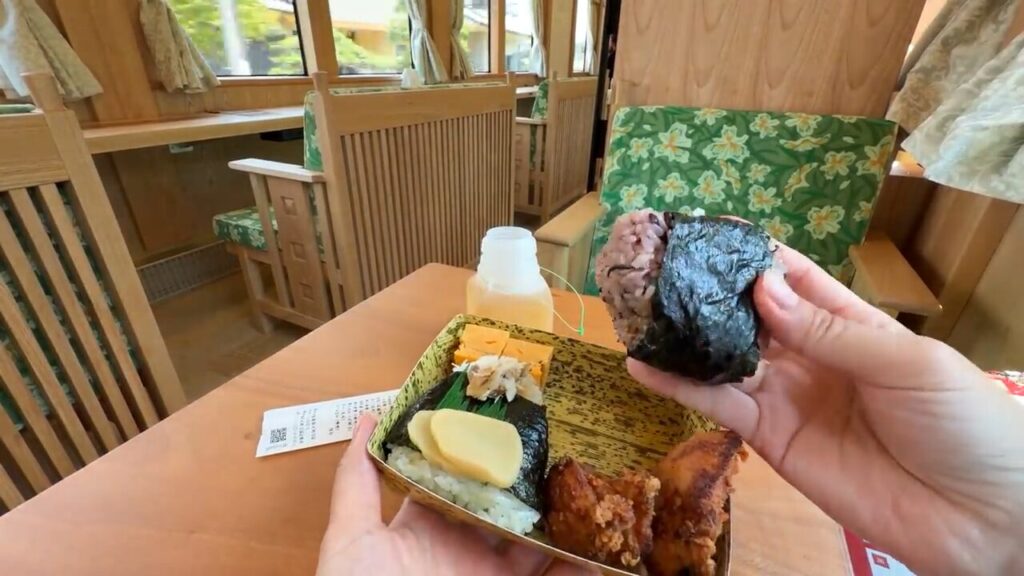
In the limited time available, I managed to grab a boxed lunch and roasted green tea, with local kids waving from the platform along the way. The rice is reportedly cooked over a wood-fired stove using locally grown grains, and the box included two types of rice balls, fried chicken, and a rolled omelet.
The meal was excellent — the kind of simple, well-made boxed lunch you could eat daily without getting tired of it. The fried chicken was crisp, the omelet lightly sweet and nostalgic. A short, slightly frantic errand, but well worth it.
Shopping at GRAN Tenku’s Onboard Service Counter
Once the train left Kudoyama, the Car 3 service counter finally opened, quickly drawing a crowd. The same items available to Gran Seat passengers are sold here, though Car 1 and Car 2 passengers need to come to this counter to buy anything.
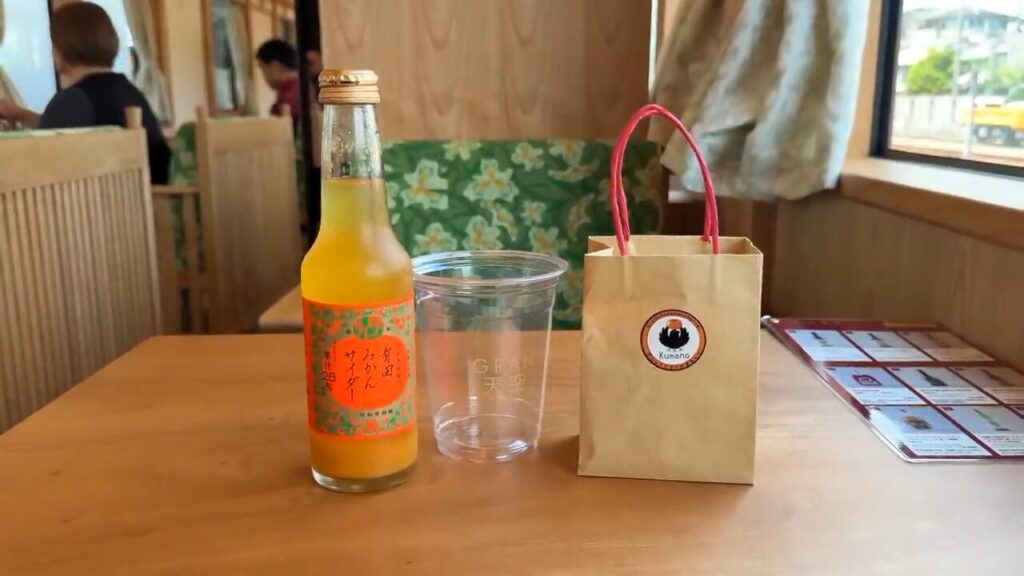
I picked up the original GRAN Tenku monaka (400 yen), Yura mandarin marmalade (1,000 yen), and Arida mandarin cider (500 yen). The cider had a light fizz and a clean citrus flavor, not too sweet. The heart-shaped monaka is a limited item — lucky if you manage to grab one, and it looked as good as it tasted.
The counter seats, meanwhile, have longer tables and more room, making them feel like their own private lookout over the scenery.
GRAN Tenku’s Relax Seat: A More Casual Way to Ride
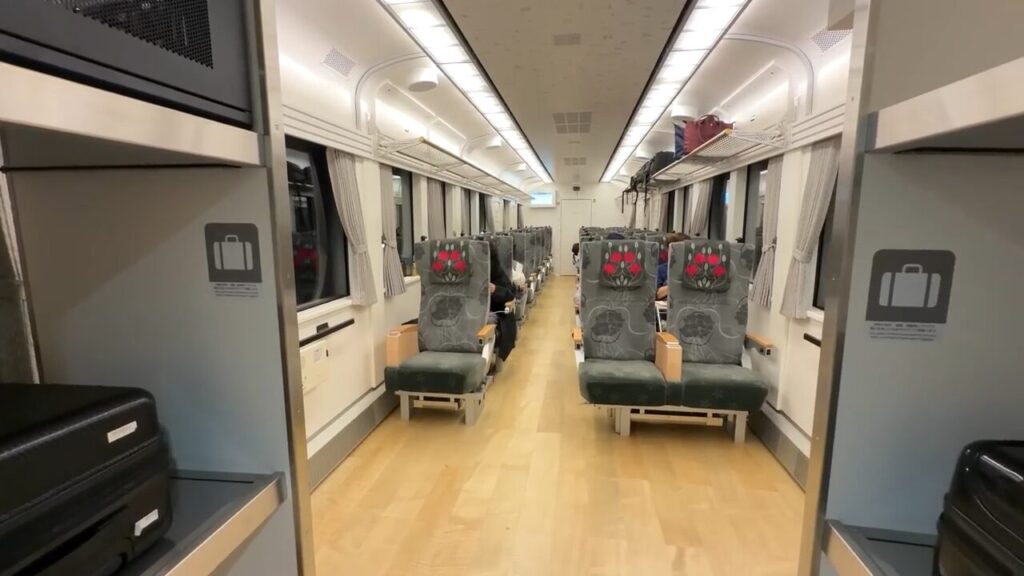
I also rode Car 1, the Relax Seat, on a separate day. Fully reserved, with 24 fully reclining seats, it’s described as the easiest car to book on GRAN Tenku.
Like the other cars, it comes with a menu and wet towels, plus ceiling artwork depicting the history of the line. Onboard sales are available here too.
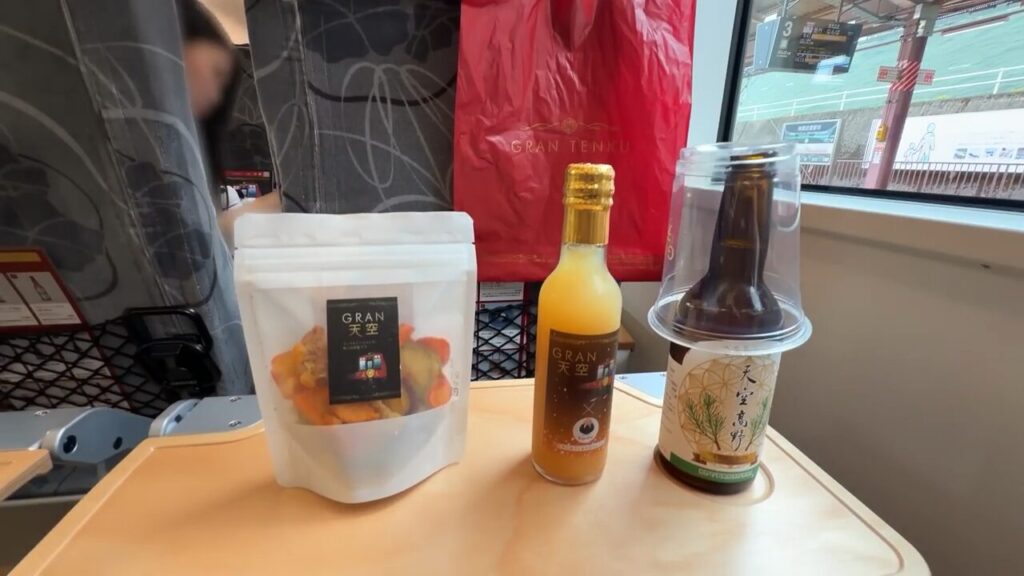
I tried the original GRAN Tenku craft beer, “Tenku Koya Beer” (1,000 yen) — a midday drink is one of travel’s small luxuries — paired with original vegetable chips (500 yen), made from a mix of real vegetables and genuinely tasty. I also had the Arakawa peach juice (700 yen), rich enough to taste like eating an actual peach.
Each seat includes a fold-down table plus a second hidden table inside the armrest, useful when seats are turned to face each other. The area behind the seats includes wheelchair space, and there’s luggage storage near the doors, along with a restroom and washbasin between Cars 1 and 2.
Arriving Back in Namba
Returning to the Wide View Seat, the car filled up as GRAN Tenku approached Namba, the scenery shifting from mountain green to cityscape. Short as the ride was, it felt complete and satisfying.
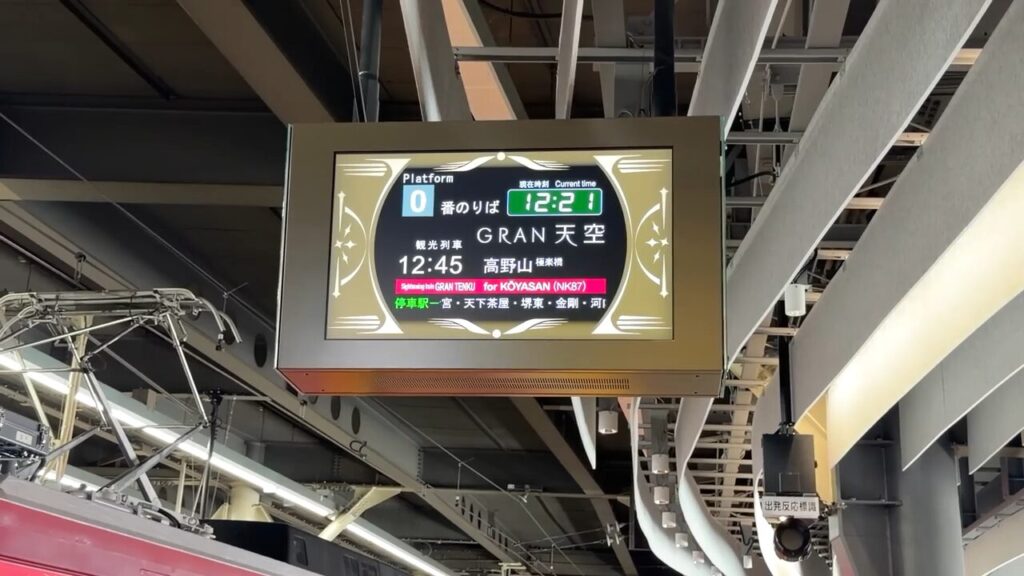
Platform 0 at Namba Station is reportedly dedicated exclusively to GRAN Tenku. If a trip to Koyasan is on your itinerary, this train is worth building your schedule around. You can check current schedules and reservations on Nankai Electric Railway’s official site.
Final Thoughts on Riding GRAN Tenku
Between the food, the scenery, the interior design, and a small onigiri-stand adventure along the way, the 90-minute ride went by in a flash. GRAN Tenku is the kind of train that leaves you wanting to book it again — with just a touch of wistfulness as the city comes back into view.
If you’re curious about other unique ways to experience Japan beyond the usual sightseeing spots, check out our review of Yoro Land, a retro amusement park easily combined with a Kansai-area trip.
GRAN Tenku Quick Facts
- Route: Namba Station to Gokurakubashi Station (Nankai Electric Railway)
- Frequency: 4 round trips per day
- Ride time: Approximately 90 minutes
- Also visited: Onigiri Stand Kudo, Kudoyama Station platform
Comments