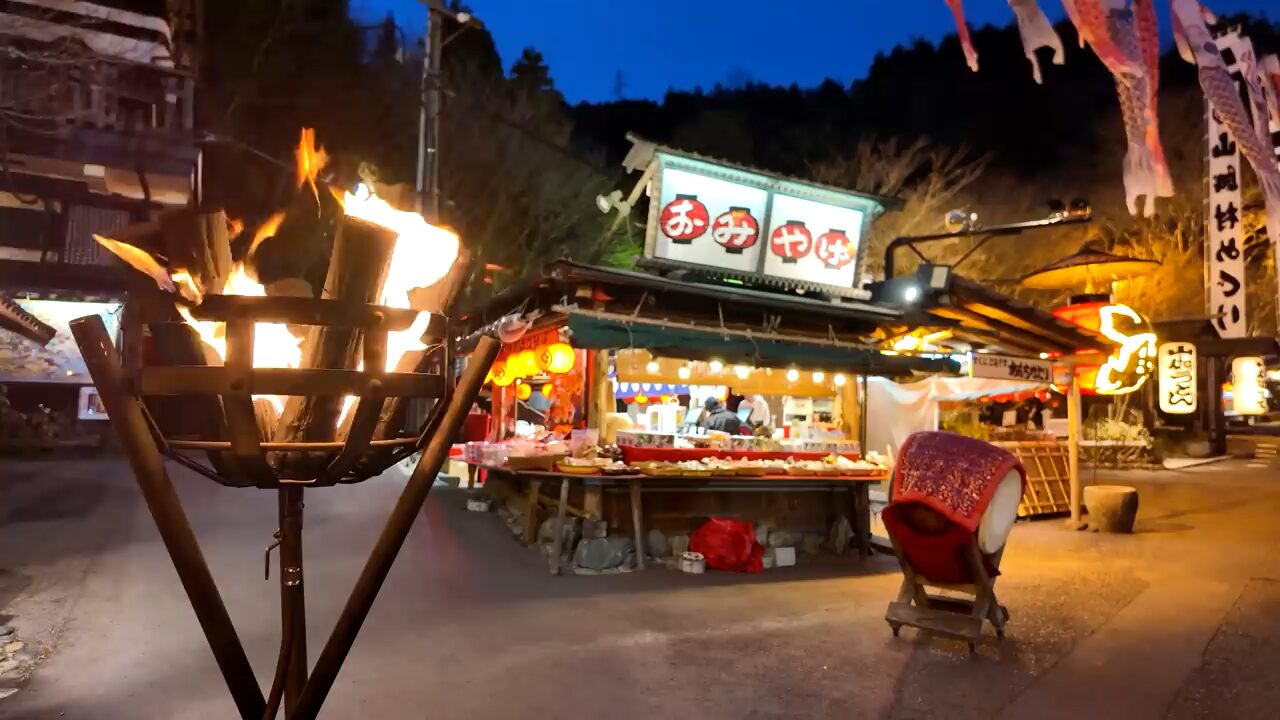
A Mysterious World Deep in the Mountains
Some restaurants are worth a detour. Irori Sanzoku is worth an entire road trip. Tucked deep in the mountains of Yamaguchi Prefecture, this legendary drive-in restaurant looks less like a place to eat and more like a portal into feudal Japan — or a scene ripped straight out of a Studio Ghibli film.
Driving through the forest, there’s no warning before it suddenly appears: rows of blazing torches and glowing lanterns lighting up the darkness. On a random weekday, the parking lot was already completely full. This is Irori Sanzoku, and it’s considered a rite of passage for locals in Yamaguchi and Hiroshima — the kind of place almost everyone visits at least once after getting their driver’s license.
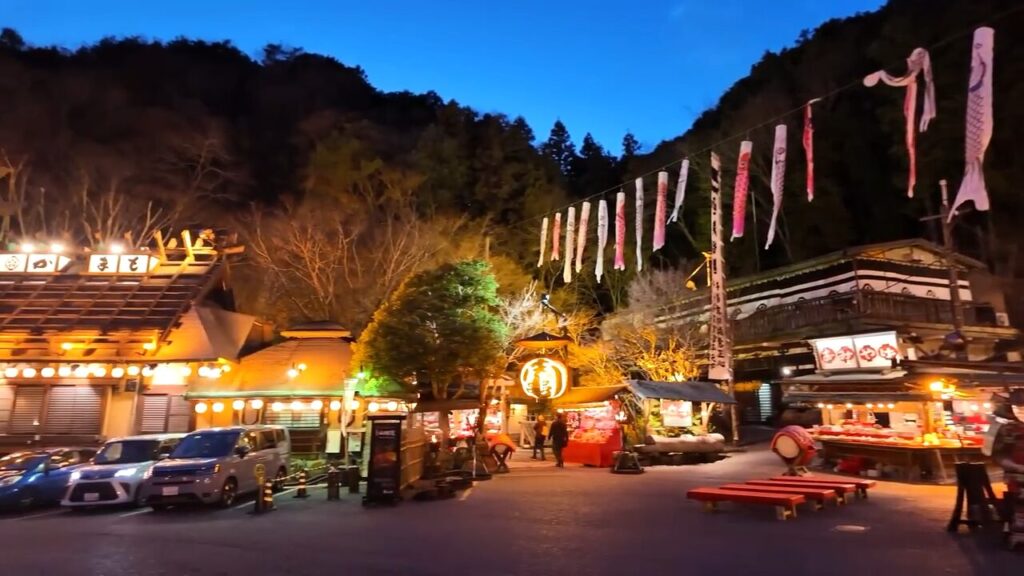
A Family Restaurant Disguised as a Bandit Hideout
Despite its wild, otherworldly appearance, Irori Sanzoku is, technically, a family restaurant — run by a company with the delightfully odd name “Family Restaurant University.” The concept was inspired by the bandits (sanzoku) from Akira Kurosawa’s classic film Seven Samurai, and the theming goes all-in: burning torches line the entrance, and a giant drum sits out front for any visitor to play.
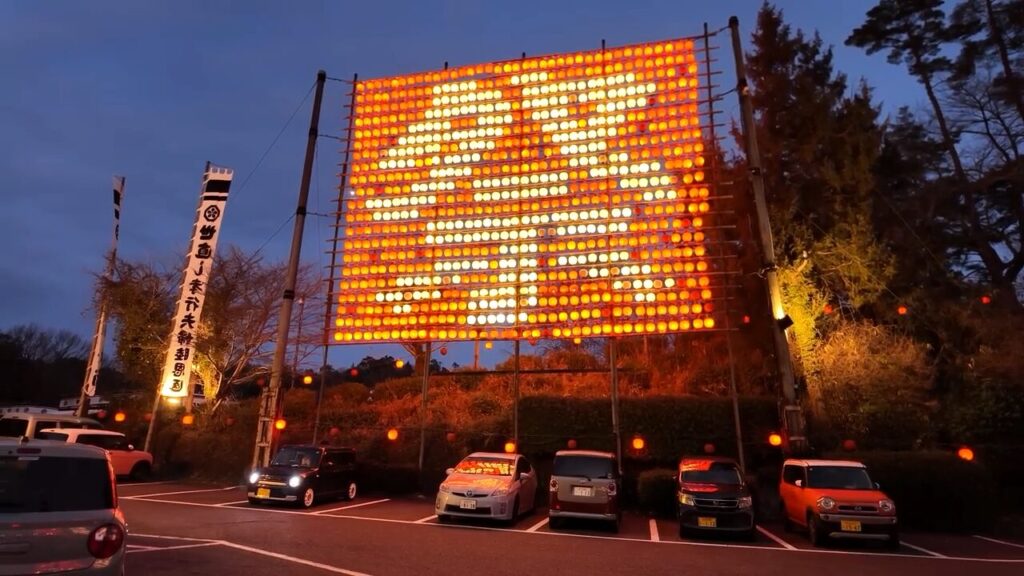
Stepping through the gate feels like crossing into another dimension entirely. The property is enormous, and the restaurant is only the beginning — there’s also a shrine, an artificial waterfall, gift shops, and multiple dining buildings scattered across the grounds.
A Slice of History: Open Since 1971
Irori Sanzoku has been serving guests since 1971, and its roots go back even further than the current Kuga location. The restaurant actually started as an izakaya in Hiroshima City before relocating to its current spot along a busy national highway. As its popularity grew, the building kept expanding — piece by piece — until it became the sprawling complex it is today. At its peak, Sanzoku welcomed around 400,000 visitors a year, making it one of the most beloved drive-in destinations in the entire region.
The Kuga branch (there’s a second location in Nishiki) is the largest of the two, home to three separate dining buildings: Irori Sanzoku, Kamado, and Torian — each with its own distinct atmosphere, though they share largely the same menu.
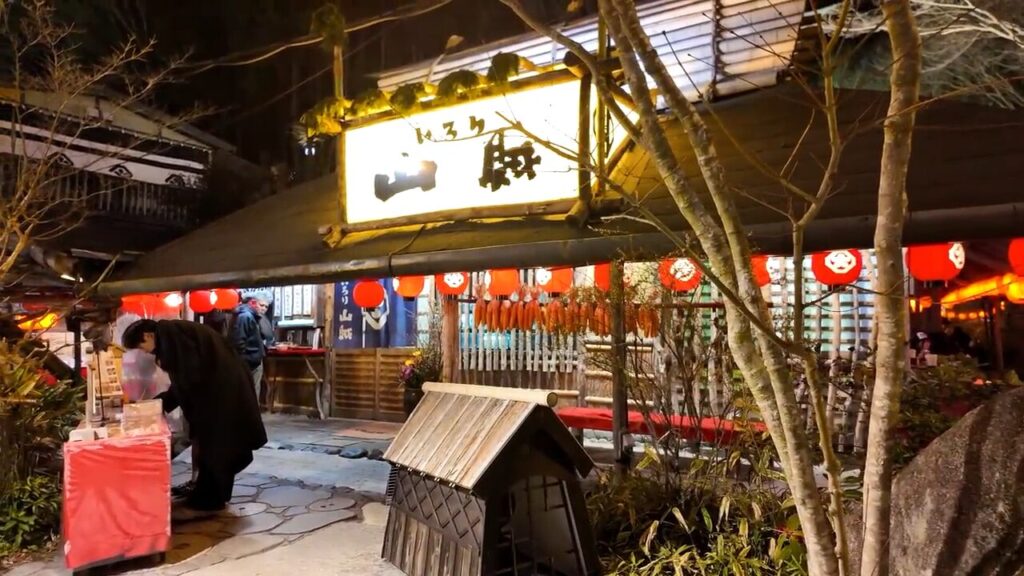
Ordering Bandit-Style
At Irori Sanzoku, you pay first. Once you’ve decided what to order from the delightfully unconventional menu, you write your choice down on a slip of paper — an old-school ordering style you rarely see anymore — then head off to find a seat, wherever you like.
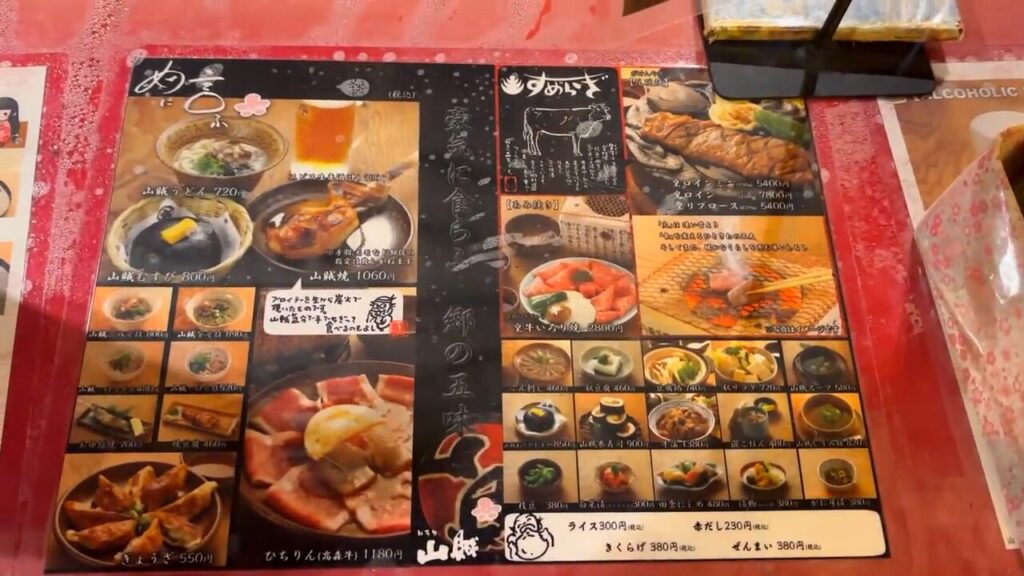
And finding a seat is half the fun. Outdoor tables are scattered throughout the property, including small private huts, each equipped with a heated kotatsu table for winter dining. The whole scene has the energy of a festival, or a countdown to New Year’s — glowing lanterns, warm food, and crisp mountain air. It genuinely feels like stepping into a dream, or a frame from a Ghibli film.
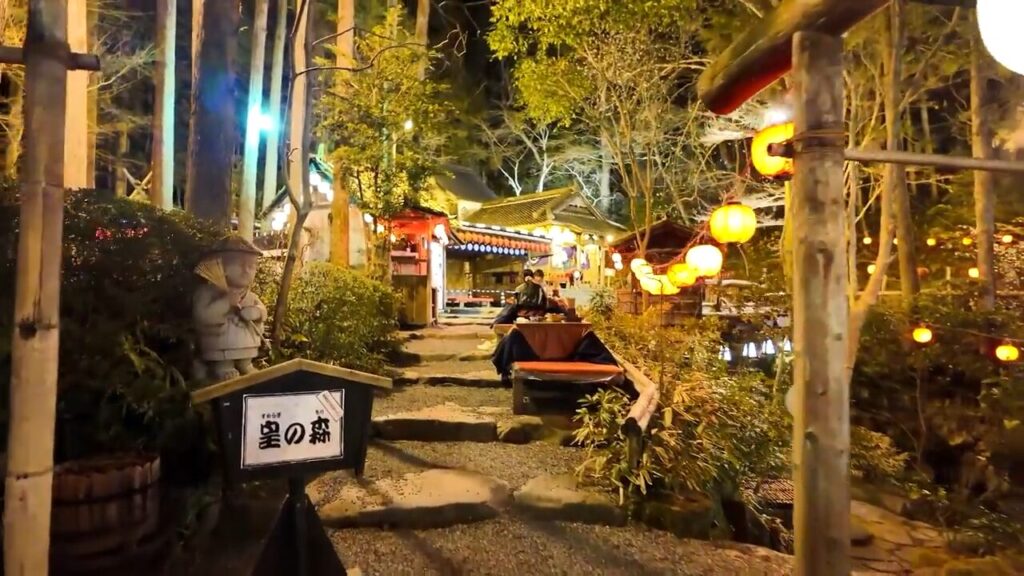
What to Eat: Sanzoku-Yaki and More
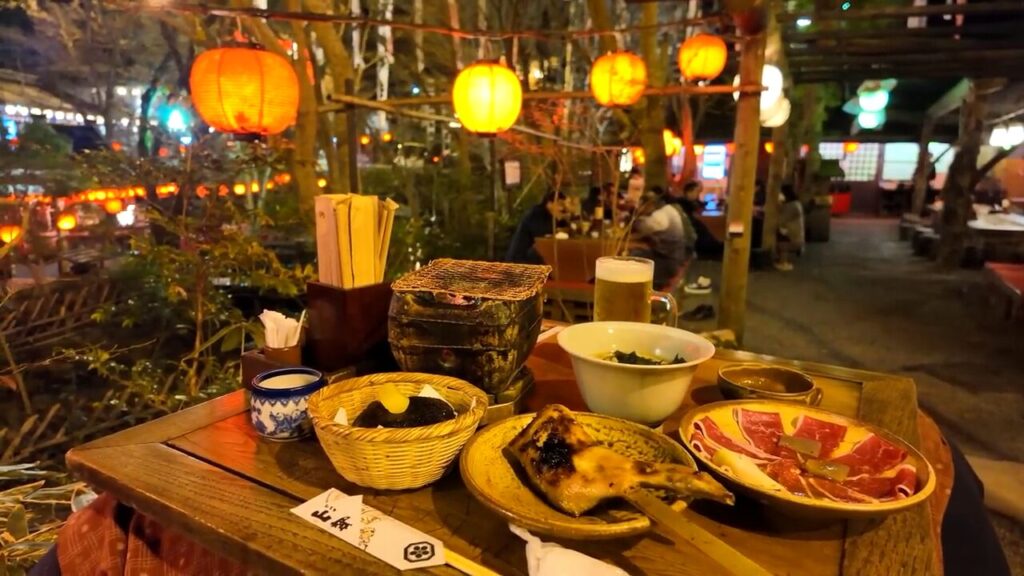
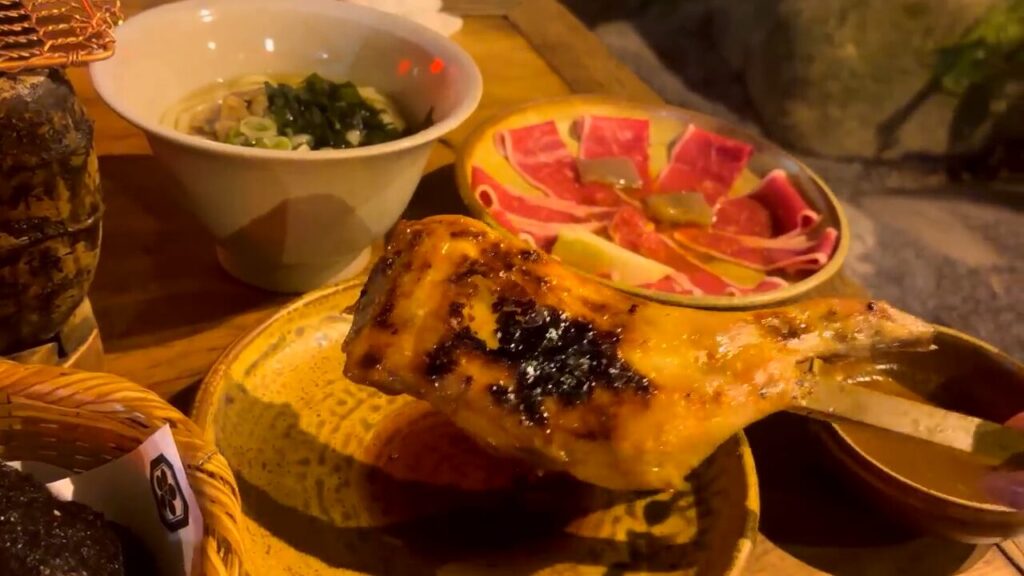
The restaurant’s most famous dish is Sanzoku-yaki, a massive skewer of charcoal-grilled chicken leg meant to be devoured with both hands, bandit-style. The skin comes out perfectly crispy, and simply watching it grill over the open charcoal fire is entertainment in itself.
Other standout menu items include:
- Sanzoku-musubi — an enormous rice ball stuffed with salmon, kelp, and pickled plum. It was created by the restaurant’s founders, a working couple who wanted to give their children something filling and nutritious.
- Sanzoku-udon — handmade noodles in a rich, carefully crafted dashi broth so good you’ll want to drink every last drop.
- Hichirin (charcoal-grilled beef) — raw cuts of locally sourced Takamori Beef from Iwakuni, grilled tableside on a small brazier and dipped in a light, flavorful sauce.
Even the condiment containers on the table are designed with bandit flair, right down to the wooden box holding the shichimi pepper flakes.
A Shrine, a Waterfall, and Plenty of Playful Surprises
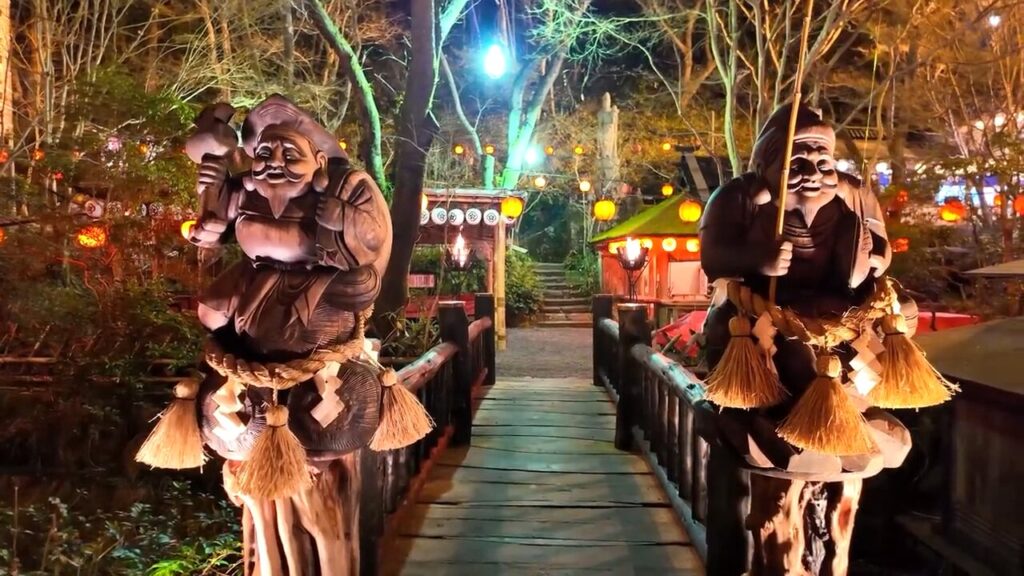
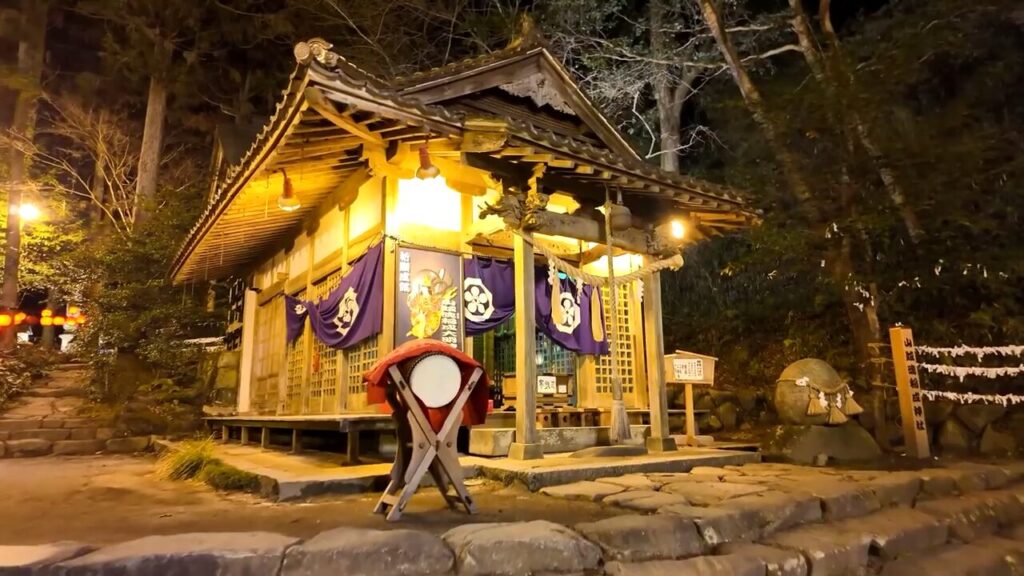
Wander further into the property and you’ll find the Kawachi Daimyojin shrine, which was relocated here after Irori Sanzoku was asked to help preserve it when the original shrine faced collapse due to rural depopulation. It’s unstaffed, with amulets sold on a self-service basis, and a natural spring feeds the purification fountain out front. There’s something quietly moving about the fact that this shrine still exists today, purely because Sanzoku chose to save it.
The shrine also sells fortune slips, including a “Love Oracle” omikuji for anyone curious about their romantic future. Beyond the shrine, guests can wander past a hand-built artificial waterfall, try a free game of ring toss, or simply explore the meticulously maintained grounds — a level of playful, handcrafted detail that feels almost impossible to recreate in modern Japan.
Kamado and Torian: More to Explore
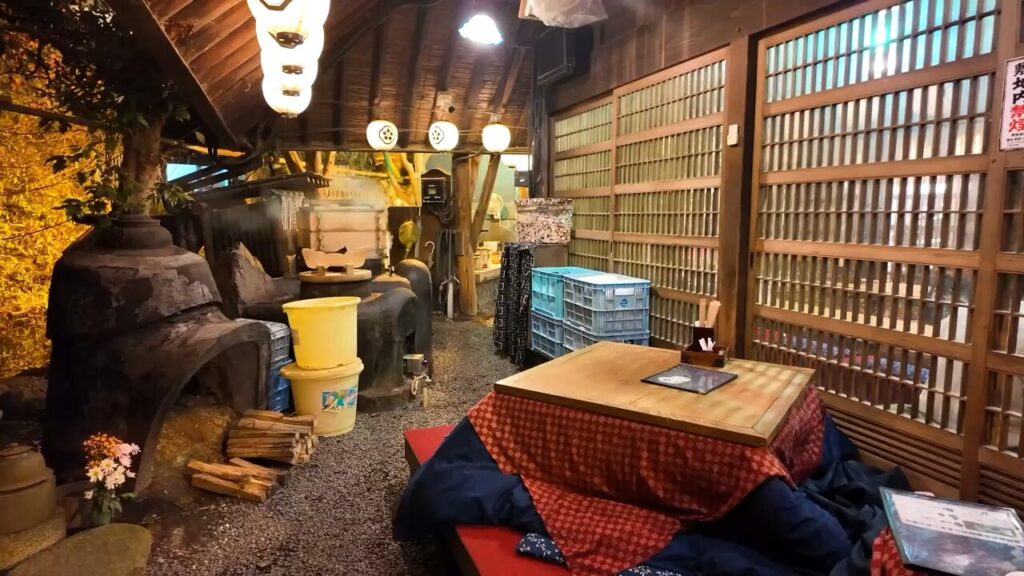
Next door to the main restaurant is Kamado, sharing the same menu but with its own distinct charm — including a newly completed waiting room, finished this past February and renovated entirely by Sanzoku’s own in-house carpenters. A koi pond sits just outside, and every corner of the property feels like it belongs in an animated film.
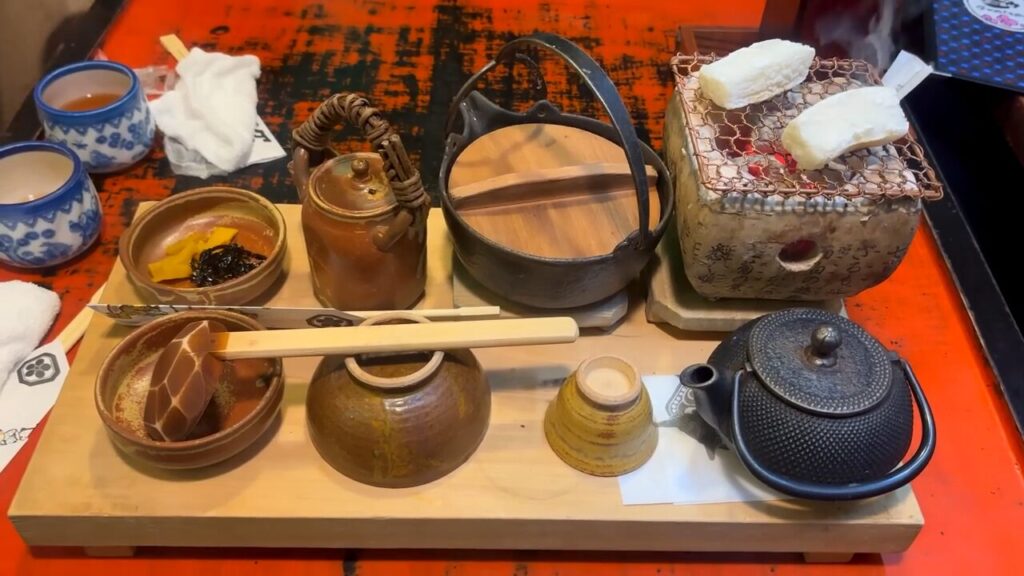
Inside, Kamado offers a different ordering system — simply call a server over — and it’s the perfect spot to try Inaka Zenzai, a traditional sweet red bean soup served with charcoal-grilled mochi. Dip the mochi back into the soup and grill it a second time, and it comes out irresistibly soft. Portions here are generous, so it’s best shared with a group.
Despite the scale of the operation, Kamado is currently run by just two staff members — a reflection of the labor shortages facing rural Japan. It’s genuinely impressive how spotless and well-kept everything remains, even with so few hands on deck.
Souvenirs and a Festival Atmosphere
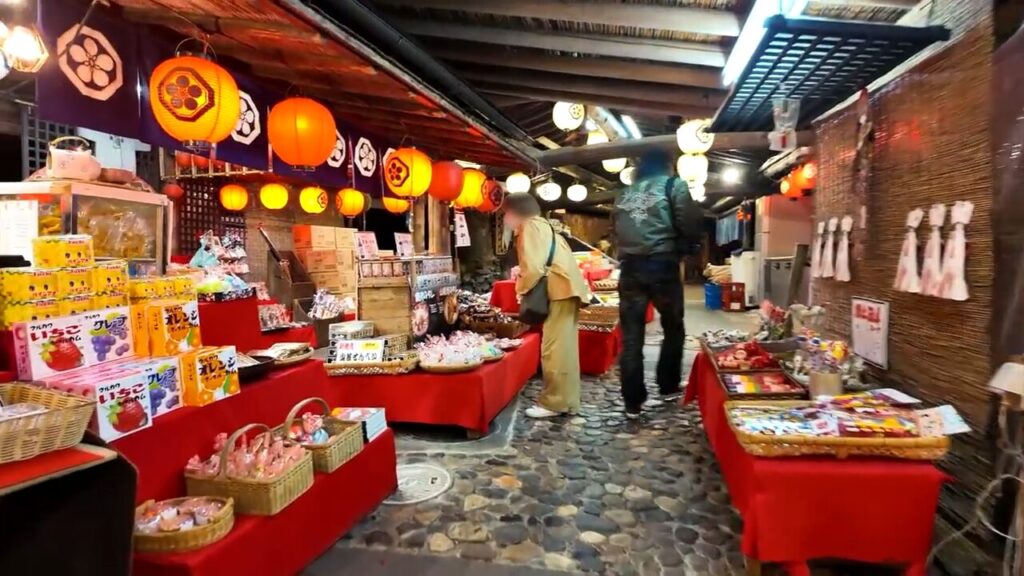
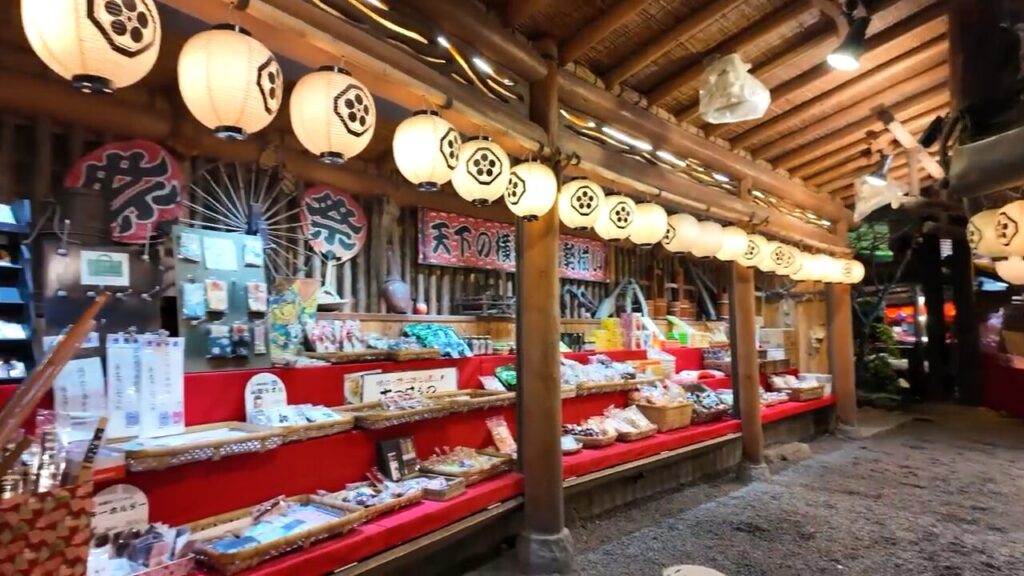
Before heading out, be sure to stop by the gift shop, where retro toys you rarely see anymore sit alongside original Sanzoku towels and snacks. The whole space carries more festival energy than an actual festival stall — a nostalgic throwback to a bygone era that the restaurant has worked hard to preserve.
Visitor Info and Final Thoughts
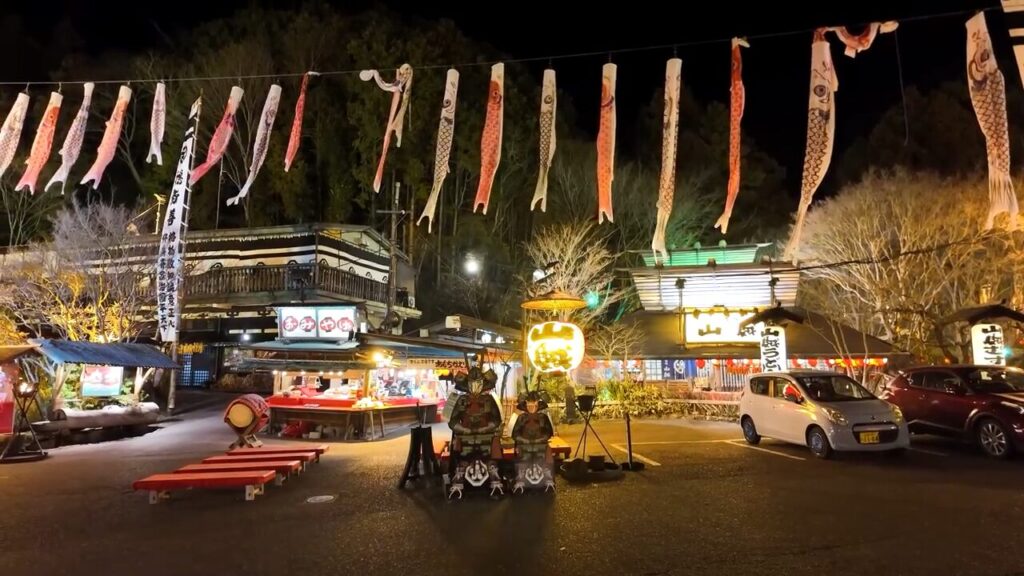
Irori Sanzoku is open late, until 11:00 PM, and the mountain setting makes an evening visit especially magical — the torches and lanterns create a glow you won’t find anywhere else. It’s a bit of a trek to get there, but it’s hard to imagine anyone leaving disappointed. If you’re driving through the area, pairing your visit with nearby Nagasawa Garden makes for an even fuller day trip.
Shop Information
Irori Sanzoku (Kuga Branch) Address: 1380-1 Kugamachi, Iwakuni, Yamaguchi 742-0314 Hours: 10:00 AM – 11:00 PM (Last Order 10:00 PM)
Comments