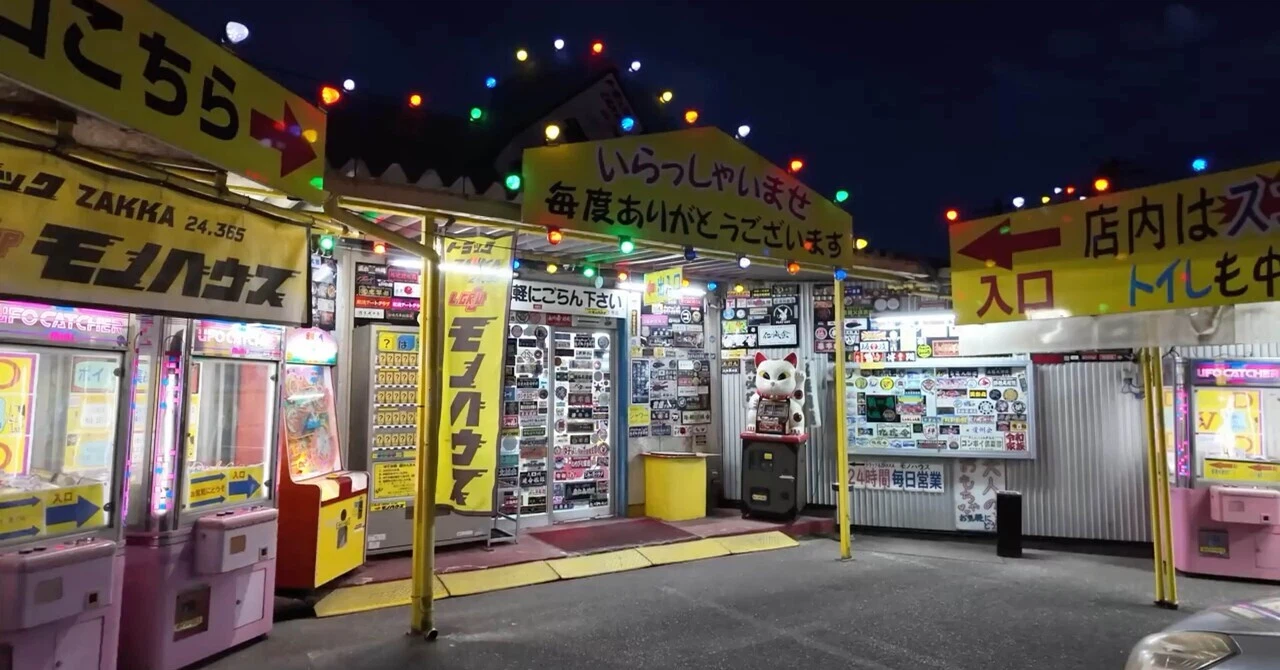
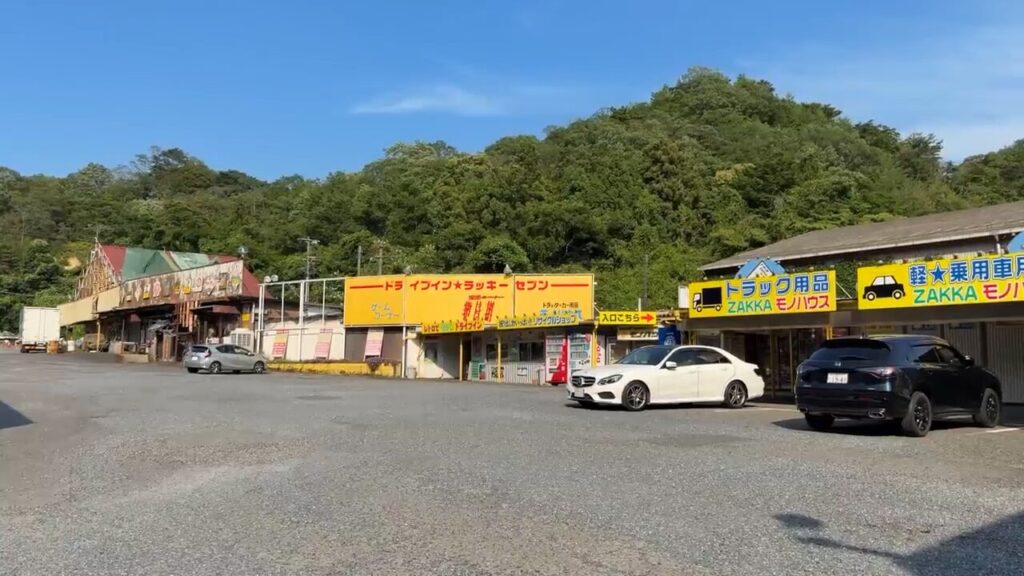
Along National Route 2 in Shunan City, Yamaguchi Prefecture, there’s a rumor that a real-life “dreamcore” world exists — the kind of surreal, internet-famous aesthetic you’d expect to only see in AI-generated images. So I went to find out for myself. The destination: Truck Shop Monohouse, officially known as “Lucky Seven Monohouse.”
It’s open 24 hours a day, 365 days a year, and this year marks its 47th year in business — making it one of the most retro drive-ins still standing in Japan. I spent an entire day wandering through it, and here’s what I found.
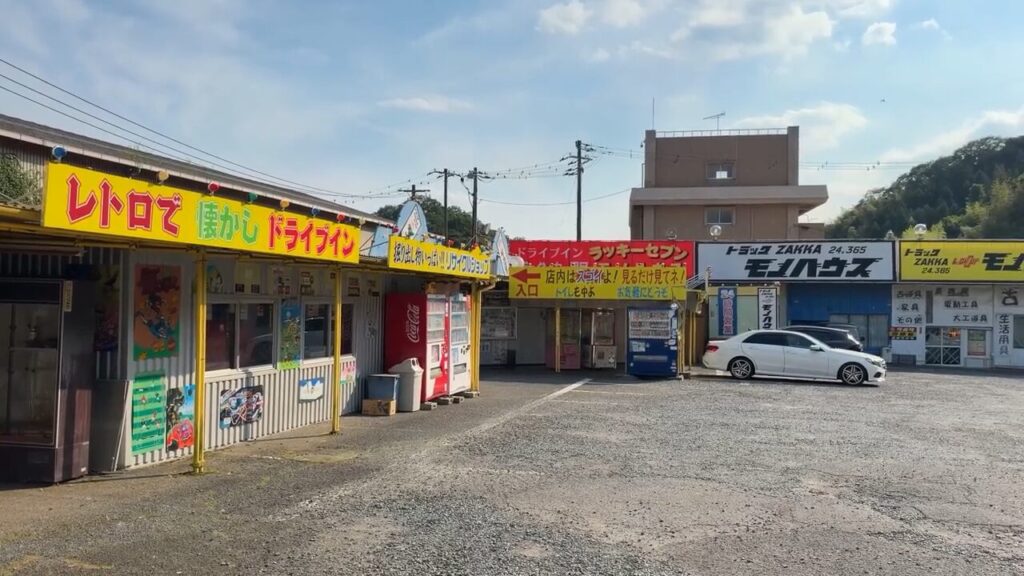
An exterior so unusual it takes courage just to walk in
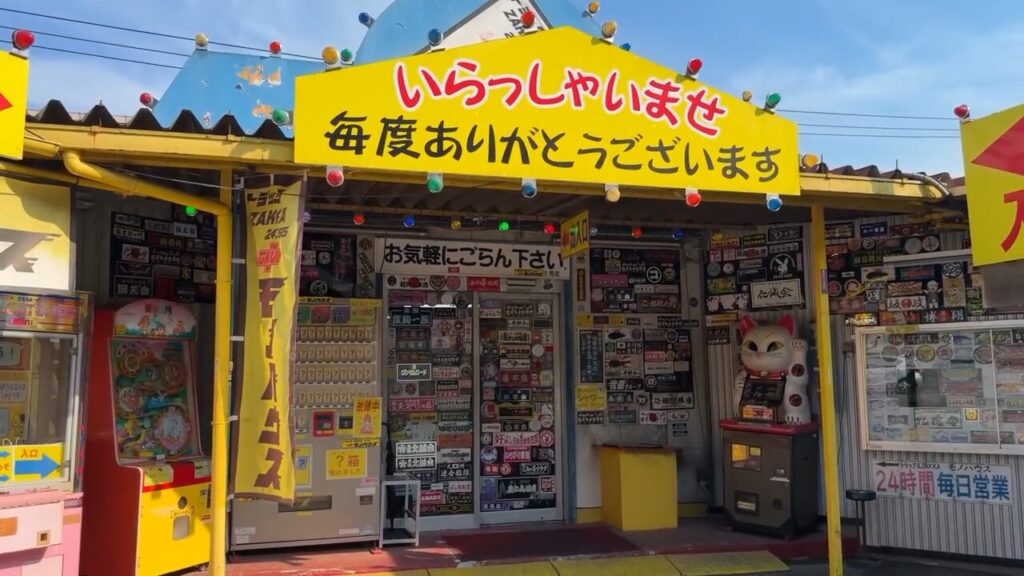
Arriving on site, my first reaction was pure nerves — “I guess this is the place.” The atmosphere was unlike any other drive-in I’d visited, and honestly, walking through the front door felt intimidating.
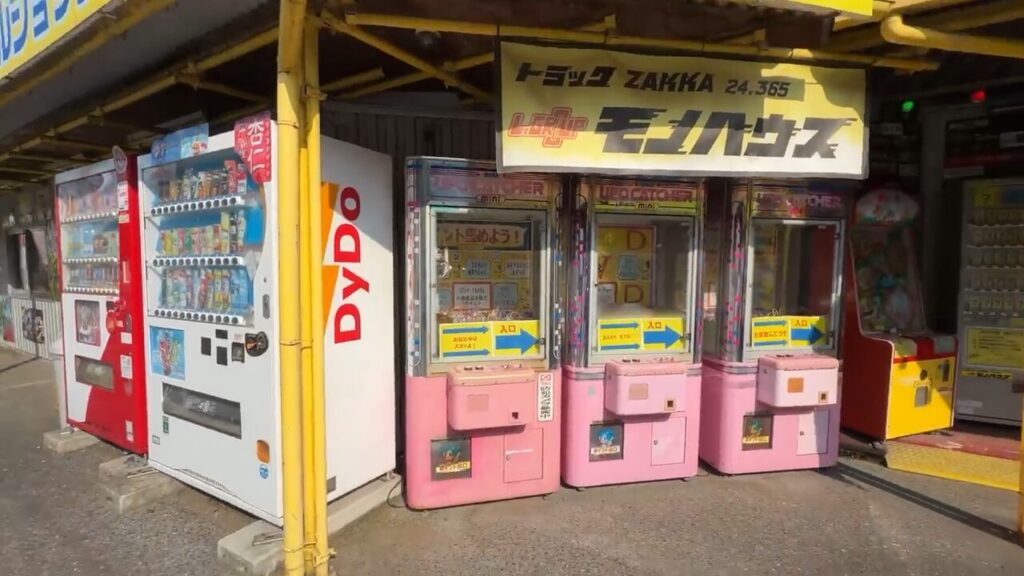
Strange background music played at the entrance, and the walls were absolutely covered in stickers with a lot of personality. It felt like stepping into a world an AI might dream up, except this one is completely real — a gap that was hard for my brain to process. A crane game near the entrance was stacked with all kinds of prizes, giving off serious “man’s paradise” energy. Anyone under 18 needs to be accompanied by an adult to enter.
Working up the nerve to approach, I was relieved to find the place felt more welcoming than expected — a “everyone’s welcome” kind of energy. I got permission to take photos under certain conditions and finally stepped inside.
An overwhelming truck-supplies section
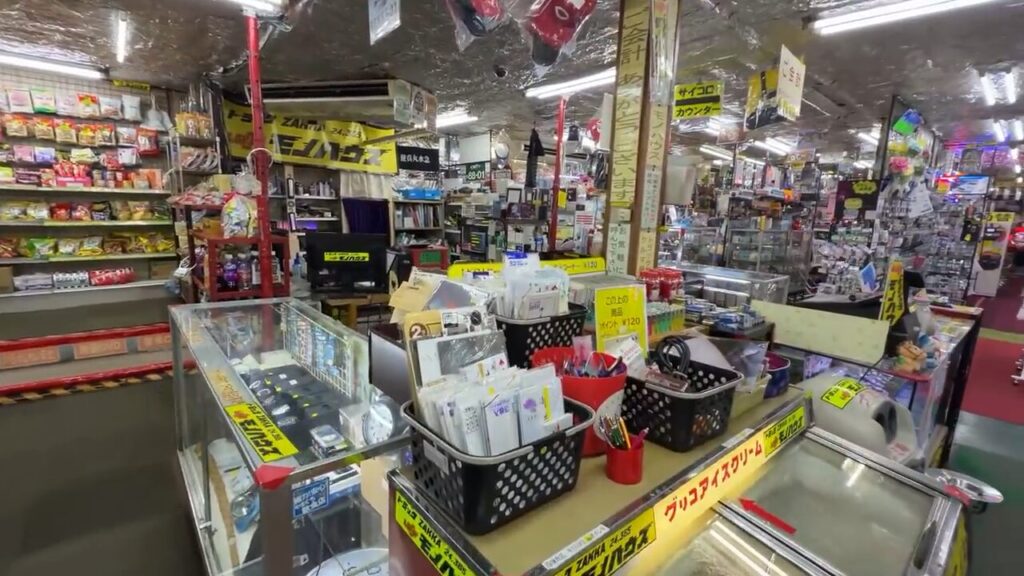
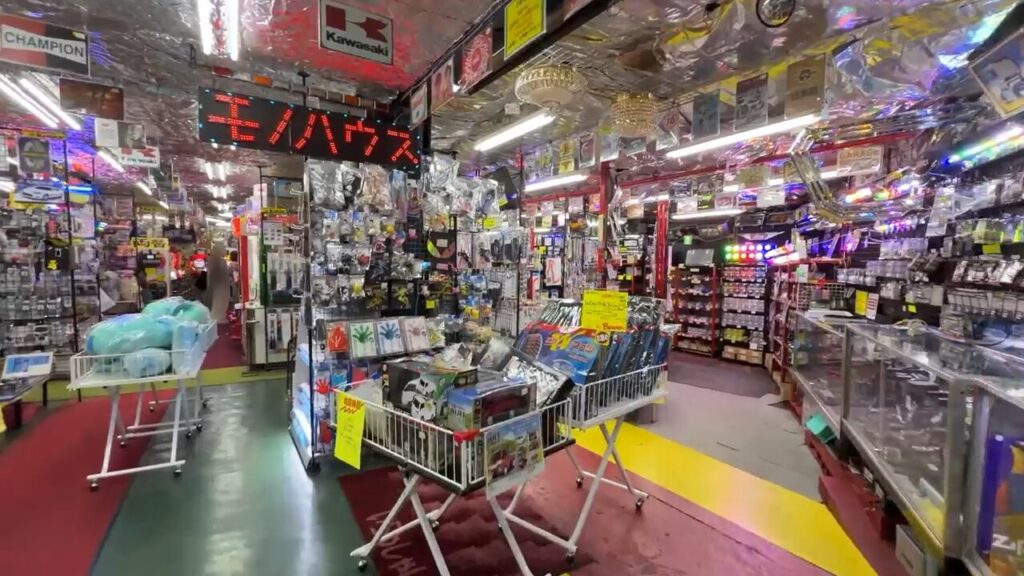
The first thing that greeted me inside was row after row of truck accessories — quite possibly the largest collection I’ve ever seen. Apparently this is where all that decorative “dekotora” truck styling actually comes from. It felt like peeking into a world I knew nothing about.
Monohouse sits right on Route 2 and mainly serves as a rest stop for truck drivers. The “one-man” operation lights were unexpectedly cute, and the selection of truck interior goods was extensive — the kind of items you’d never find at a regular home center. There was even a wall-mounted chandelier, which caught me completely off guard.
Being open 24/7, 365 days a year says a lot about the owner’s dedication to supporting the truckers who keep Japan’s logistics running through the night. The products ranged from affordable to genuinely high-end.
Across from the truck section were rows of stickers with a slightly rough-around-the-edges look — though many of the phrases on them turned out to be surprisingly cute or funny, which made for a nice contrast. Some items had nothing to do with trucks at all; there was even a selection of Showa-retro merchandise, displayed in a wonderfully unconventional way.
A pachinko and slot area straight out of a period drama set
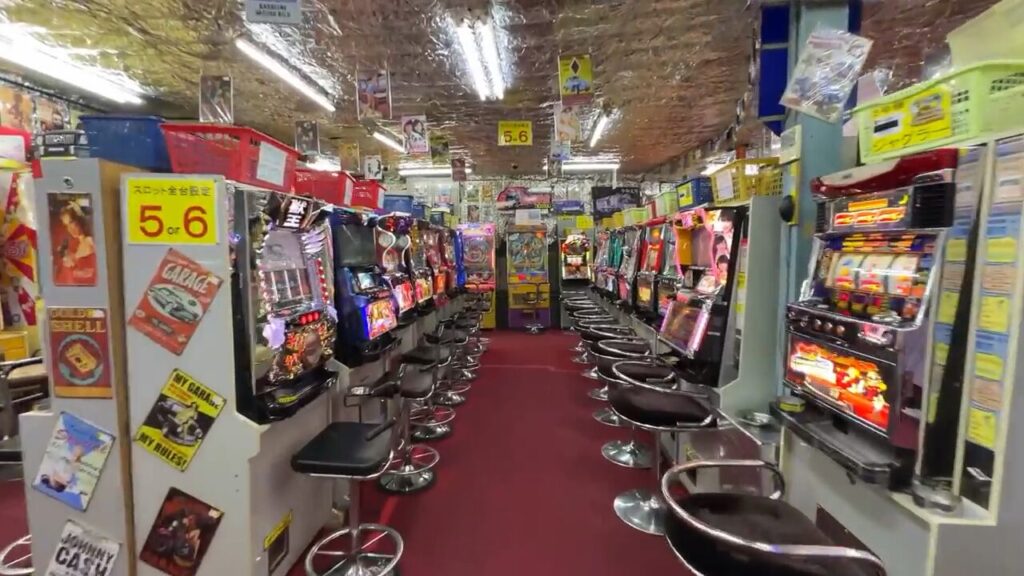
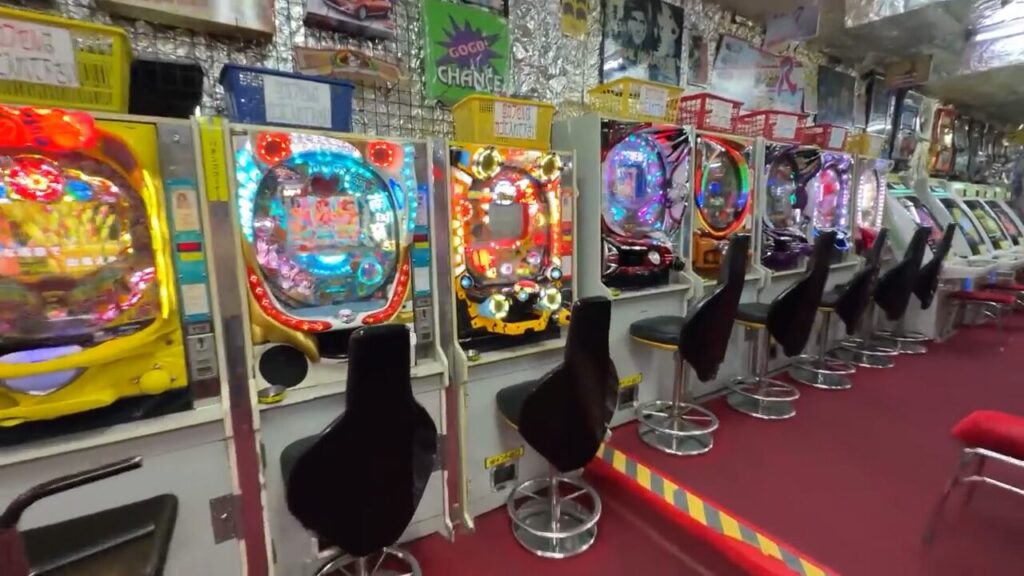
The store is surprisingly large, and further inside, a pachinko and slot machine section opens up. It looks like something out of a TV drama set, with an impressive number of machines — enough that I found myself worrying about the electricity bill.
Deeper still, a message from the owner was posted on the wall. Lucky Seven has apparently been running in this exact style for 47 years. It’s clear this place has become a beloved rest stop not just for truckers, but for anyone passing through. Smoking is allowed inside.
Alongside the pachinko machines were kids’ arcade games and retro signage hanging from the ceiling — signage that, surprisingly, is actually for sale. Some pieces aren’t for sale, but the ones that are have clear price tags. In an era of self-checkout and unmanned stores, this felt like the complete opposite approach.
Some of the old pachinko machines were still fully playable. I wasn’t entirely sure how to play, but it was fun just to watch. It was quiet on a weekday afternoon, though a few families were there enjoying the space too.
A 2,000-yen challenge in a game corner straight out of the Heisei era
On the other side of the store is a spacious game corner filled with celebrity panels and arcade machines that scream Heisei nostalgia. A few games were out of order, but the points you earn can apparently be exchanged for snacks and drinks — something like a pachinko payout system.
I decided to go all in and spend 2,000 yen on games I’d never seen before, with rules I didn’t understand at all.
First up was “Home Run Stadium” — score 500 points or more to earn a point. It was tougher than it looked. My best attempt topped out at 460, frustratingly short of the mark.
Next to it was “Kids Stadium,” where you hit incoming balls for points until you get three strikes. I was cruising along, just two points away from winning, when things suddenly fell apart. Even the machine right next to it, seemingly the same game, fired balls at a noticeably faster speed — a nasty little trap.
Giving up on baseball, I tried “Puppy Ball Toss” next. It looked deceptively easy, but turned out to be much harder than expected — I never even came close to the 15 needed to clear it, no matter how many times I tried. Some games really do trick you with how simple they look.
An eat-in space that still carries traces of the old “Lucky Diner”
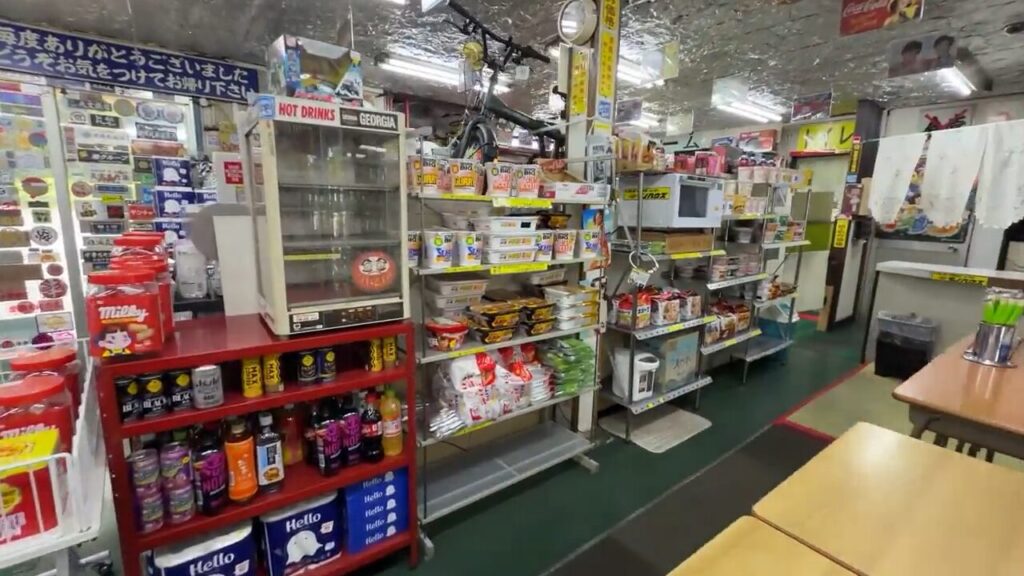
Until around 2018, there was an actual restaurant inside called “Lucky Diner.” It’s gone now, but the eat-in space where you can grab instant noodles or snacks is still there.
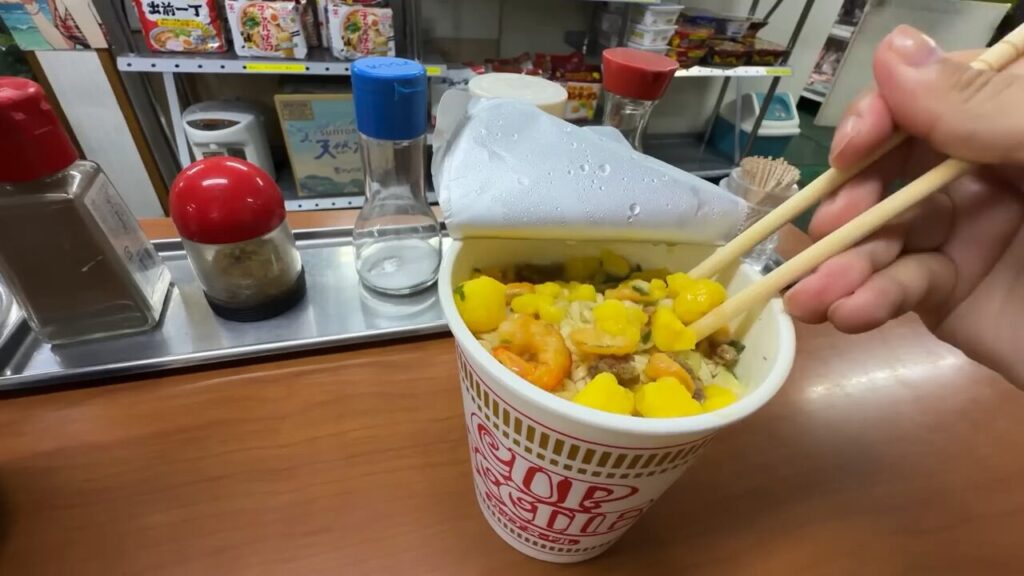
Cup noodles and drinks can be purchased with cash or exchanged with points, and remnants of the old diner are still visible in the back of the space. Eating on-site costs an extra 150 yen. No alcohol is sold here. Drinks are 200 yen, or 2 points.
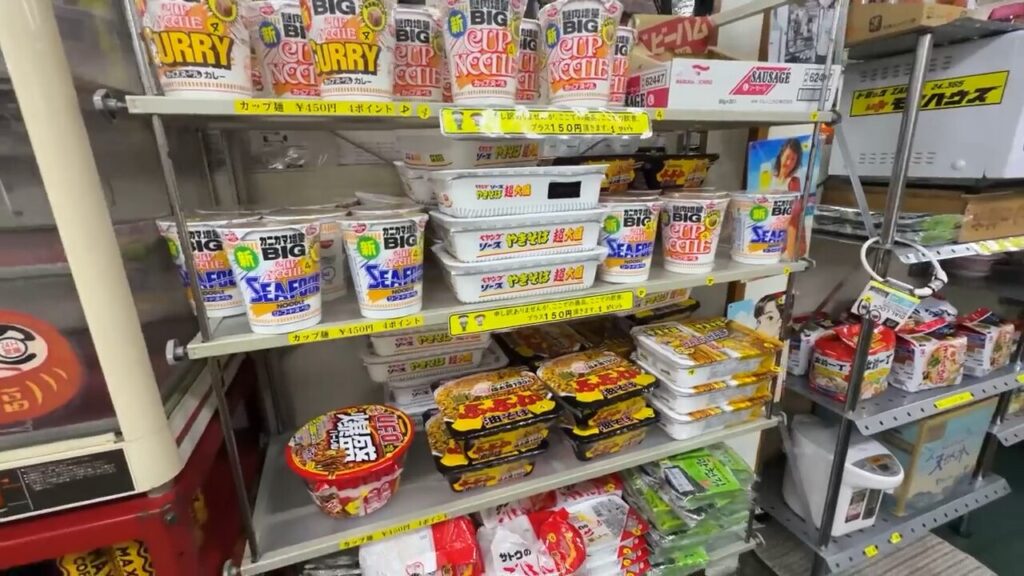
The eat-in area has an electric kettle, and the tables and chairs give it a school-cafeteria feel — something like “school for adults,” equal parts nostalgic and fun. I ended up buying a few things and even got a free sticker as a bonus.
Interestingly, despite only cup noodles being available, seasonings were still sitting out — likely a leftover from when the diner actually served ramen, fried rice, and other cooked dishes.
Snacks are sold for 2 points (200 yen), and the shelves were also stocked with sanitizing wipes and other amenities. Honestly, the selection rivaled a convenience store.
Paid showers, a lifeline for long-haul drivers
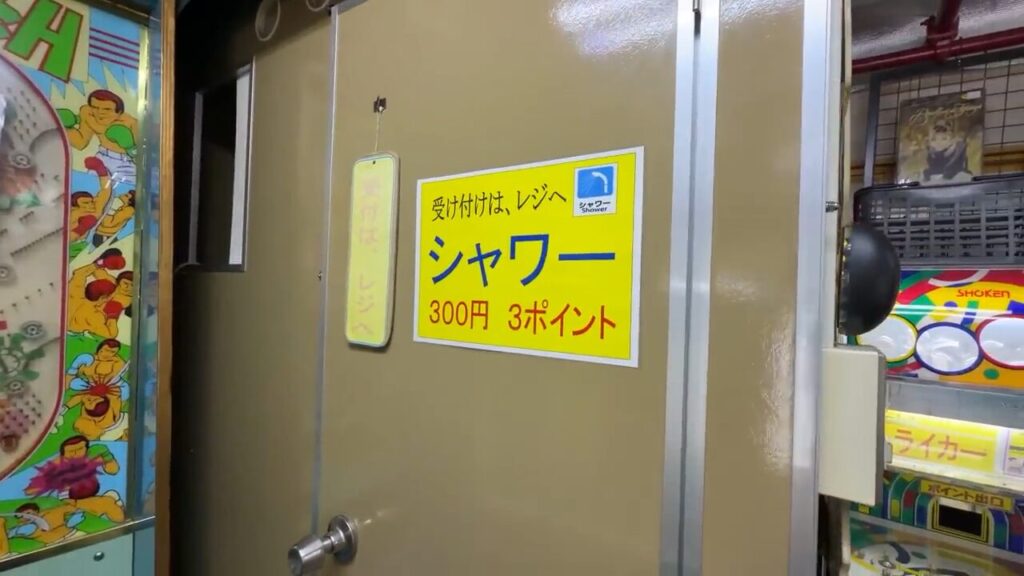
One of the biggest surprises was a paid shower room inside the store. Being able to shower easily on the road is a huge convenience for long-distance truck drivers.
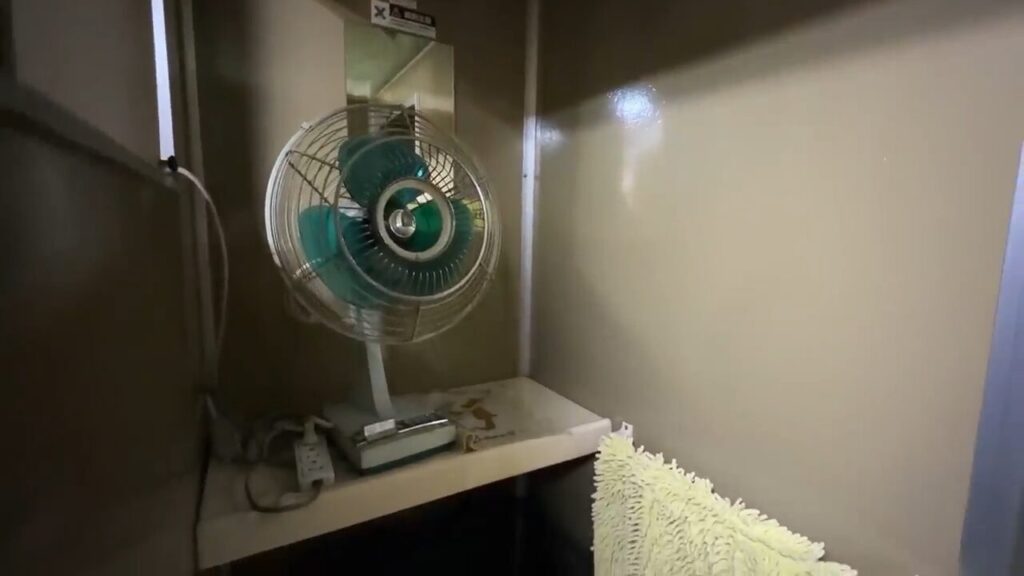
The changing area has a massive fan, giving it a vibe similar to an internet café’s shower room. Between the general goods, pachinko, dining space, arcade, and now showers — it was startling to realize just how much is packed into one building.
The exterior might be intimidating at first glance, but the inside has a surprisingly warm, welcoming atmosphere. That contrast might be exactly what makes Monohouse so special.
Next door, a treasure trove of Showa-era ruins
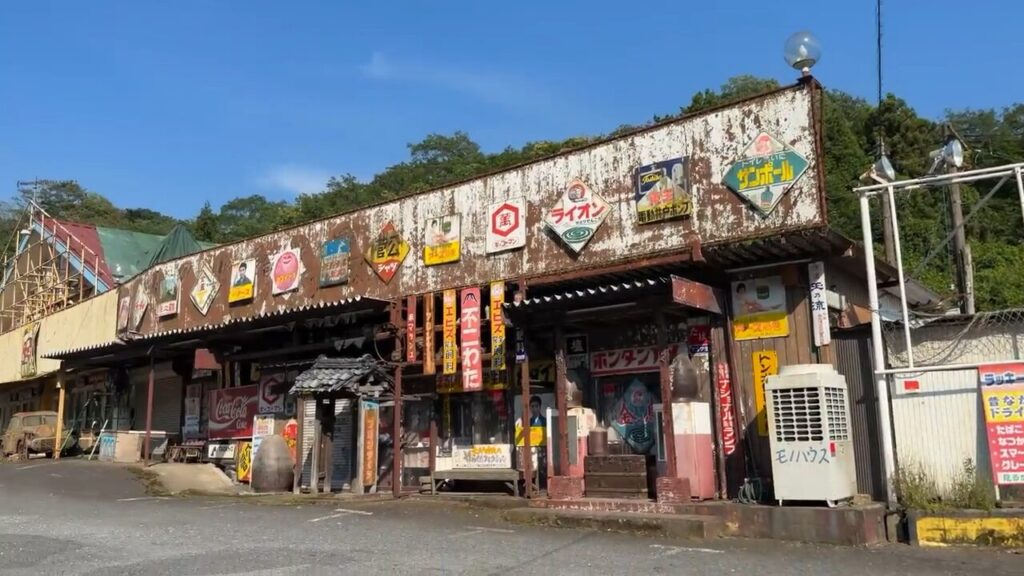
Right next to Monohouse was another retro-looking shop that caught my eye, so I went to check it out. Getting closer, its distinctly Showa-era appearance pulled me right in.
This building is now abandoned, but it still carries a powerful atmosphere — like stepping straight into the Showa era. A rusted-out car sits by the entrance, and for some reason, a bicycle hangs from the ceiling inside, its purpose a total mystery.
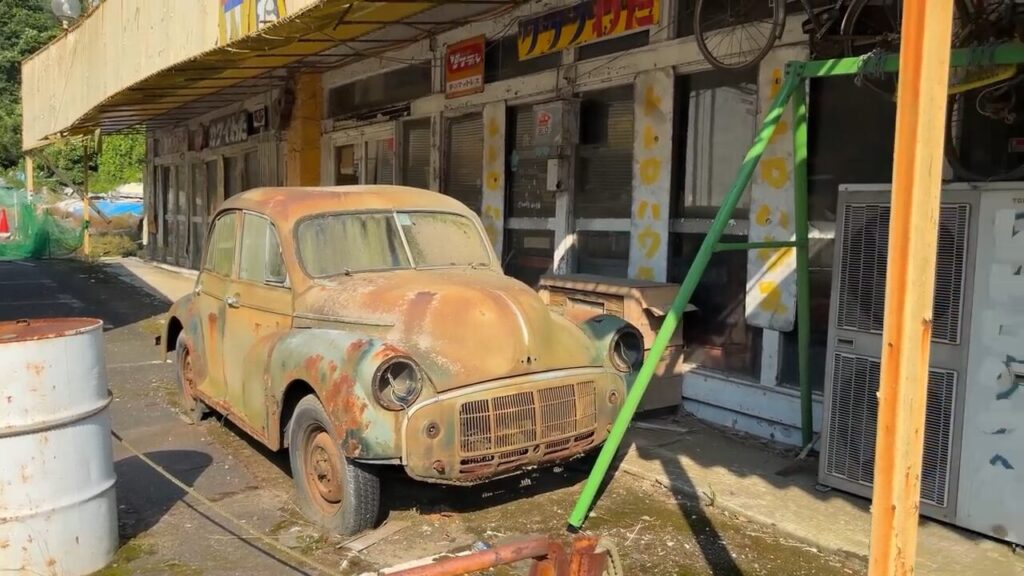
Apparently you could still go inside as recently as 2015, but it’s closed to visitors now. It used to sell antiques and old household items. Even just peering in from outside was enough to make me say, “this is incredible” out loud.
Yamaguchi Prefecture apparently still holds onto quite a few retro gems like this — including Nagasawa Garden and Irori Sanzoku, both near Monohouse. If this place ever opens again, I’d love to go inside. I had no idea a world like this still existed, tucked away in the mountains of Yamaguchi, until I actually came here. It’s already an impressive scale, but I’ve heard it used to be even bigger — so if you’re curious, it might be worth visiting sooner rather than later.
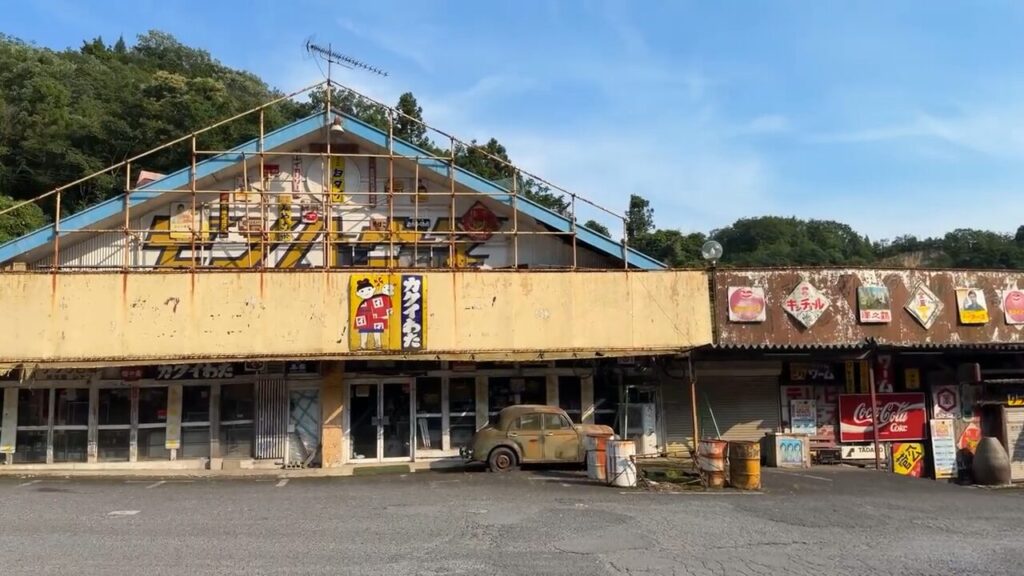
The property itself is quite large, with several more buildings still standing nearby. One shop that appears to have sold household goods had an old washing machine sitting there for no clear reason. There also seemed to be a former karaoke box building, though it’s no longer in operation. It really does feel like this place has “everything.”
Now in its 47th year, Monohouse is a place I hope keeps running for a long time. It’s right next to Irori Sanzoku, so if you’re ever nearby, it’s worth the stop.
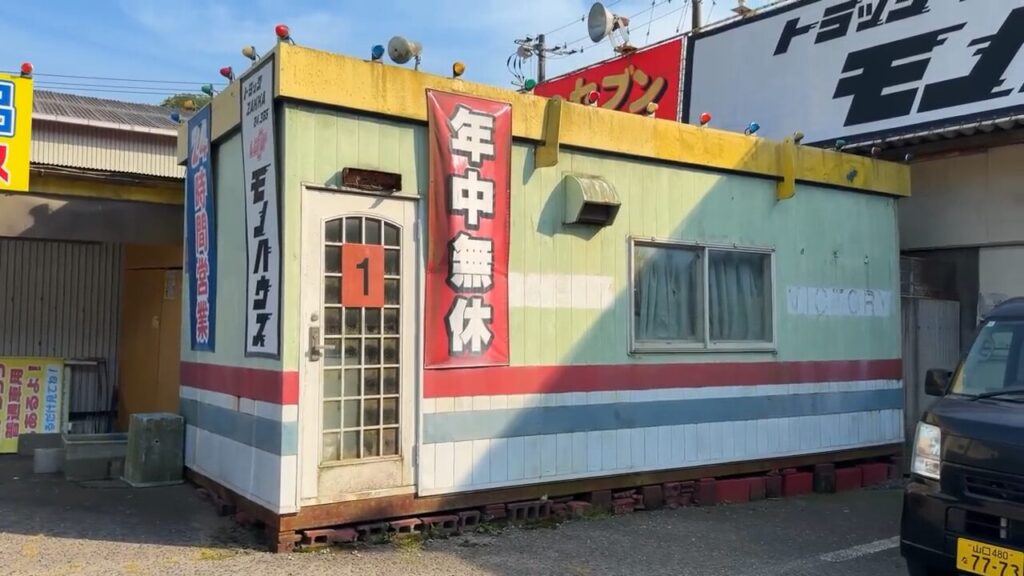
At night, the world turns even more dreamlike
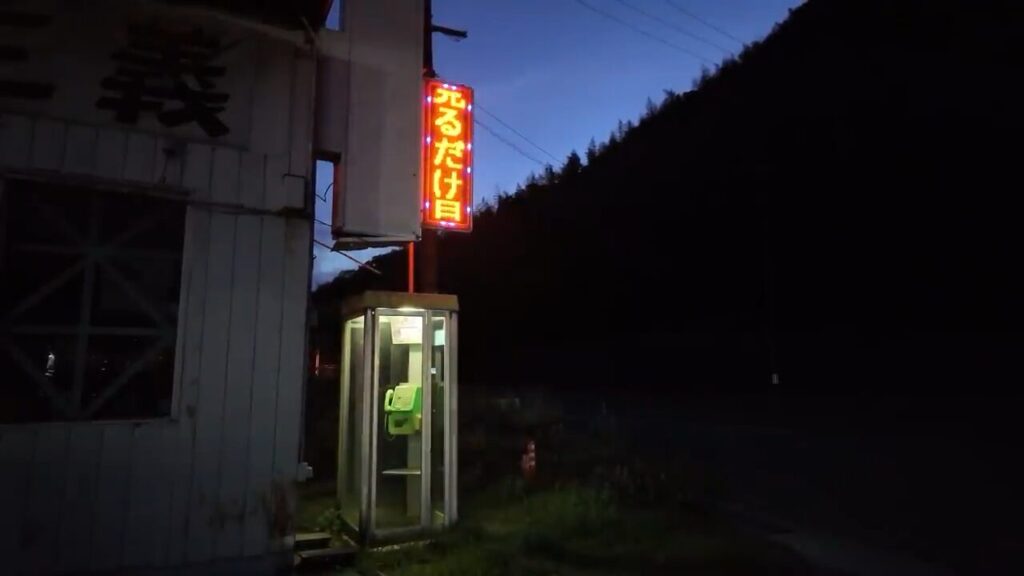
Even after the sun goes down, Monohouse keeps running like nothing changed. The daytime atmosphere was great, but nighttime brings an even stranger, more magical quality. Standing there with the background music echoing around it, the whole place felt like something out of a dream. I was glad I waited for nightfall.
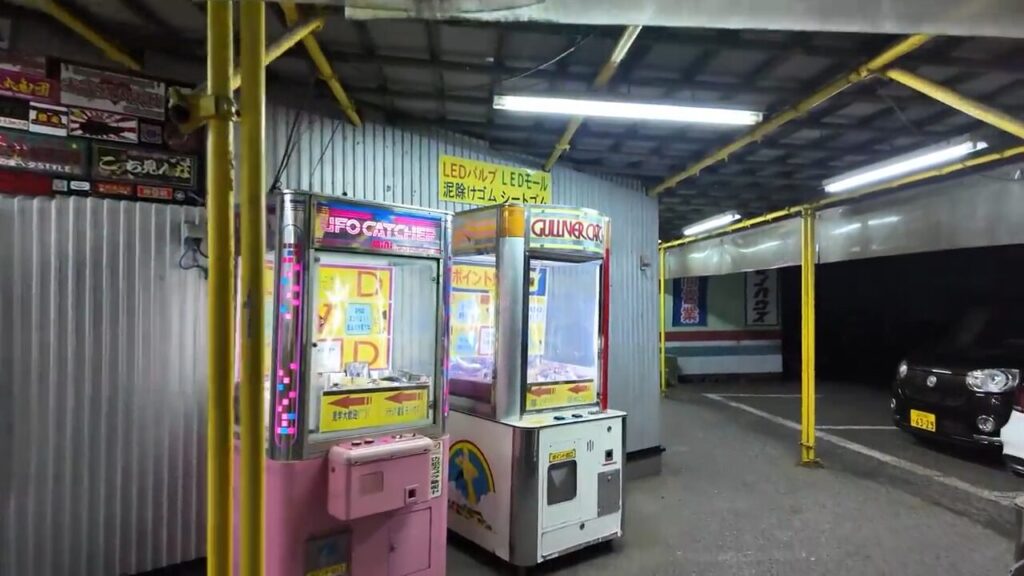
I decided to try some of the outdoor games too. There was a crane game restricted to adults 18 and up, but I went with a regular one instead — no telling what you’ll get until you actually win it.
After playing for a while, I won something — honestly not entirely sure what it was, but there’s apparently a system where three unwanted prizes can be exchanged for 1 point.
Among all the other games, the one that caught my attention most was a beckoning-cat slot machine. It fit the Monohouse vibe perfectly, and despite sitting outside, it was fully functional — sound and all. The rules were simple enough that even I understood them right away, and the artwork was so cute I fell for it instantly.
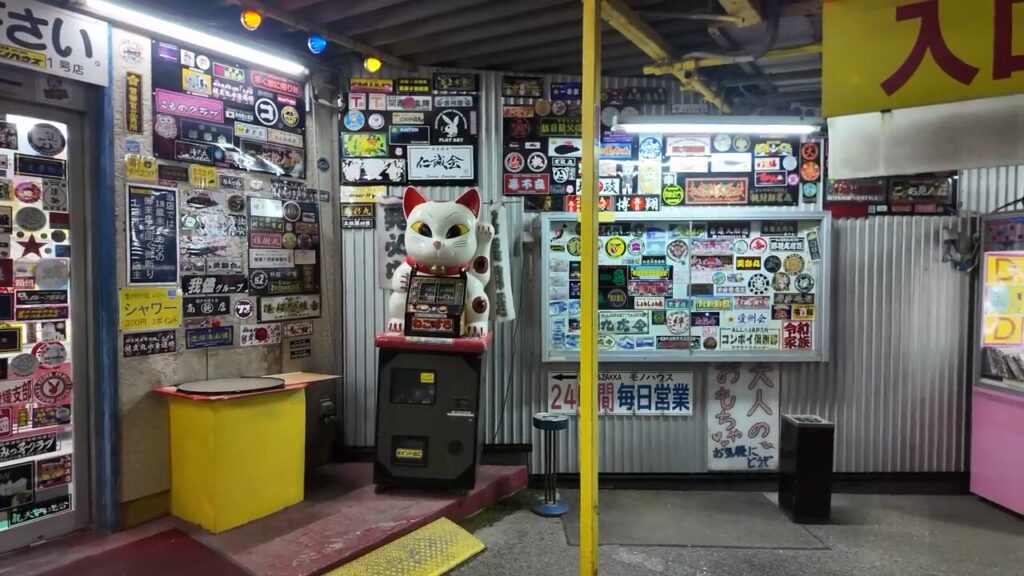
On my very first try, I won. After all that struggling with the baseball games, winning a point on the slot machine felt almost too easy — this machine seems to hit often, maybe as a little extra generosity from the shop. Either way, winning felt genuinely satisfying.
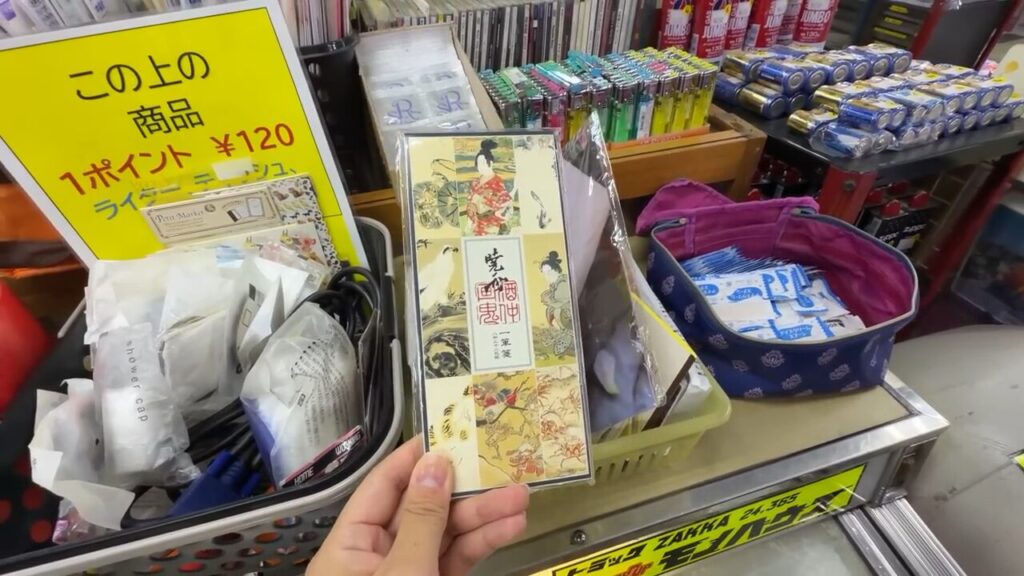
The points I earned can be exchanged for goods inside the shop, and apparently they never expire. I traded mine in for a notebook.
Final thoughts
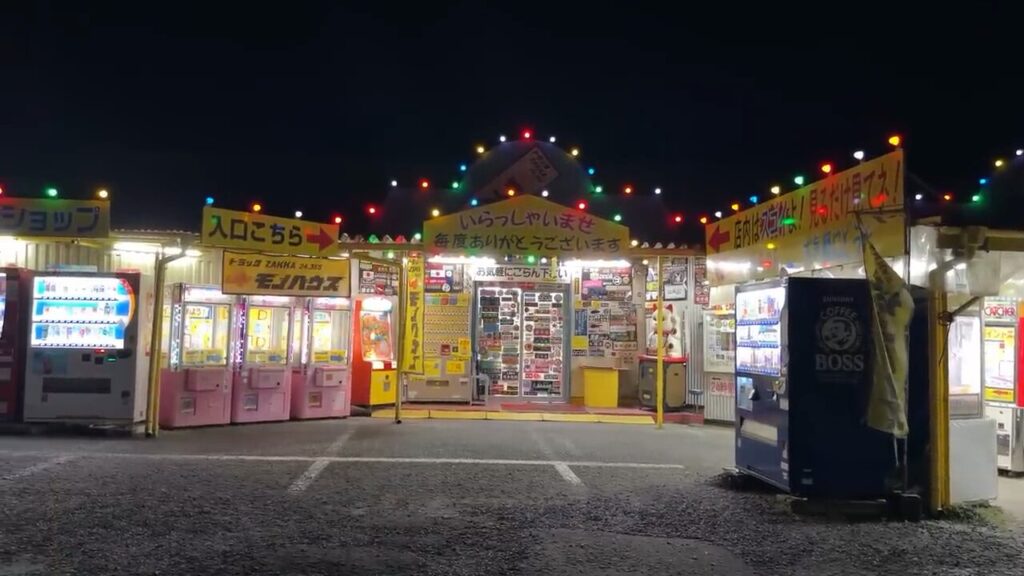
Monohouse ranks among the most memorable places I’ve visited — genuinely impressive, and honestly, just playing the outdoor games alone would have been enough to make the trip worthwhile. If this sounds interesting to you, it’s absolutely worth a visit.
After a day that felt dreamlike yet completely real, I found myself once again wondering, “where should I go next?”
Location visited this time
Truck Shop Monohouse (Lucky Seven Monohouse)
Address: Shunan City, Yamaguchi Prefecture (along National Route 2, near Irori Sanzoku)
Hours: Open 24 hours, 365 days a year
Note: Visitors under 18 must be accompanied by a guardian. Smoking is permitted inside.
Comments