Deep in the snow country of Niigata Prefecture runs one of the most exclusive sightseeing trains in Japan. The Setsugekka (雪月花), operated by Echigo Tokimeki Railway, carries just 38 passengers at a time on a roughly 3.5-hour journey between Joetsumyoko Station and Itoigawa Station — passing through blizzard-white mountains, a rare railway switchback, a tunnel station buried 40 meters underground, and finally out along the wild winter coastline of the Sea of Japan. Add a multi-course meal built entirely from local Niigata ingredients, and it’s easy to see why this train is considered one of the finest sightseeing rail experiences in the country.
We rode the full route in winter. Here’s what the experience is actually like, and what to know before you book.
Table of Contents
- What Is the Setsugekka?
- A Train Built Entirely from Niigata Craftsmanship
- Departure from Joetsumyoko Station
- The Rare Switchback at Nihongi Station
- A Three-Tiered Feast: The Setsugekka Gourmet Bento
- The Sakura Lounge and Onboard Souvenirs
- Tsutsuishi Station: A Platform 40 Meters Underground
- The Sea of Japan Comes Into View
- Dessert Fit for a Pope
- Arriving at Itoigawa Station — One Booking Tip
- Practical Information and Final Thoughts
What Is the Setsugekka?
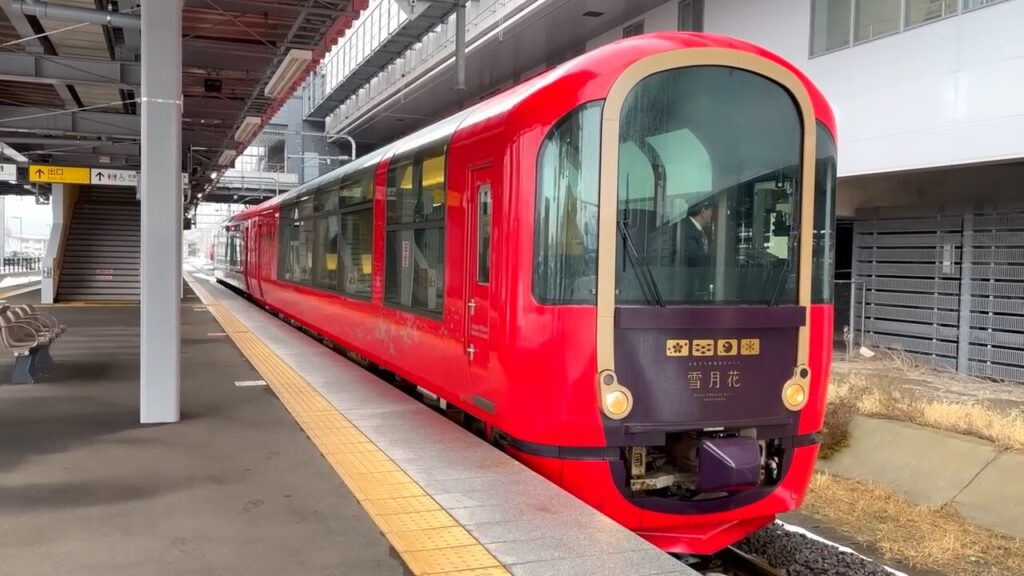
The Setsugekka debuted in April 2016 as the flagship sightseeing train of Echigo Tokimeki Railway, a regional line in Niigata Prefecture. It runs the roughly 3.5-hour route between Joetsumyoko Station and Itoigawa Station, tracing the Sea of Japan coastline through some of Japan’s heaviest snowfall regions. In winter, it operates only on weekends, with a single departure per day — making it one of the hardest sightseeing trains in the country to book. All 38 seats are reserved, and the entire two-car train is widely regarded as one of the top-tier luxury sightseeing trains in Japan.
A Train Built Entirely from Niigata Craftsmanship
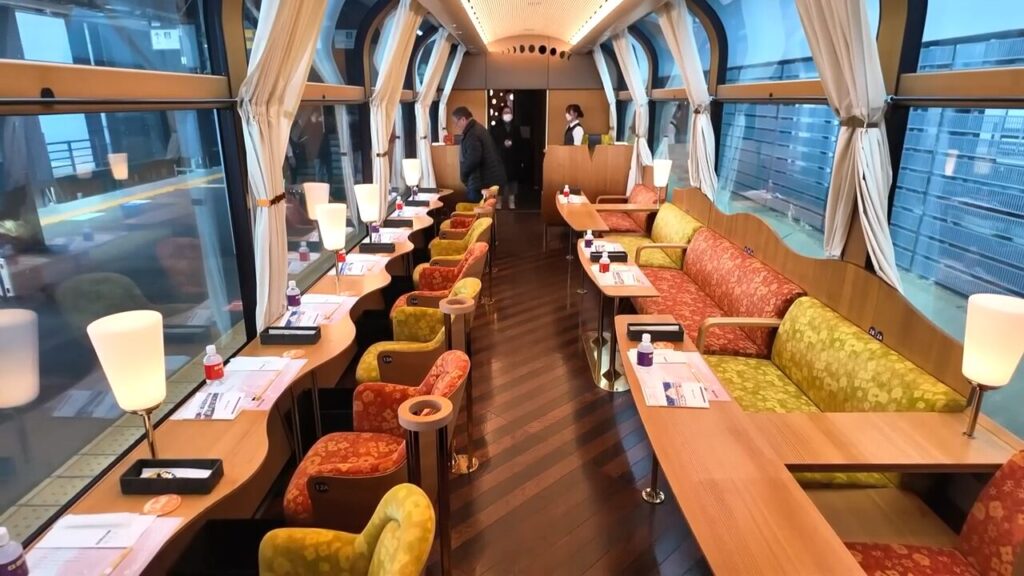
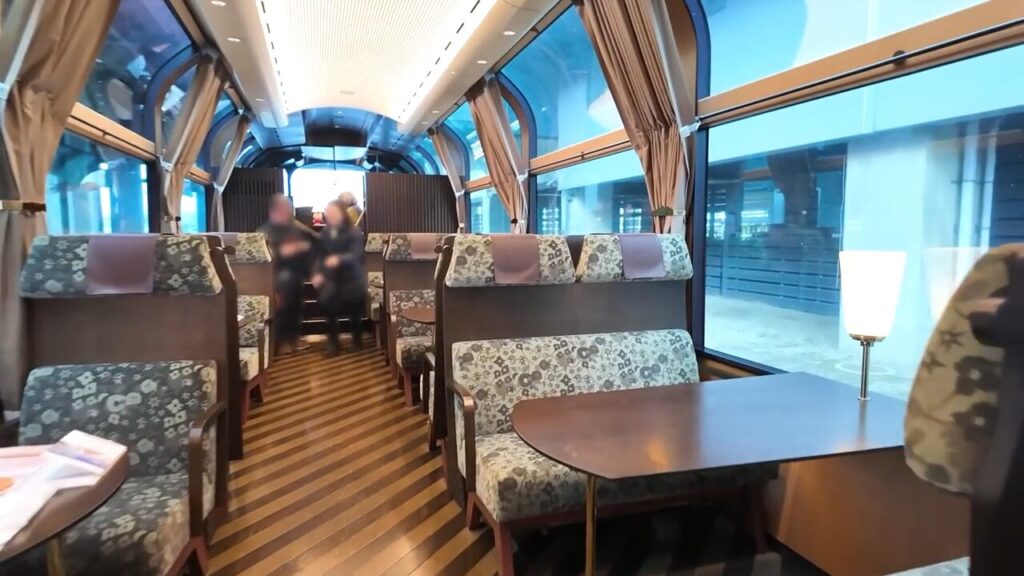
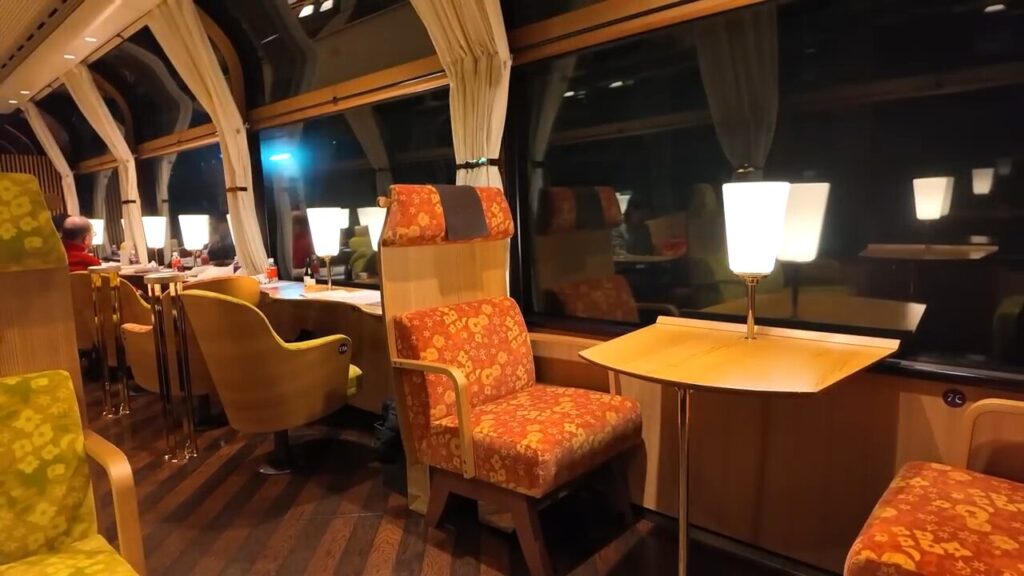
The Setsugekka’s design concept is “all made in NIIGATA,” and it shows in every detail. Metal fittings throughout the cabin come from Tsubame-Sanjo, a region famous for centuries of Japanese metalworking. The flooring uses Yasuda roof tiles and the walls are finished in Echigo cedar, both local Niigata materials. The train’s panoramic windows are said to be among the largest of any sightseeing train in Japan — in some seats, everything except the floor and ceiling is glass.
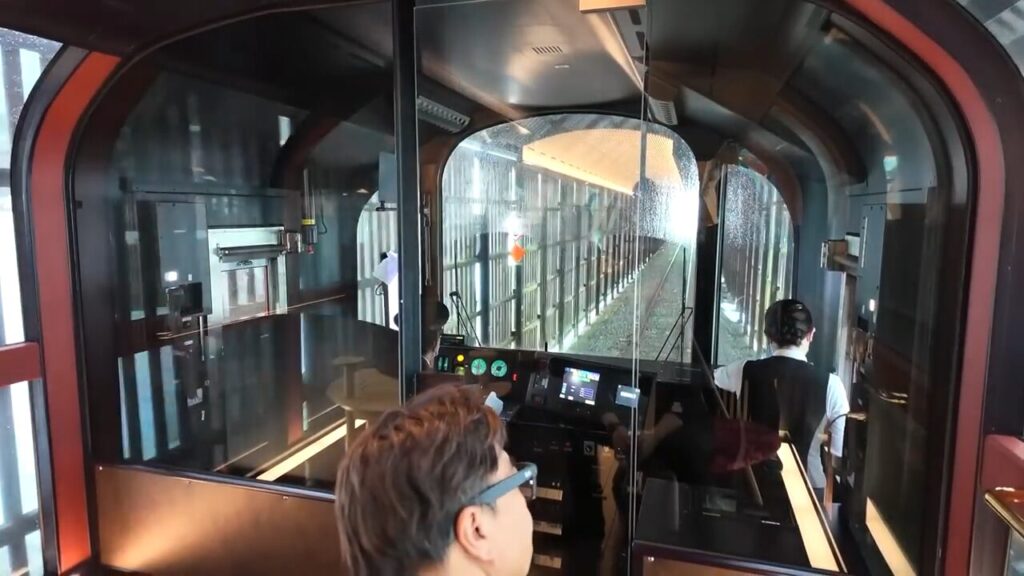
Car 1 features counter seating, table seating, and an open observation area at the rear where any passenger can sit and watch the tracks ahead — including a view straight into the driver’s cab. Lounge seats face either the Sea of Japan or Mount Myoko, and there’s a wheelchair-accessible space as well. Car 2 houses the “Sakura Lounge” and larger table seating, with a more classic, subdued interior than Car 1. A private observation deck at the rear of Car 2 is also available for an additional fee.
Departure from Joetsumyoko Station
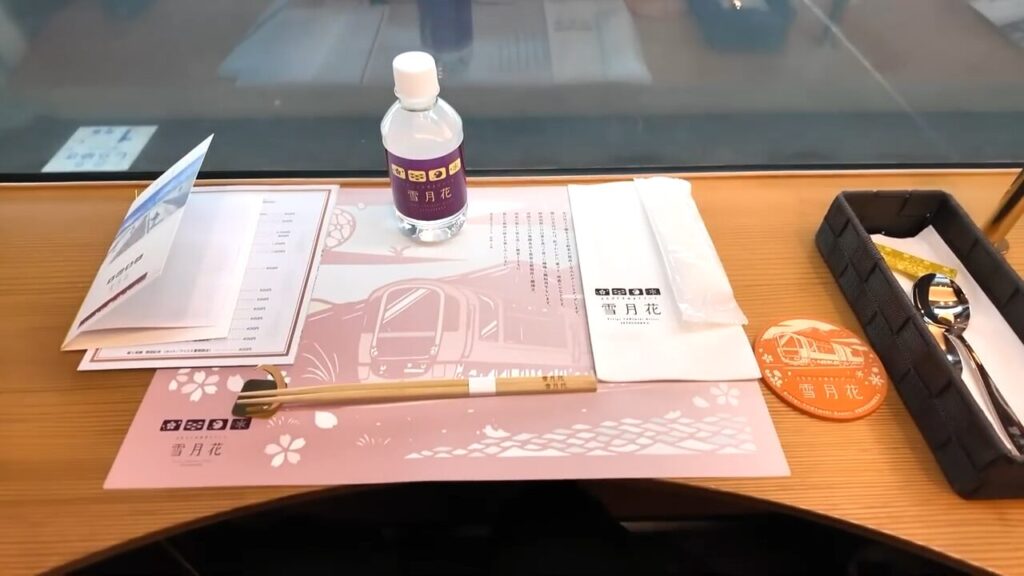
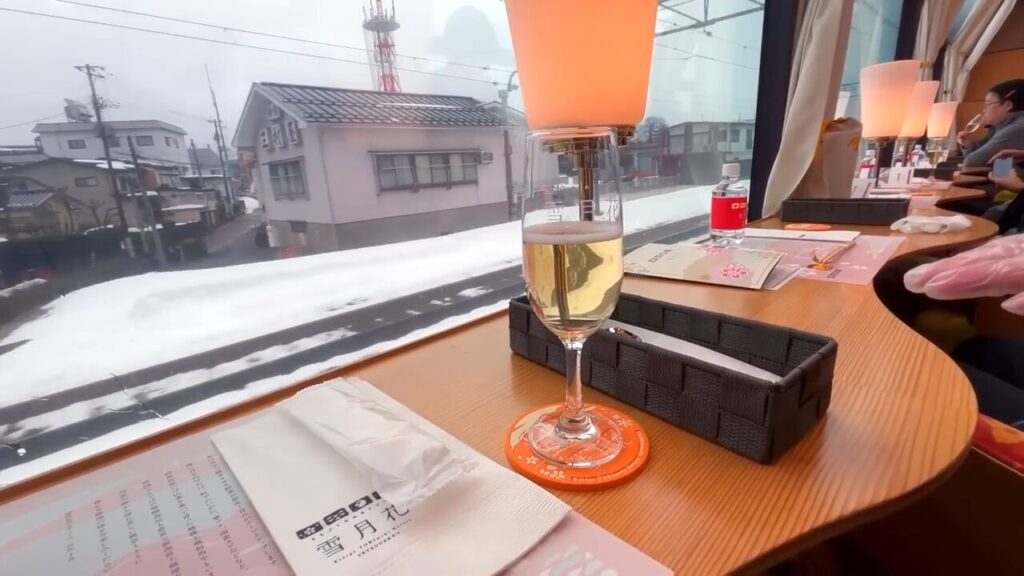
The train departed Joetsumyoko Station at 10:57 AM. Heavy snowfall from the previous night had blanketed the entire town in white. Shortly after departure, staff served a welcome drink — sparkling wine from Fermier, a winery in Niigata City (a non-alcoholic option is also available). Sake, beer, and soft drinks can be ordered separately for a fee, and each table is set with a printed route map showing the journey’s stops and departure times — a nice keepsake from the ride.
The Rare Switchback at Nihongi Station
About ten minutes after departure, the train stops at Nihongi Station — the only station in Niigata Prefecture that still uses a switchback system, a railway layout in which the train reverses direction to climb or descend steep terrain. Only about ten stations in all of Japan still operate this way, making it a genuine rarity even for train enthusiasts. Watching the Setsugekka change direction and pull into the station facing the opposite way is one of the trip’s most memorable small moments.
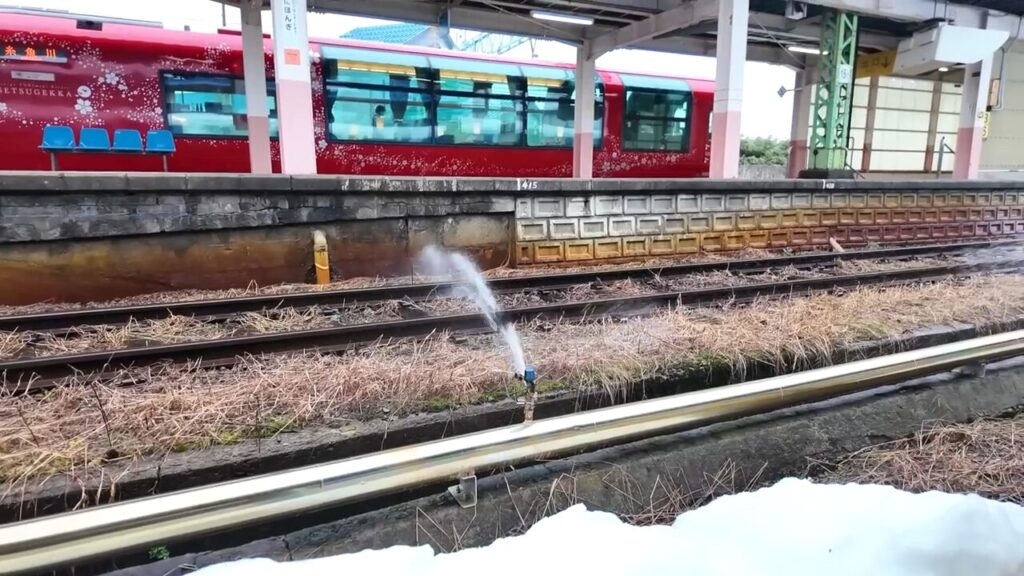
The train arrives at Nihongi Station at 11:14 AM for a roughly 30-minute stop, during which passengers can explore the area on foot. This region is one of the snowiest in all of Japan, and the station building itself dates back to 1910 — the year before the line first opened — and has been carefully maintained ever since. An optional, self-guided walking tour points out details like the safety anchor bars once used during snow-clearing work on the roof, historical photos of manual snow removal, the station’s elevation (180 meters), and the rail-line sprinklers that continuously melt snow off the tracks. Old fare charts and other historical materials are also on display inside the station.
A Three-Tiered Feast: The Setsugekka Gourmet Bento
The train departs Nihongi Station at 11:41 AM, and it’s finally time for the meal everyone’s been waiting for. Guests are served a three-tiered wooden box (jubako) bento built entirely from ingredients sourced in the Joetsu region of Niigata — fish, meat, vegetables, and even the rice are all locally produced.
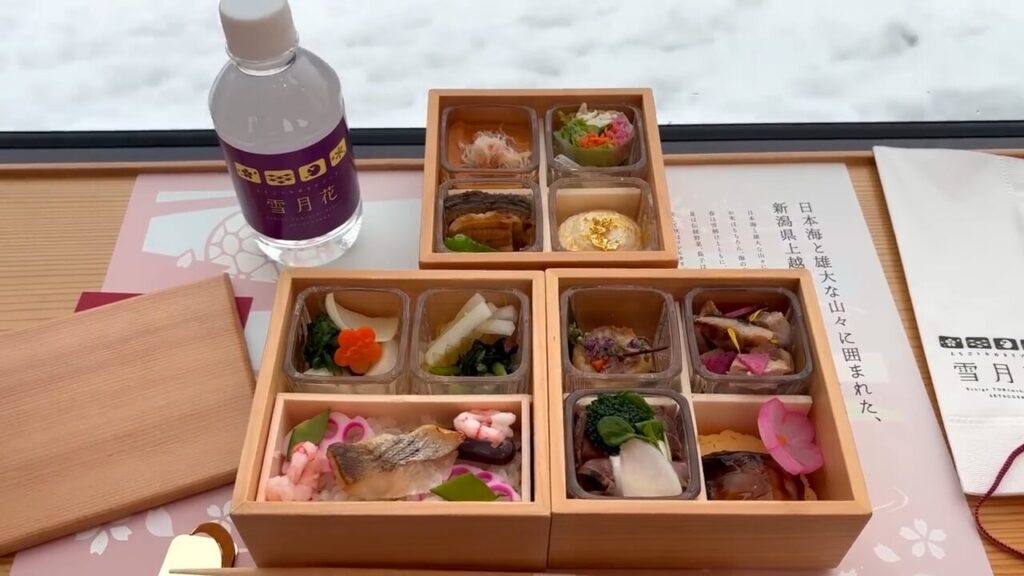
- First tier: Sado Island snow crab flan, Echigo chicken spring rolls, grilled eel, and silken tofu mousse
- Second tier: Joetsu Koshihikari rice and beef croquette, pork marinated in local sake lees, roast beef, and yuzu-miso-glazed Uonuma “Miyuki” trout
- Third tier: Simmered seasonal Niigata vegetables, yuzu daikon and komatsuna namul, and chirashi sushi with local rockfish and sweet shrimp
The meal is prepared by Duo Cerezo, a wedding venue in Niigata known for its refined cuisine, and every dish felt carefully composed. We paired it with a Myoko Kogen Alpen Bräu beer, brewed by hand using natural spring water from Mount Myoko — a great match for the meal’s richness.
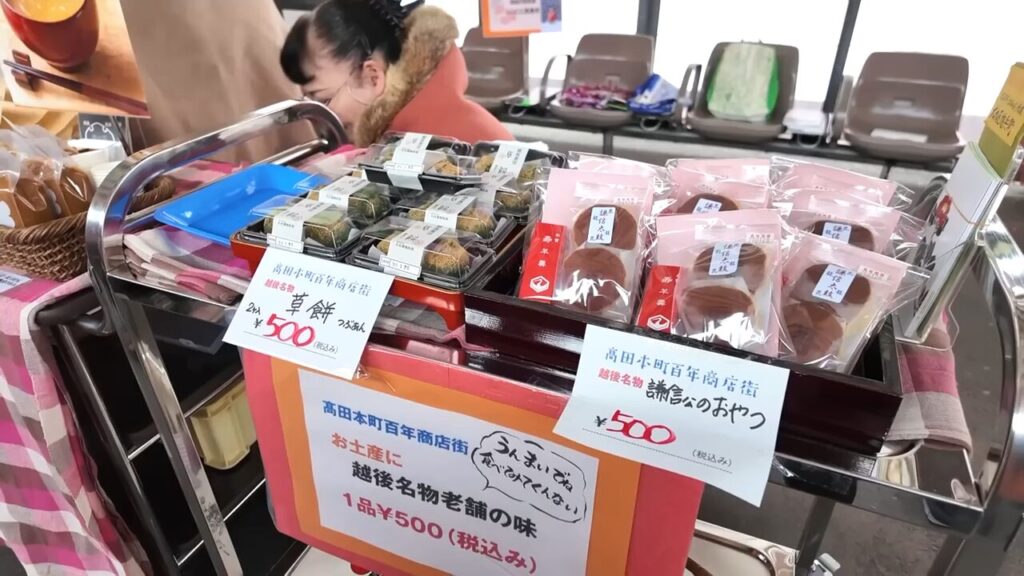
Midway through the meal, the train makes a stop at Takada Station, where local specialty foods are sold and staff greet passengers in traditional winter outerwear — a “kakumaki” wrap and “tonbi” cloak once worn to fight off Joetsu’s bitter cold. A warm bowl of miso soup is offered to guests on the platform, and we picked up some local miso and wagashi (Japanese sweets) as souvenirs before reboarding.
The Sakura Lounge and Onboard Souvenirs
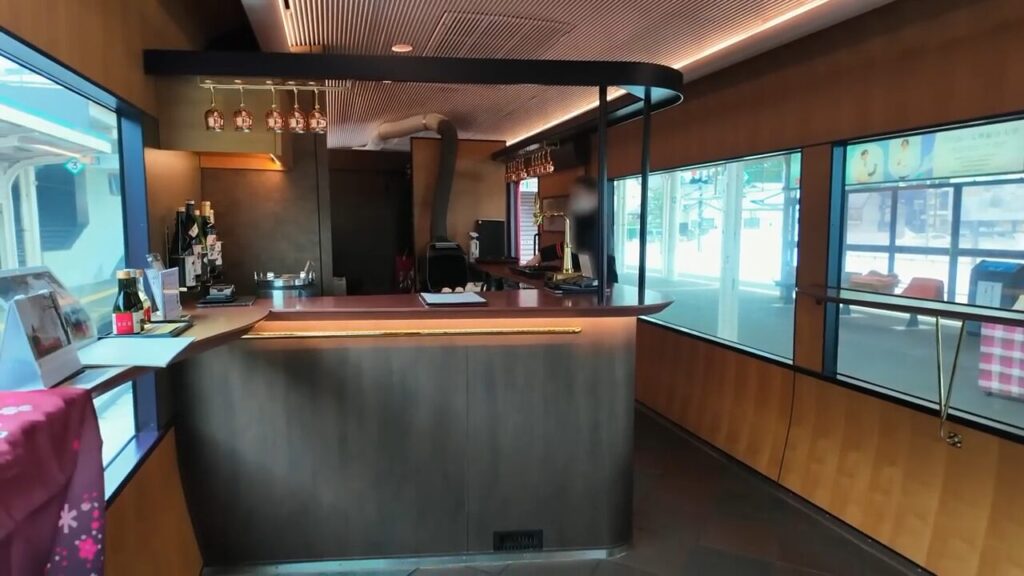
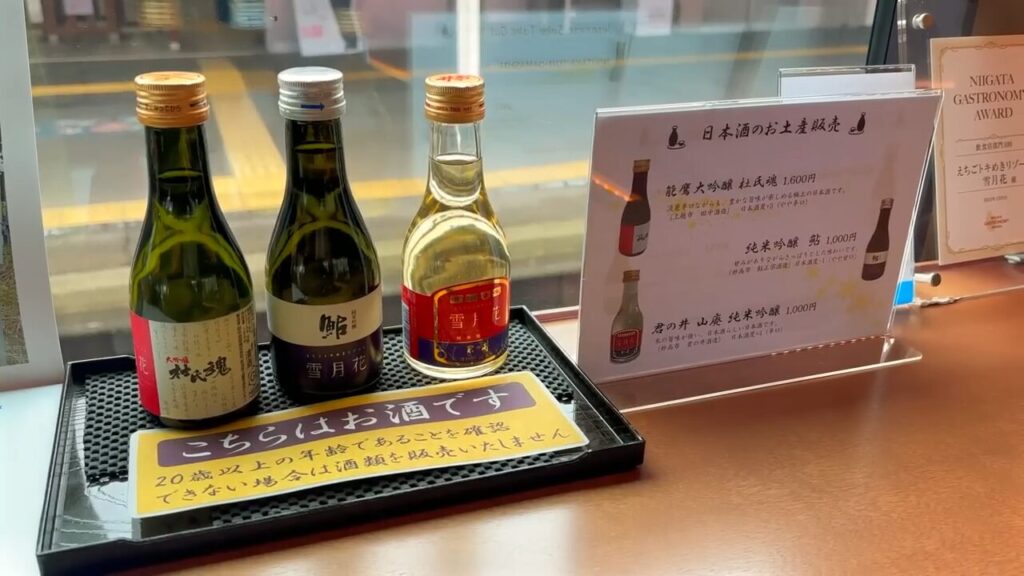
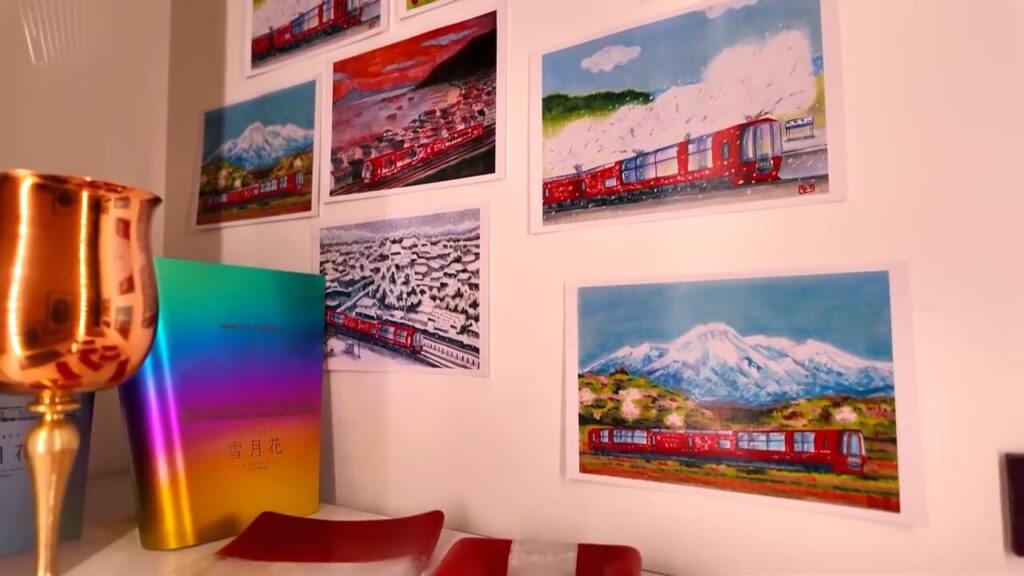
Between courses, it’s worth wandering back to the “Sakura Lounge” in Car 2. The train sells a range of original merchandise, including postcards, keychains, hand towels, sake cups, and a silver-toned version of the onboard chopstick rests. Local sake and a Setsugekka-branded calendar are also popular items.
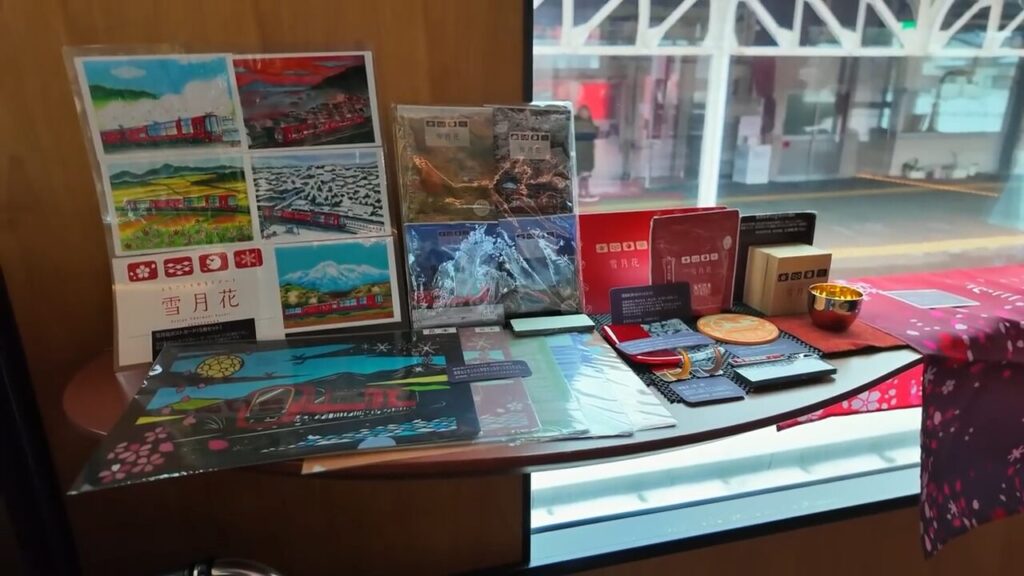
The lounge also has an old-fashioned manual ticket punch and a commemorative rubber stamp station, letting passengers recreate the ticket-punching ritual from an era before automated ticket gates. Car 1’s restroom and sanitary room are spacious enough for wheelchair access, decorated with Setsugekka illustrations and fitted with their own heaters. Small peepholes built into the hallway walls reveal glimpses of Niigata craftwork and train-themed art tucked behind the panels — a playful design touch that rewards a closer look.
Tsutsuishi Station: A Platform 40 Meters Underground
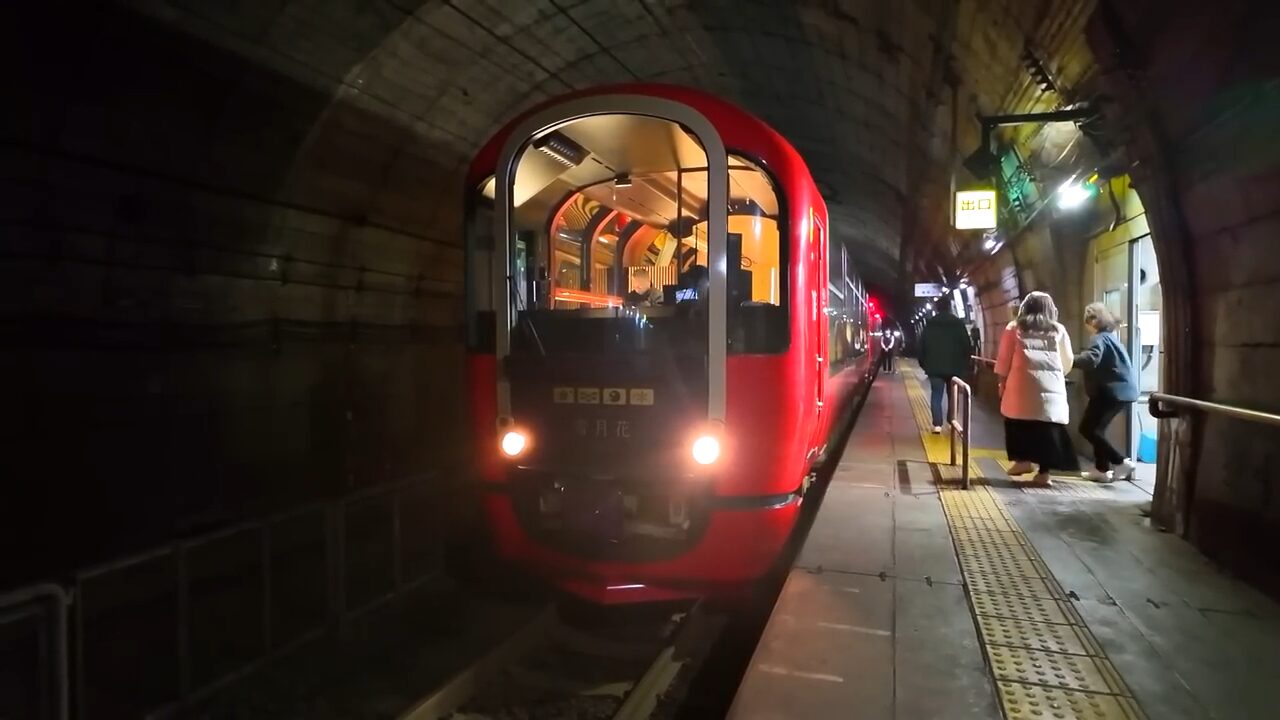
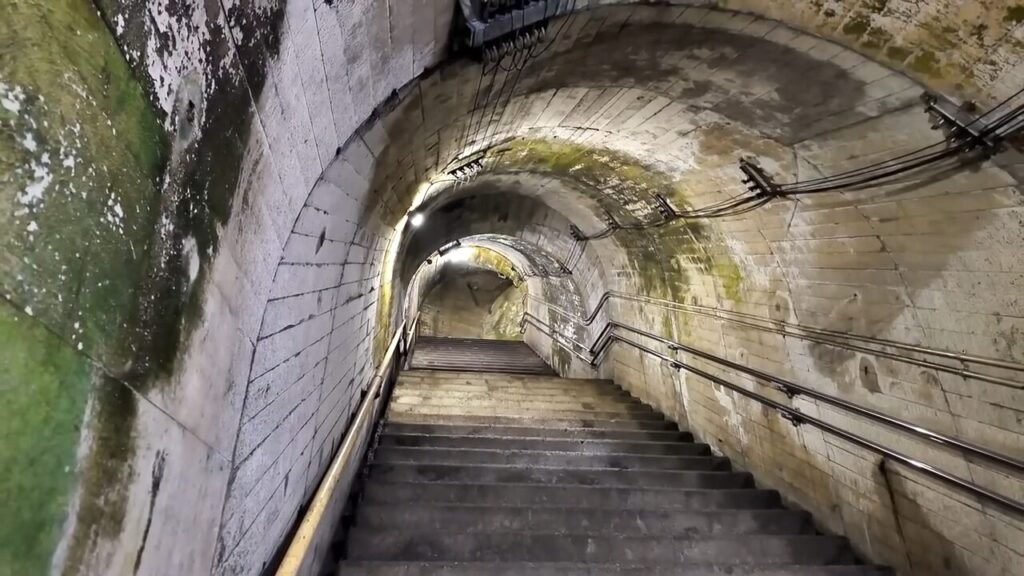
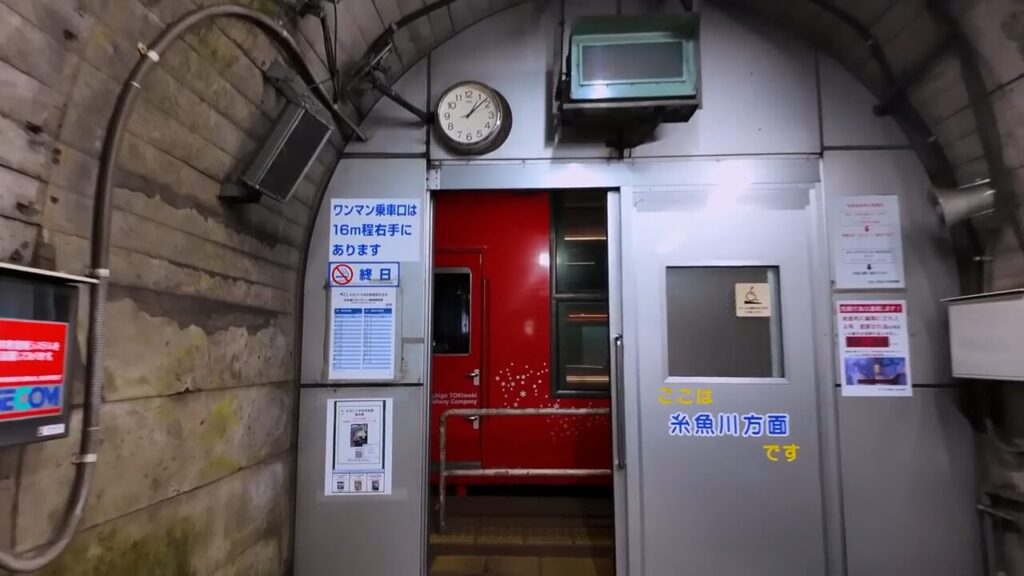
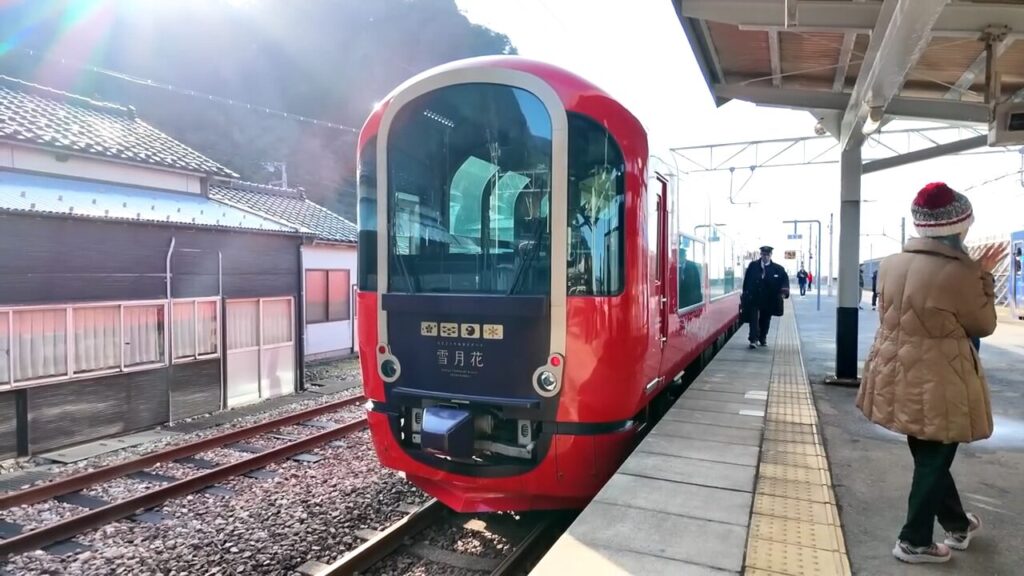
At 12:27 PM, the train departs Takada Station and heads toward one of the trip’s most unusual stops: Tsutsuishi Station. This unstaffed station, served by only one train per hour on the regular line, sits inside a tunnel roughly 40 meters underground — a genuine rarity that draws visitors on its own merit. The Setsugekka stops here for seven minutes.
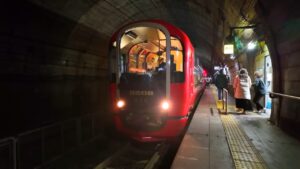
Getting from the platform to the surface requires climbing 290 steps, and staff caution passengers not to go all the way up, or they risk missing the train. We climbed partway up the staircase out of curiosity, only to find more stairs stretching on ahead, and turned back before reaching the top. The sight of the bright red Setsugekka parked in the dim tunnel light is genuinely striking — atmospheric enough that visiting the station alone, without a crowd of fellow passengers, might feel a little eerie. The tunnel housing Tsutsuishi Station stretches 11,353 meters (about 11.4 km) in total, and riding through it feels almost like drifting through a spacecraft corridor.
The Sea of Japan Comes Into View
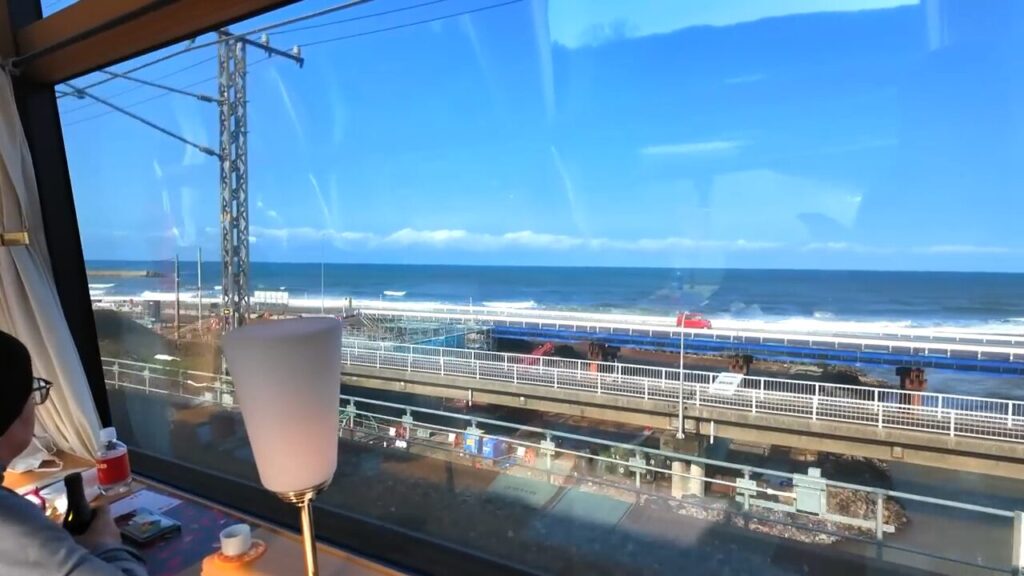
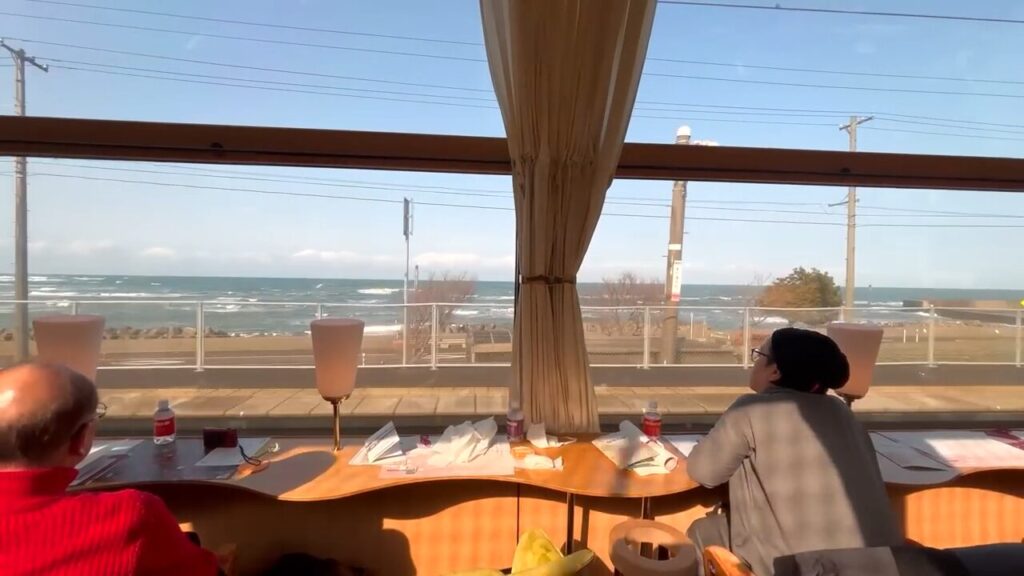
Emerging from the long tunnel, the scenery transforms almost instantly. The snow-covered mountains give way to an open view of the Sea of Japan, its water a striking deep blue. Weather along this stretch of coast is often rough, but on the day of our ride, it was unusually calm and clear. Unlike the gentler Seto Inland Sea further south, the winter Sea of Japan here churns with dramatic spray and whitecaps, making for one of the most striking stretches of the entire route.
Dessert Fit for a Pope
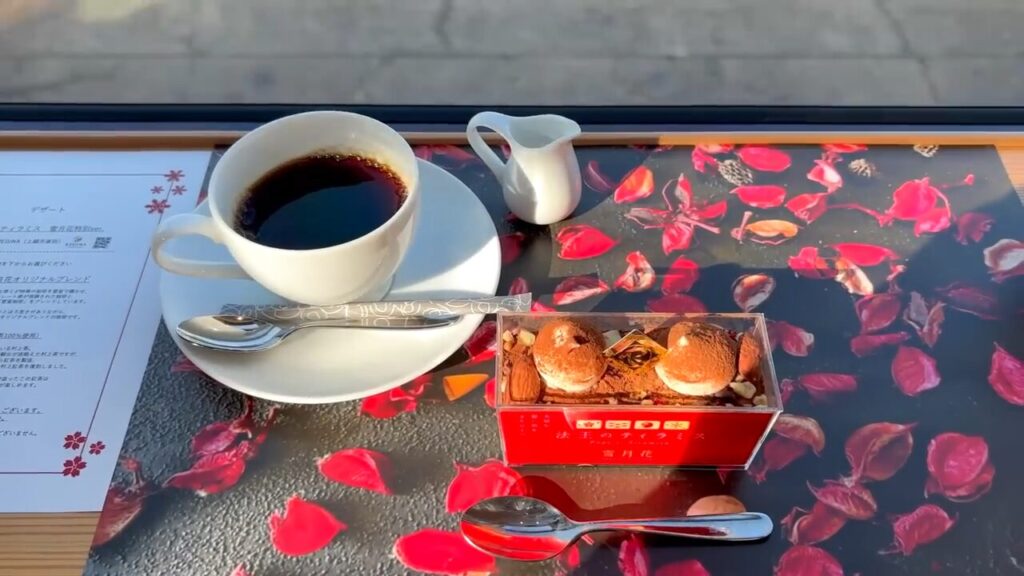
After the meal, guests are served coffee and dessert — Yukimuro (snow-cellar aged) coffee alongside a dish called the “Pope’s Tiramisu, Setsugekka Special Version.” This dessert is based on a tiramisu originally served to Pope Francis during a luncheon on his visit to Japan, reworked here into a version exclusive to the Setsugekka. It’s an unexpectedly grand touch for a train ride — and a memorable way to close out the meal.
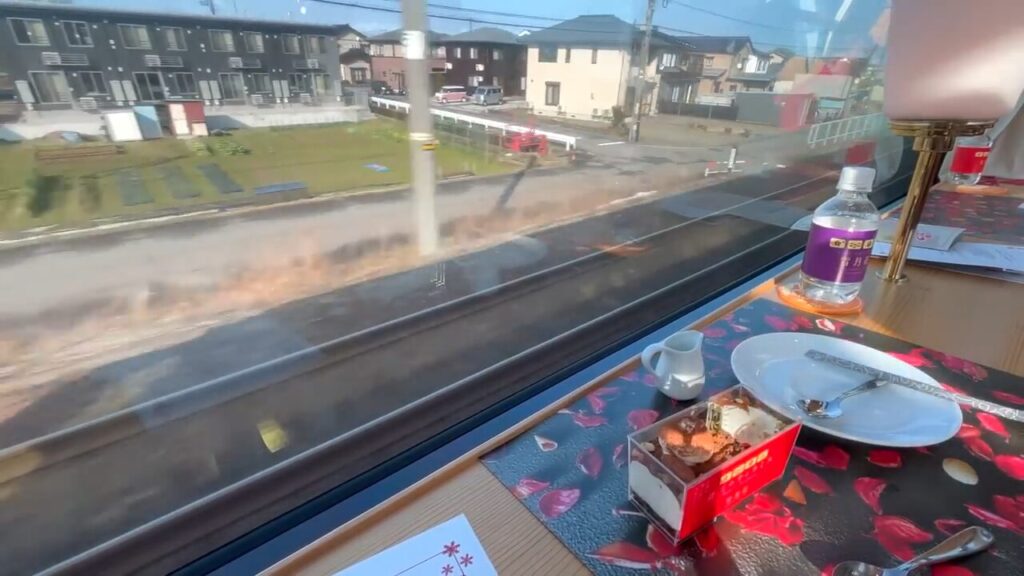
Shortly after, the train reaches Ichiburi Station, the westernmost station in Niigata Prefecture, notable for having a railway crossing built directly into the station grounds — another small rarity along this route.
Arriving at Itoigawa Station — One Booking Tip
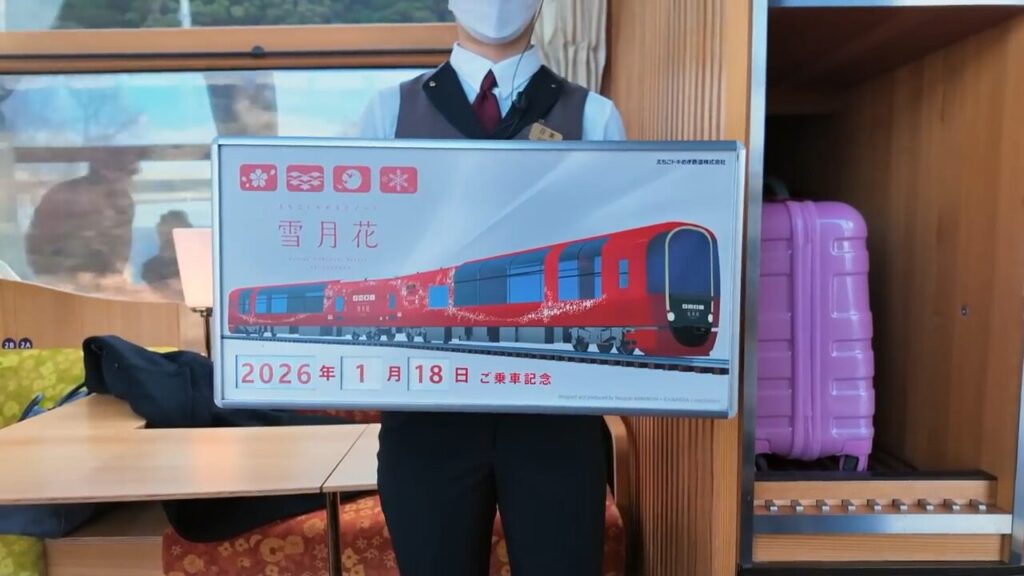
At 2:30 PM, the train pulls into its final stop, Itoigawa Station, bringing the roughly 3.5-hour journey to a close. Looking back, the ride felt over almost instantly — a genuinely luxurious way to spend an afternoon.
One practical tip worth knowing: a Setsugekka ticket includes unlimited same-day travel on the entire Echigo Tokimeki Railway line. We didn’t realize this and ended up purchasing a separate return ticket — so if you’re planning your own trip, be sure to take advantage of this before buying anything extra for the ride back.
Practical Information and Final Thoughts
Train name: Echigo Tokimeki Resort “Setsugekka” Route: Joetsumyoko Station to Itoigawa Station (approx. 3.5 hours) Winter schedule: Weekends only, one departure per day Capacity: 38 passengers, fully reserved seating, two-car train Official website: Echigo Tokimeki Resort Setsugekka
From handcrafted Niigata interiors and some of the largest windows on any Japanese train, to a rare switchback, an underground tunnel station, and a three-tiered feast built entirely from local ingredients, the Setsugekka is an experience worth planning a trip around. It’s especially popular in winter, so booking well in advance is strongly recommended.
Have you ridden a sightseeing train in Japan? Let us know your favorite route in the comments below.
Comments