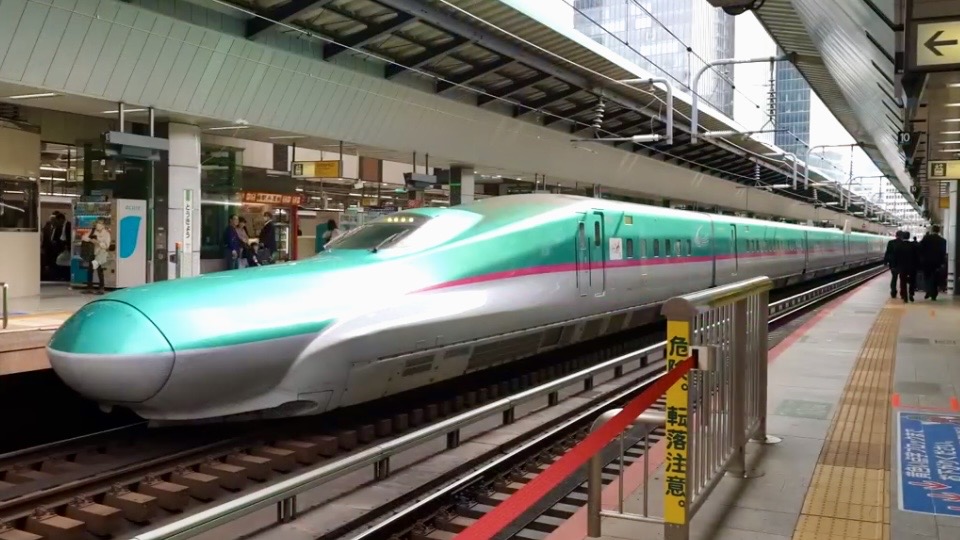
This time I took Japan’s fastest bullet train, the “Hayabusa,” on a solo trip from Tokyo to Hokkaido. Gran Class — a first-class experience with only 18 seats. Here’s a full report on this luxurious 4-hour journey, plus the Hakodate sightseeing that followed.
From Tokyo Station, a 4-Hour Shinkansen Journey Begins
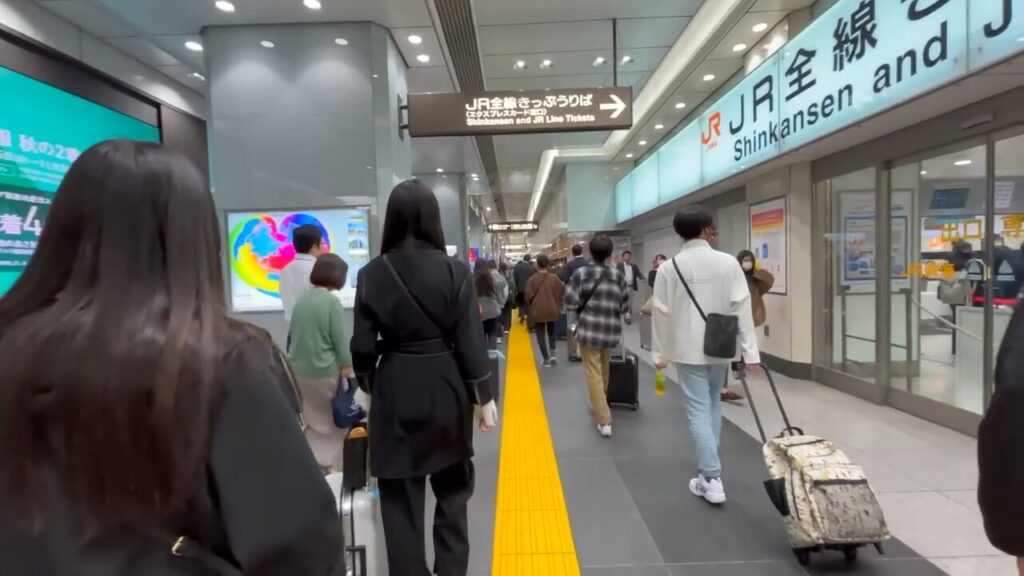
Today I’ll be riding the “Hayabusa” Shinkansen for 4 hours. First, I bought my ticket at the ticket machine. Since I hadn’t booked in advance, I was hoping there’d be seats available — and luckily, even at the last minute, plenty of seats were open, so I was able to purchase my ticket without any trouble.
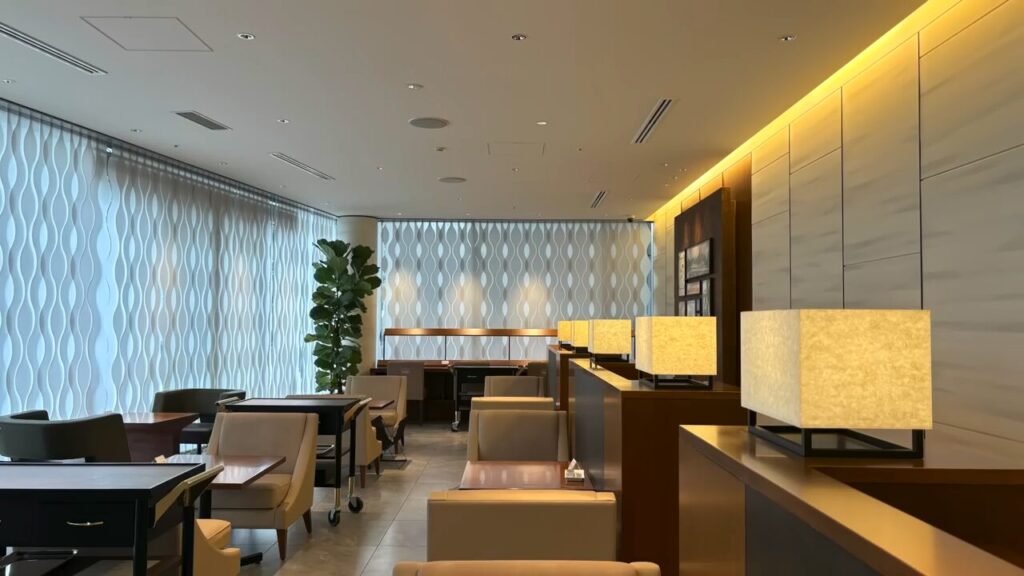
A Perk: The View Gold Lounge
Passengers riding Gran Class that day can use the “View Gold Lounge” at Tokyo Station (filming isn’t allowed inside). You can enter starting 90 minutes before your train’s scheduled departure, and coffee, tea, juice, and snacks are all complimentary.
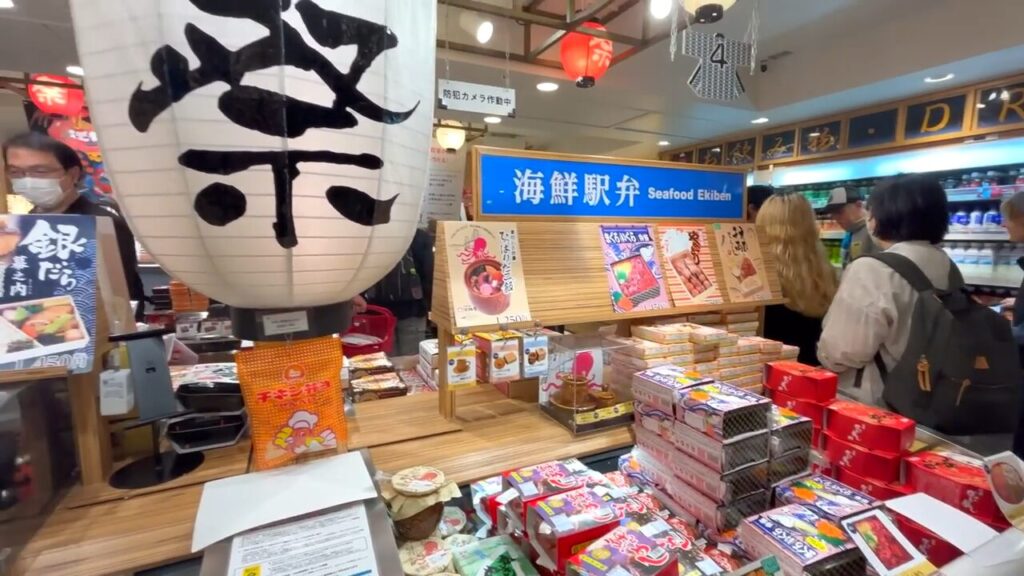
Ekiben at Tokyo Station’s “Matsuri”
No Shinkansen trip is complete without an ekiben (train bento box). Apparently around 200 different varieties of regional specialty bento are sold here. I decided to buy the number one bestseller at the ekiben shop “Matsuri.” The store was quite crowded, but the self-checkout registers were open, which was very convenient.
The Hayabusa Arrives at Tokyo Station
The Shinkansen I’d be riding was a coupled train — the “Hayabusa” and “Komachi.” Gran Class exists only in one car of the Hayabusa. Apparently Tokyo Station’s passenger numbers have been rising year by year since the pandemic. Trains kept departing one after another on the platform. I happened to notice people down below the platform — it turns out the space beneath Tokyo Station’s platforms is a service passage, where many staff members work.
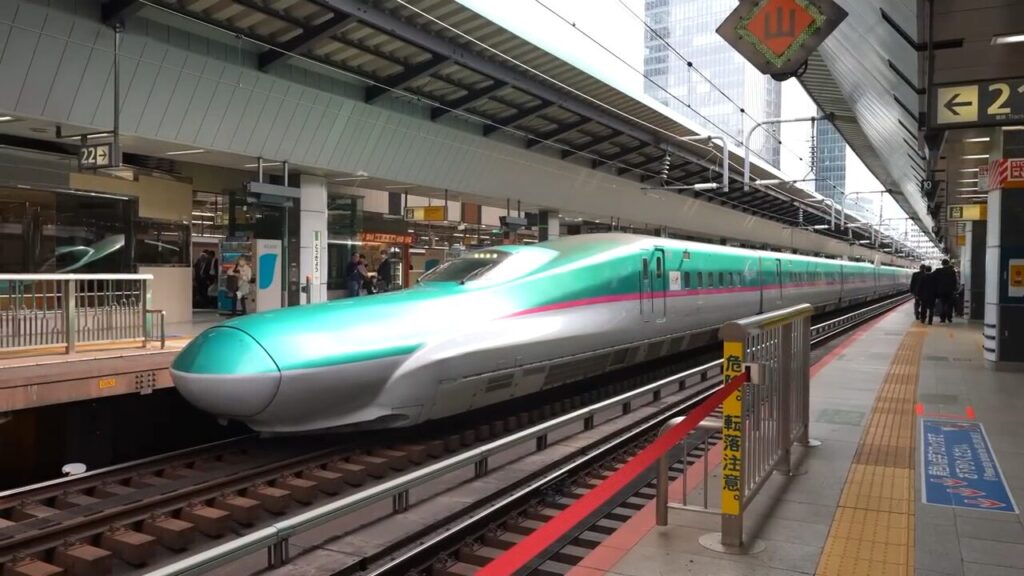
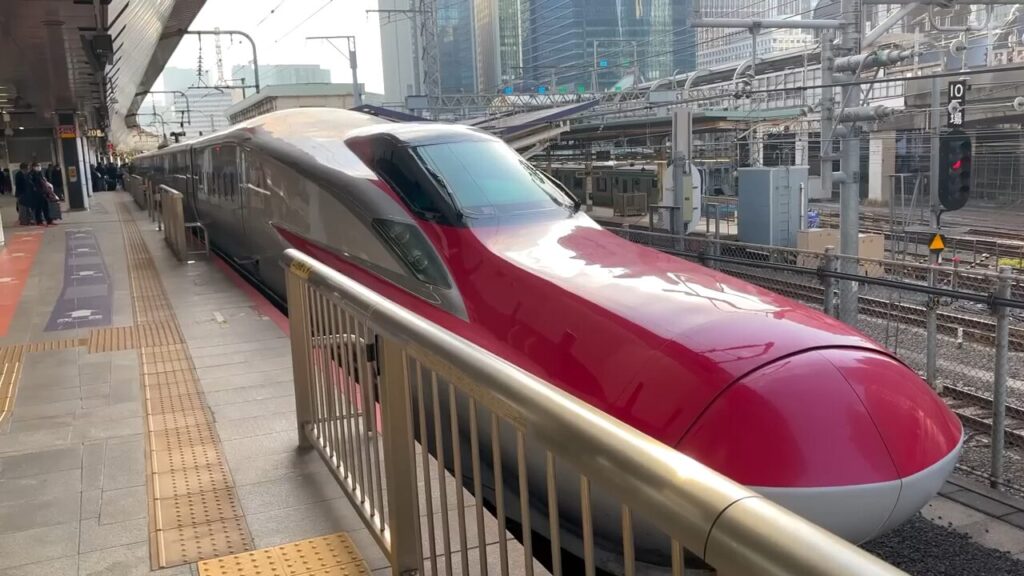
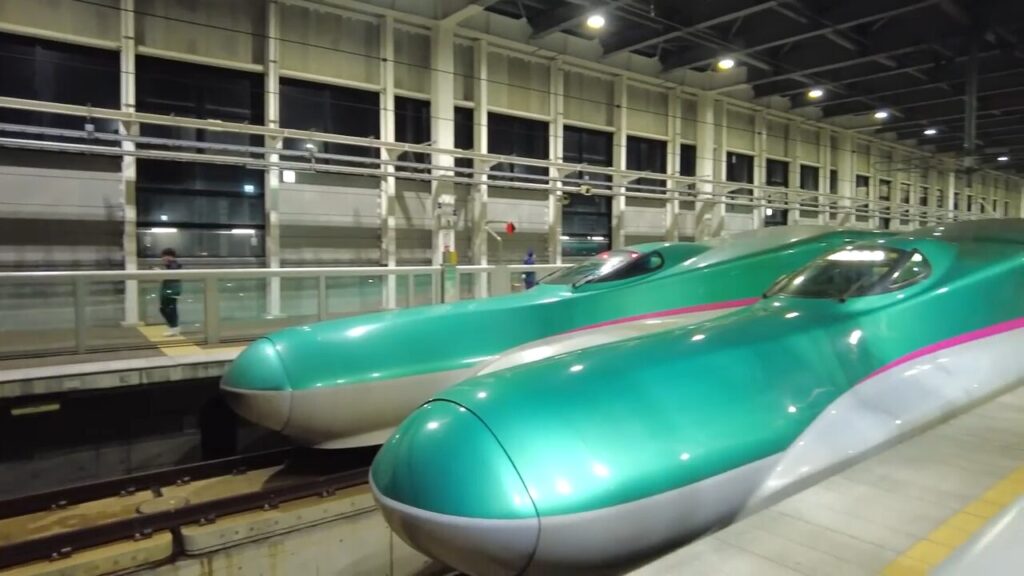
Gran Class is Car 10 of the Hayabusa. The green car is the “Hayabusa,” and the red one is the “Komachi.” The Komachi gets uncoupled partway through and heads to Akita Prefecture, while the Hayabusa continues on to Shin-Hakodate-Hokuto in Hokkaido. When a Shinkansen arrives at Tokyo Station, the first thing that happens is a full interior cleaning.
Boarding Gran Class
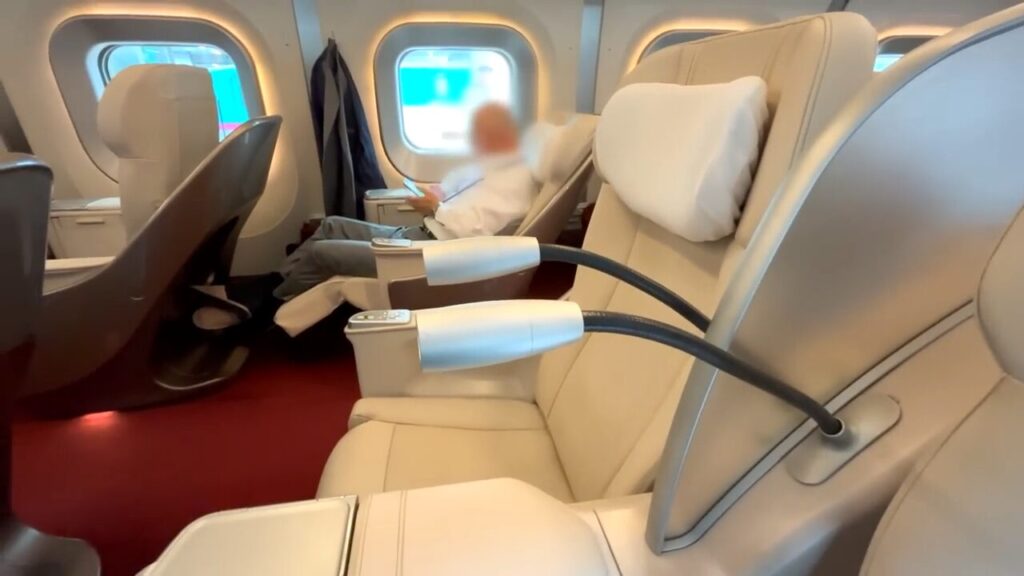
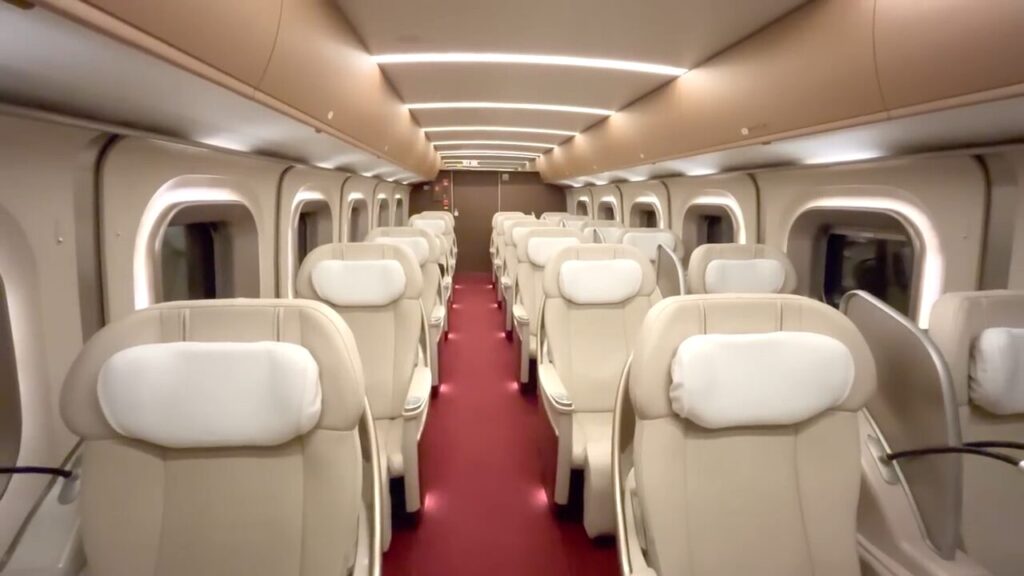
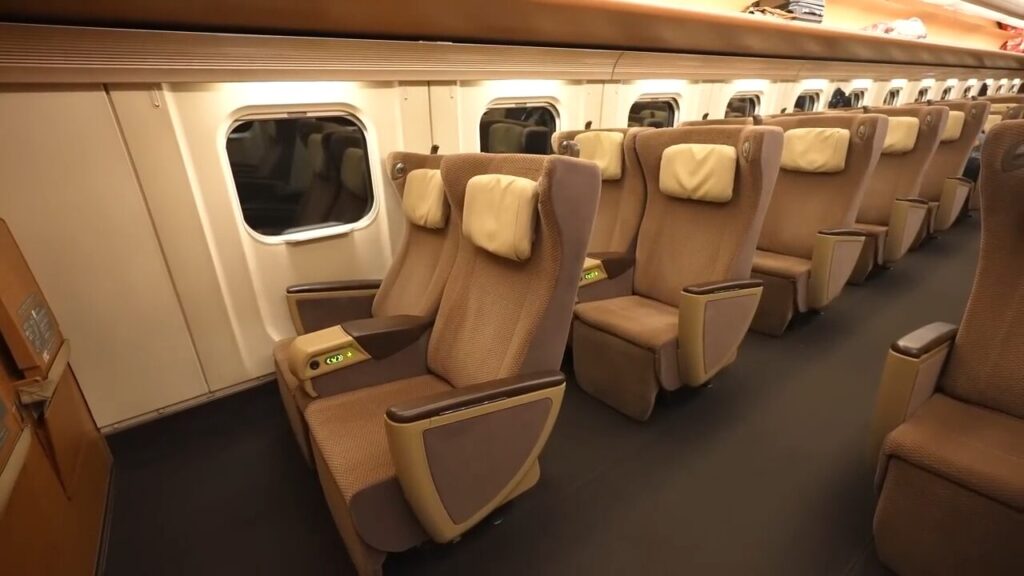
Now, it’s finally time to board. Gran Class has only 18 seats total. The whole car is done in white, giving it a very clean feel. “Wow, this is just like first class on an airplane!” I couldn’t help but say out loud.
The seats are arranged 1+2 across, six rows deep. The seat pitch is 1,300mm and seat width is 520mm — very spacious. 14:20, departure from Tokyo Station. We’re scheduled to arrive at the final stop, Shin-Hakodate-Hokuto, at 18:29 — roughly a 4-hour Shinkansen journey. For a comfortable ride, slippers are provided at every seat. Both the slippers and the floor were plush and soft. There were also magazines to read on board, and instructions for using the seat.
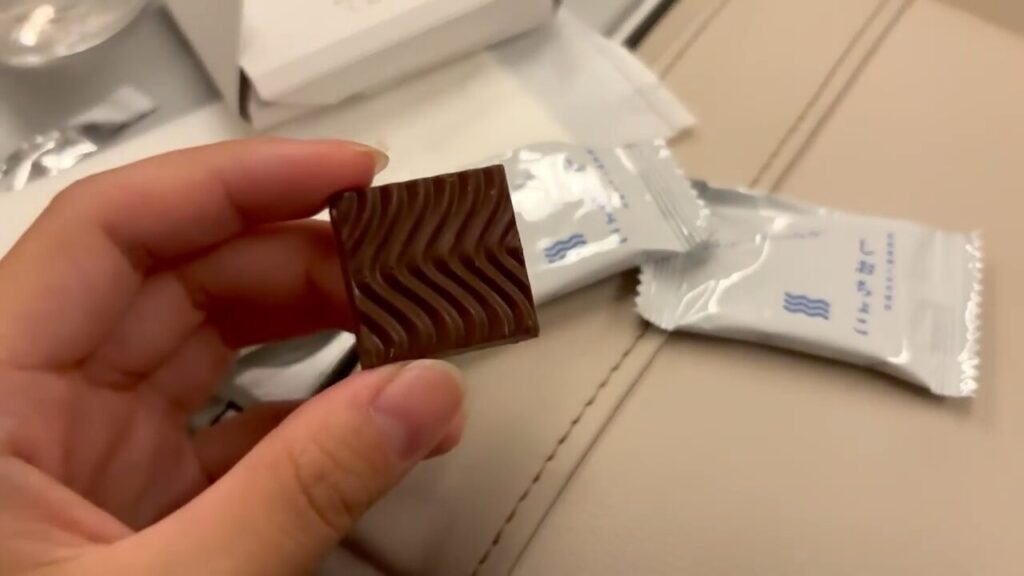
Right after departure, a white bag was handed out. Inside were a wet wipe, mineral water, chocolate, and a menu. The chocolate was salted — salty and delicious.
Onboard Light Meal
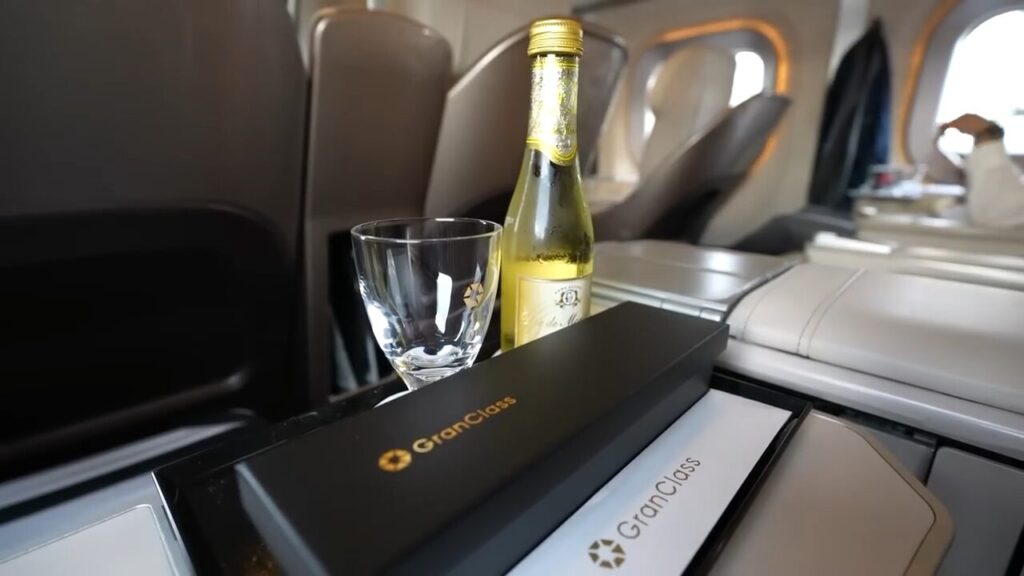
On the Hayabusa’s Gran Class, a light meal is served onboard. You can choose either a Japanese-style or Western-style meal. Drinks are all-you-can-drink. The tray table is hidden inside the armrest — a secret folding table.
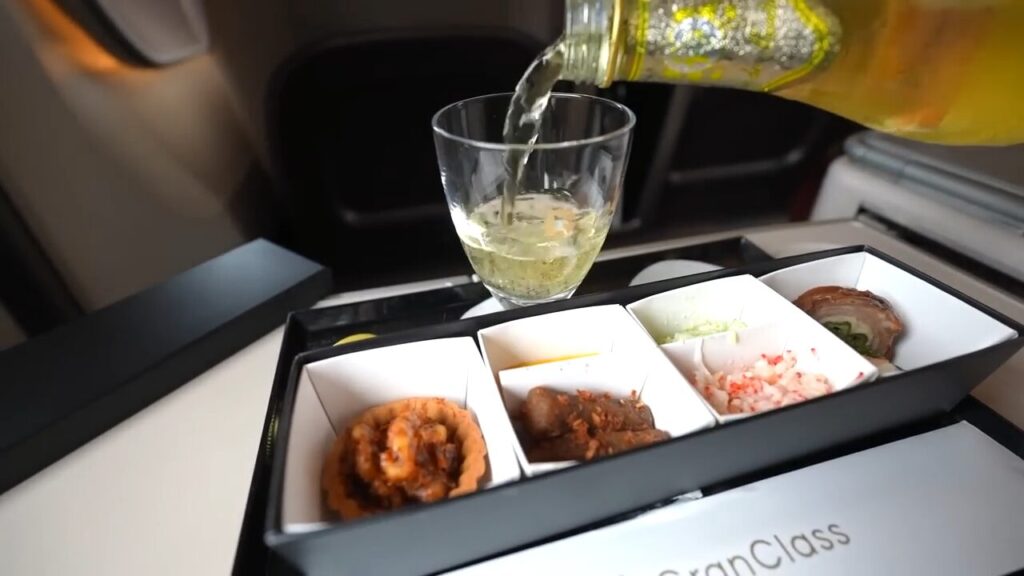
I ordered the Western-style meal, along with a non-alcoholic sparkling wine. A dedicated Gran Class attendant brought it right to my seat. The Gran Class meal uses carefully selected seasonal ingredients. The sparkling wine came in its own mini bottle, poured into an original Gran Class glass. It had a crisp, refreshing finish and was really delicious.
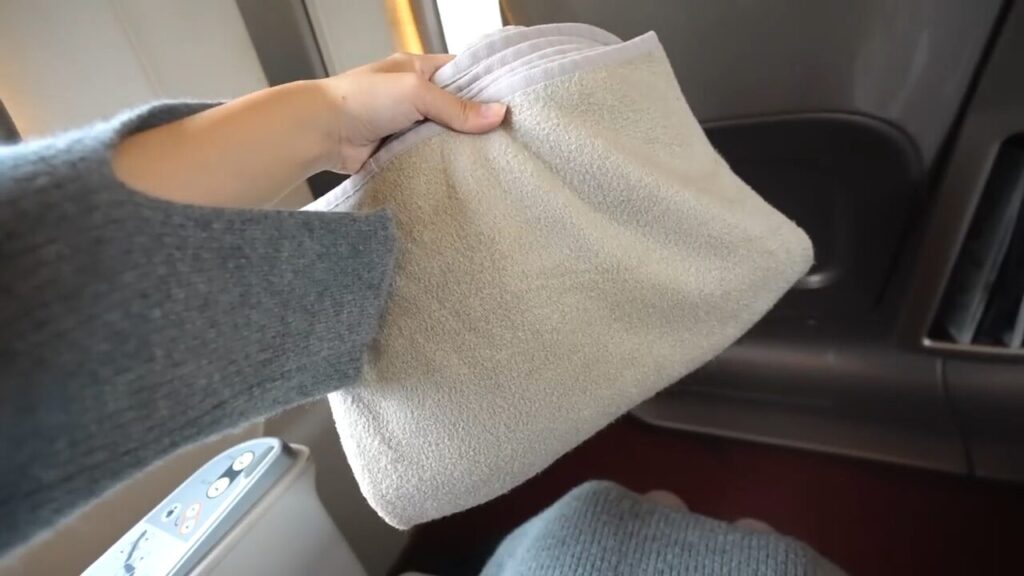
The meal mainly featured ingredients sourced from the Tohoku region: beef and vegetable rolls, a salad with crab (was that real crab?), sweet-savory simmered burdock root, zunda (edamame paste) with fish roe in spicy mayo, pumpkin castella cake, and a bonito-walnut tart — everything was delicious. Beyond the food, other amenities were also available to borrow — I asked for a blanket, and it turned out to be huge, more like a full blanket than a lap blanket. It was big enough to cover my whole body, making for the most comfortable nap. The Shinkansen was currently heading toward Sendai Station. Running speed: 315 km/h — I could hardly believe it.
Gran Class Seat Features
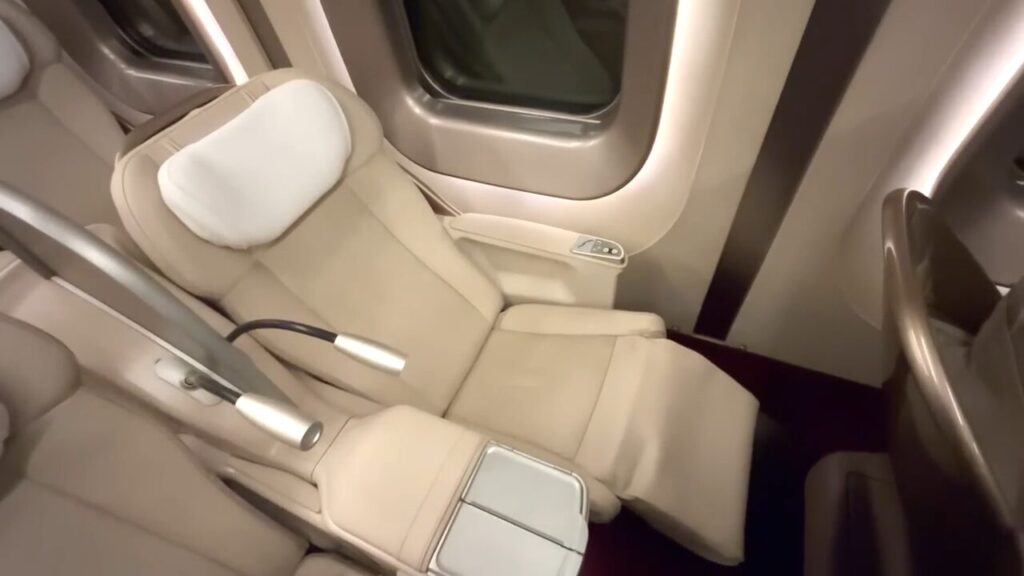
Since I had plenty of time, let me introduce the seat features. There’s a seat controller on the armrest by the wall, letting you move the footrest with a single button. The recline goes remarkably low. The seats use a “back shell” design, so reclining doesn’t inconvenience the passenger behind you — completely stress-free all the way to your destination.
There’s an outlet in the center of the seat and a reading light. There’s also a small dedicated table for drinks. The window has a manual blind, and there’s a large overhead luggage space above the seat.
I placed a second order. Press and hold the call button, and once the light turns on, the dedicated attendant comes to your seat. Since I planned to eat my ekiben, I just ordered drinks this time — apple juice, hot green tea, and a sponge cake arrived.
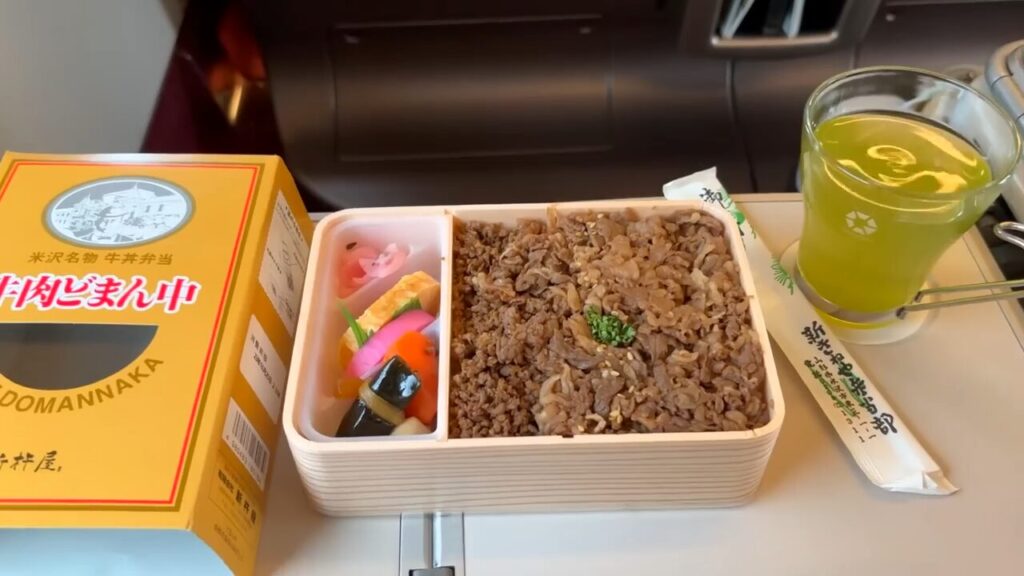
I also had the “Gyuniku Domannaka” beef bento, said to be one of the most popular ekiben in all of Japan. It was packed with sweet-savory seasoned beef and was delicious. The seasoning on the accompanying egg and kelp was also excellent.
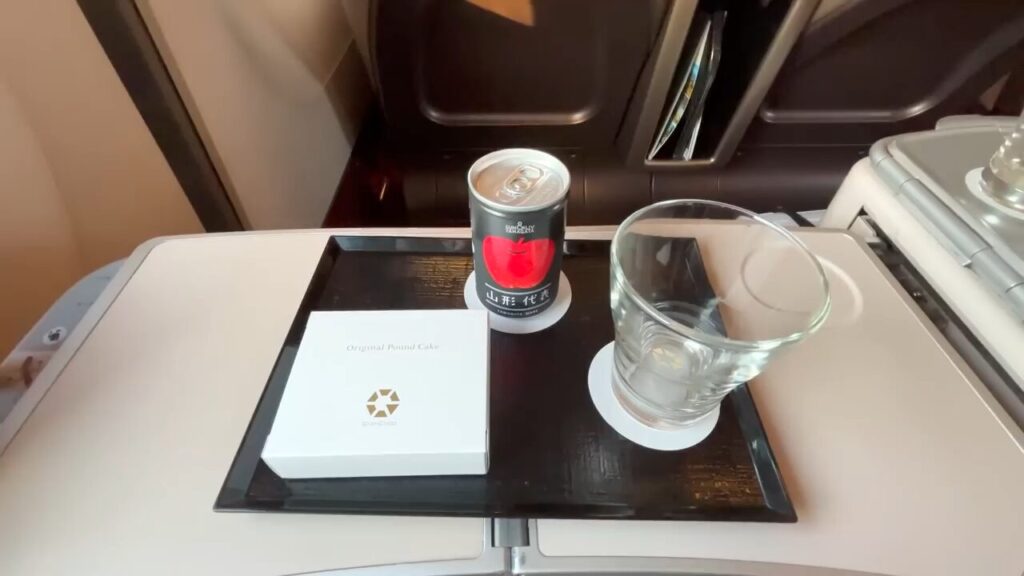
The Shinkansen arrived at Sendai Station. Nearly all the passengers in the car got off there, and it suddenly felt almost like I had the car to myself. I enjoyed the baked snack and apple juice I’d ordered earlier — the apple juice was 100% straight juice made from Yamagata Prefecture apples. Normally you’d drink it straight from the can, but in Gran Class it’s poured into a glass for you. The baked snack was an original Gran Class Japanese chestnut pound cake.
Free Wi-Fi was available onboard, and I could watch YouTube without any buffering. There was also an emergency SOS button. The scenery outside the window kept constantly changing, yet the cabin felt so relaxed and spacious — it created a strangely calming contrast.
Facilities Beyond the Seats
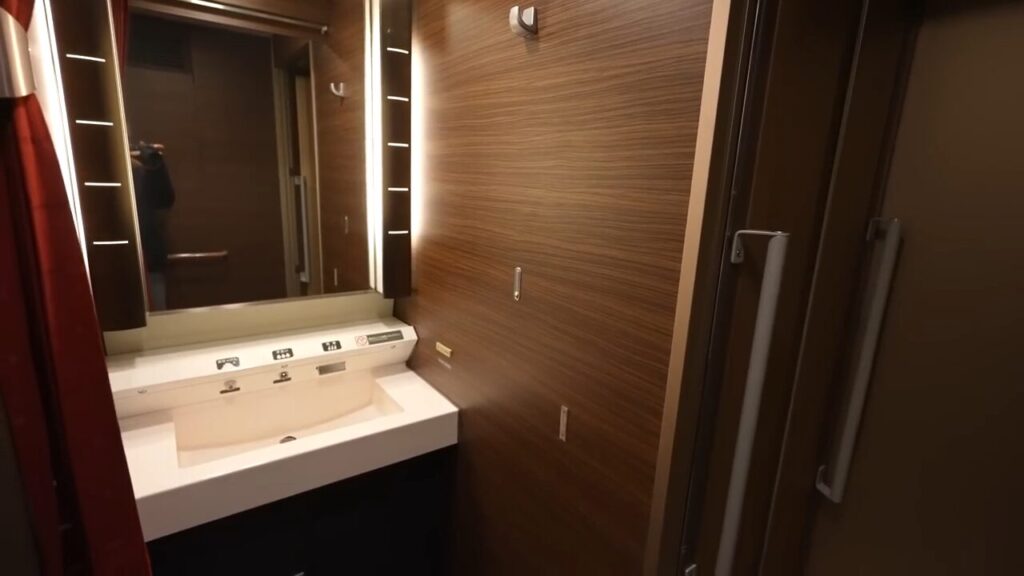
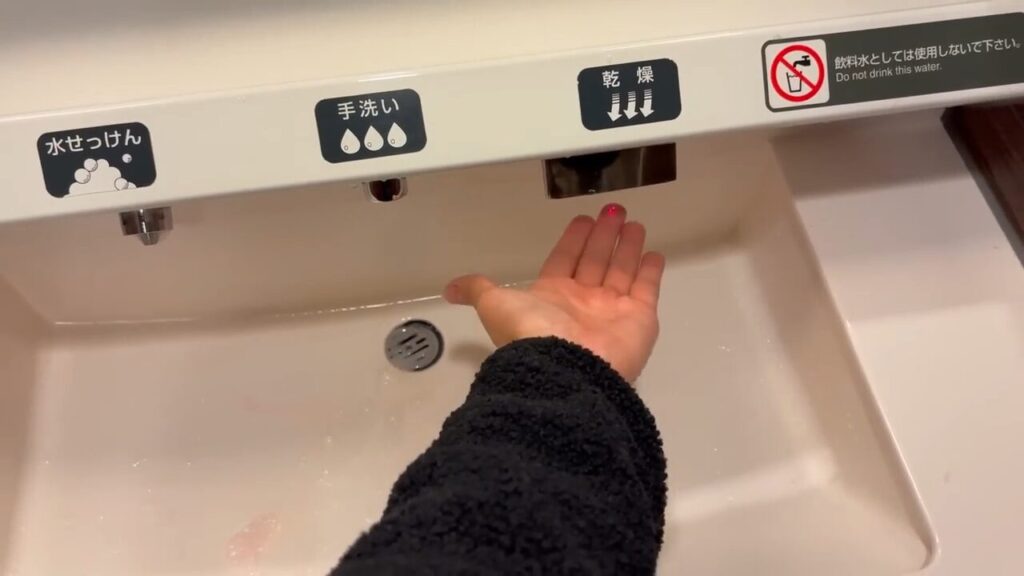
I left my seat for a bit to check out the facilities beyond the seating area. Right outside Gran Class, there’s a restroom and washbasin, where soap, water, and the dryer are all sensor-activated. Near the Green Car area, there’s a spot for storing suitcases. The restroom is a multi-purpose one that wheelchair users can also use, and the door locks with just a button press. The restrooms are generally shared between men and women. Gran Class has a red carpet, with indirect lighting on the ceiling — the cabin felt very quiet and luxurious.
Uncoupling the Hayabusa and Komachi at Morioka Station
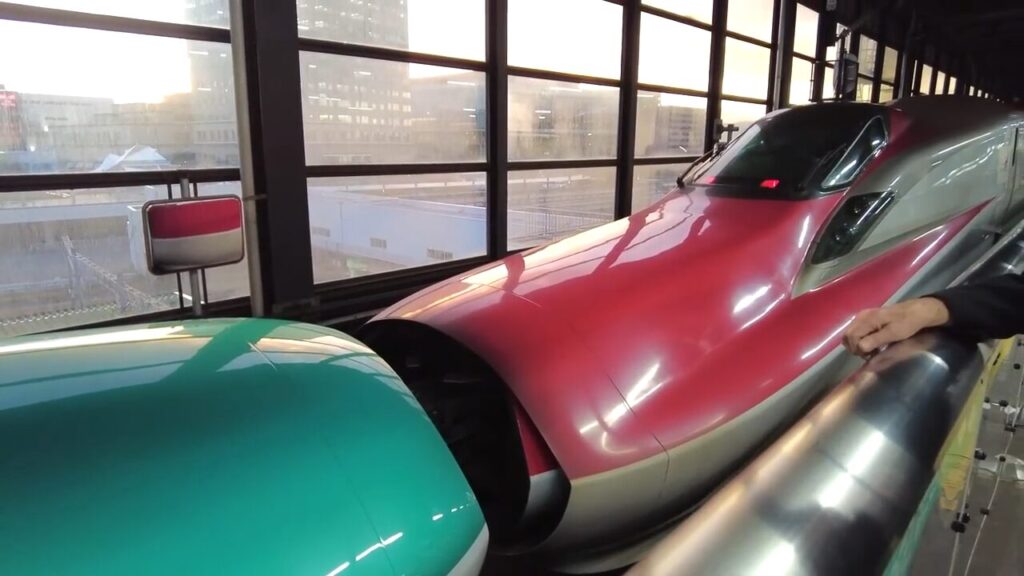
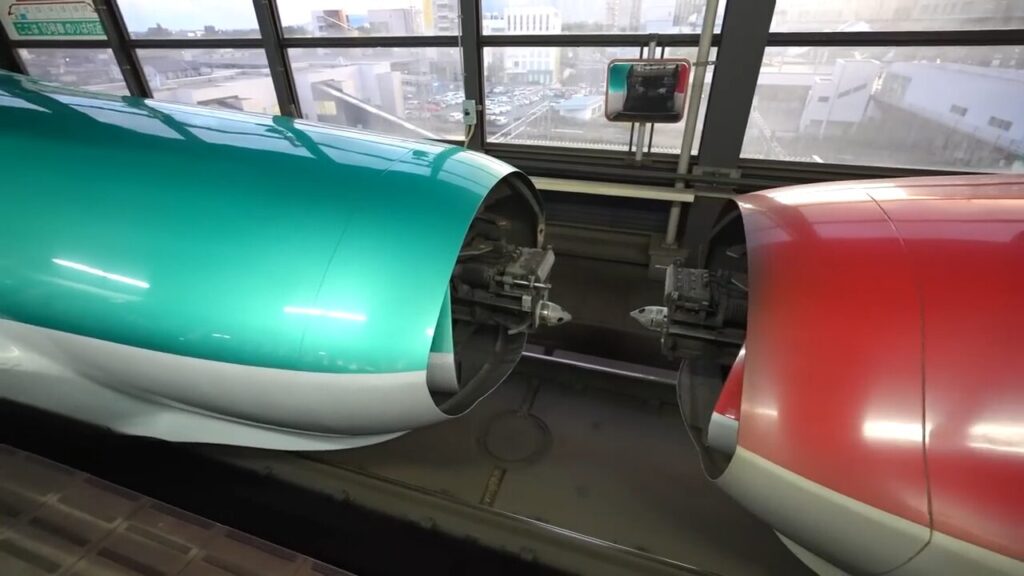
We arrived at Morioka Station in Iwate Prefecture. At Morioka, the Hayabusa and Komachi are uncoupled. The Komachi doesn’t continue to Hokkaido — it heads toward Akita Prefecture instead. Morioka Station is apparently the only place in all of Japan where you can watch trains being coupled and uncoupled.
The Komachi departed first. I was relieved I managed to capture that rare moment on camera. A few minutes after the Komachi left, the Hayabusa departed as well. I hurried back, worried about missing the train. The sun had already started setting quite a bit. We arrived at Hachinohe City in Aomori Prefecture — I realized just how far we’d come. After Hachinohe, the final stop, Shin-Hakodate-Hokuto Station, was finally next.
Passing Through the Undersea Seikan Tunnel
To get from Aomori to Hokkaido, the train travels through an undersea railway tunnel. It’s called the “Seikan Tunnel.” The depth beneath the seabed is 240 meters, and the tunnel stretches 53.85 km, taking about 25 minutes to pass through. The Seikan Tunnel is the longest and deepest undersea railway tunnel in the world. Inside the tunnel, the train slows down to 140 km/h. While passing through, the view outside the window was completely black — the ride itself felt the same, but the Wi-Fi stopped working.
Seats Beyond Gran Class
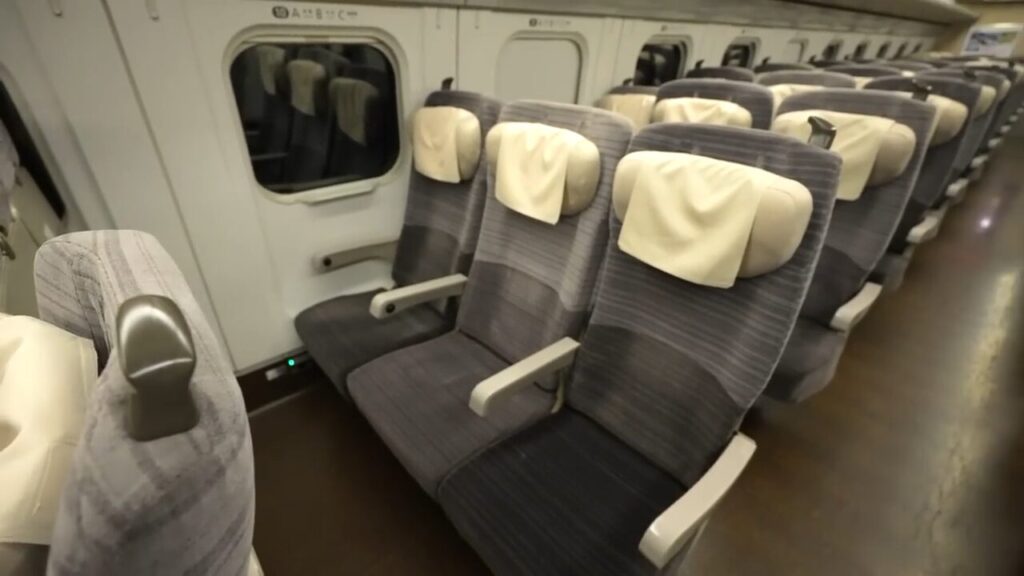
Let’s also take a look at the seats other than Gran Class. Right past Gran Class is the Green Car, arranged 2+2, with 55 seats — the next tier of luxury after Gran Class. Finally, there’s Ordinary Class, all reserved seating, with 658 seats — by far the largest number. The travel time and distance are exactly the same; only the price differs. I liked that you can choose the seat that fits you best.
We passed through the tunnel, and finally reached Hokkaido. Despite such a long journey, the train arrived at its final destination exactly on schedule. I was once again impressed by just how punctual Japan’s Shinkansen really is.
Arrival at Hakodate Station, and Lucky Pierrot
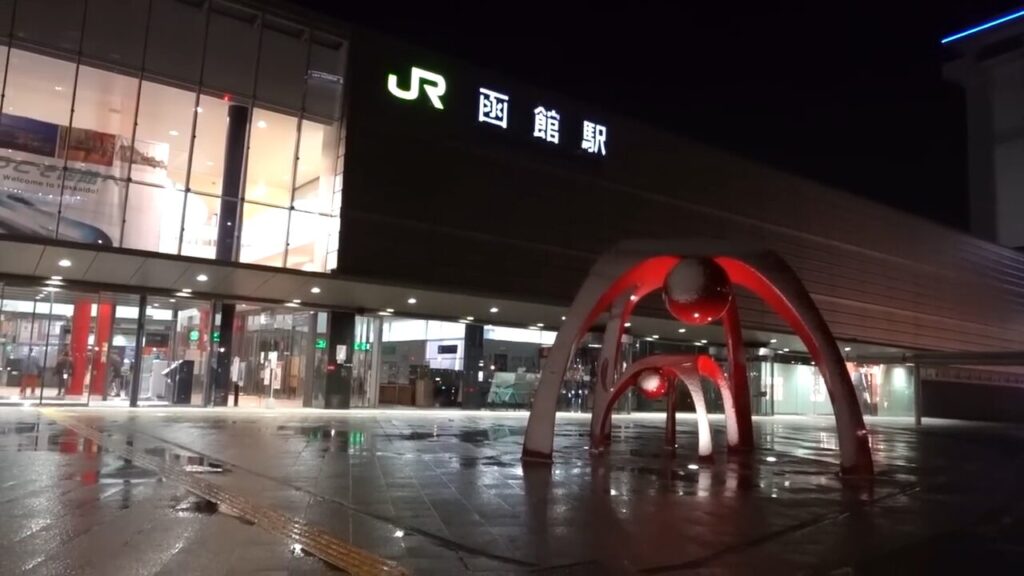
We arrived at Shin-Hakodate-Hokuto Station. The temperature was clearly different from Tokyo — it was really cold. From here, I decided to go sightseeing in Hakodate at night. Hokkaido always gets me excited, no matter how many times I visit. I took a train for about 30 minutes to get to Hakodate Station.
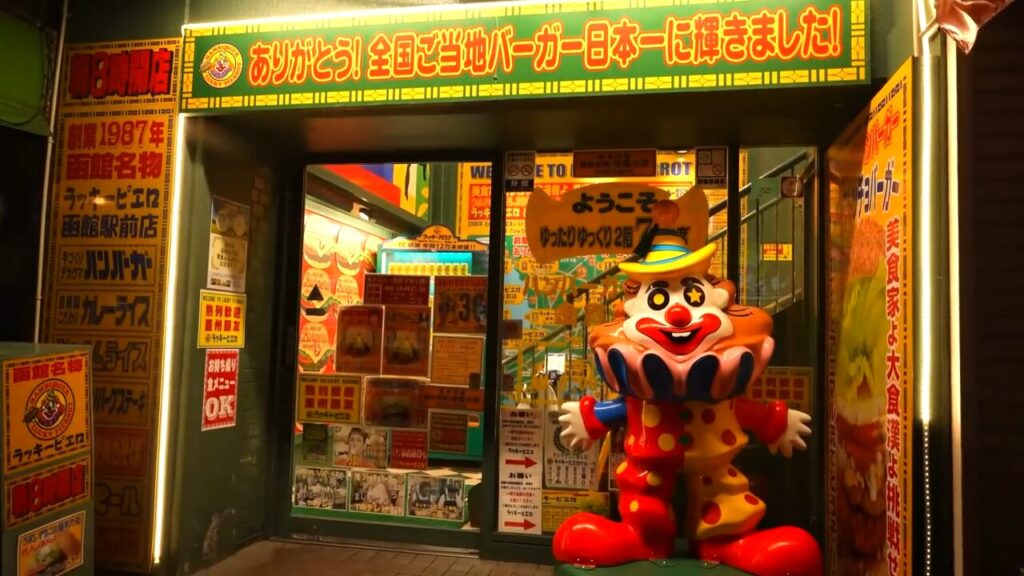
Arrived at Hakodate Station. Really cold. Whenever I come to Hakodate, I always have to visit “Lucky Pierrot.” Most shops had already closed for the night, but this one stays open late. Unusual for a Japanese restaurant, both the exterior and interior are flashy and distinctive — it felt like stepping into a completely different country. There was a long line of people waiting to order — clearly a very popular place.
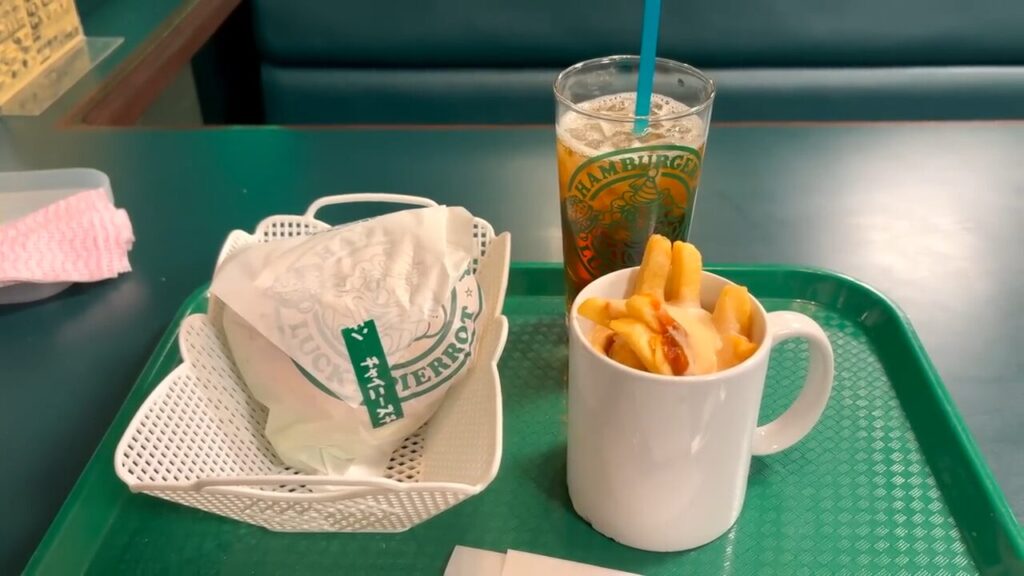
Lucky Pierrot is a Hokkaido-exclusive burger chain. Besides burgers, they also sell curry, omelet rice, yakisoba, and gyoza. Their most popular item is the “Chinese Chicken Burger.” This time I ordered a set with fries and oolong tea. The oolong tea is made in-house by Lucky Pierrot and was delicious. The fries came topped with cheese, demi-glace sauce, and white sauce, served in a cup — eating fries with a fork was a first for me. It had that junky, delicious taste that’s definitely not great for your waistline.
And then, the most popular item — the Chinese Chicken Burger. It apparently sells around 300,000 units a year. Inside were three large pieces of fried chicken. Eating something warm in such a cold town felt like pure bliss.
World’s Three Great Night Views: Mt. Hakodate Ropeway
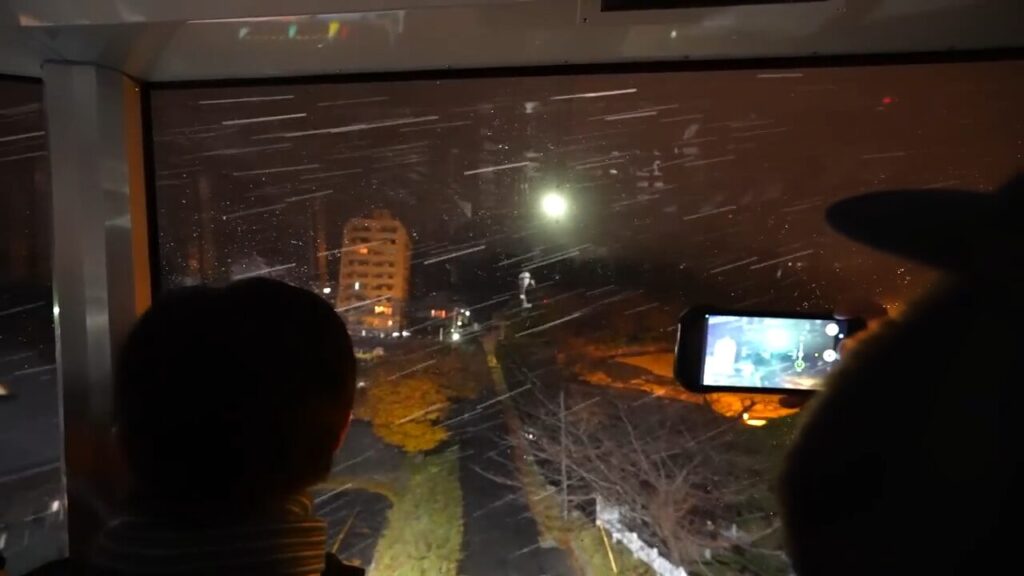
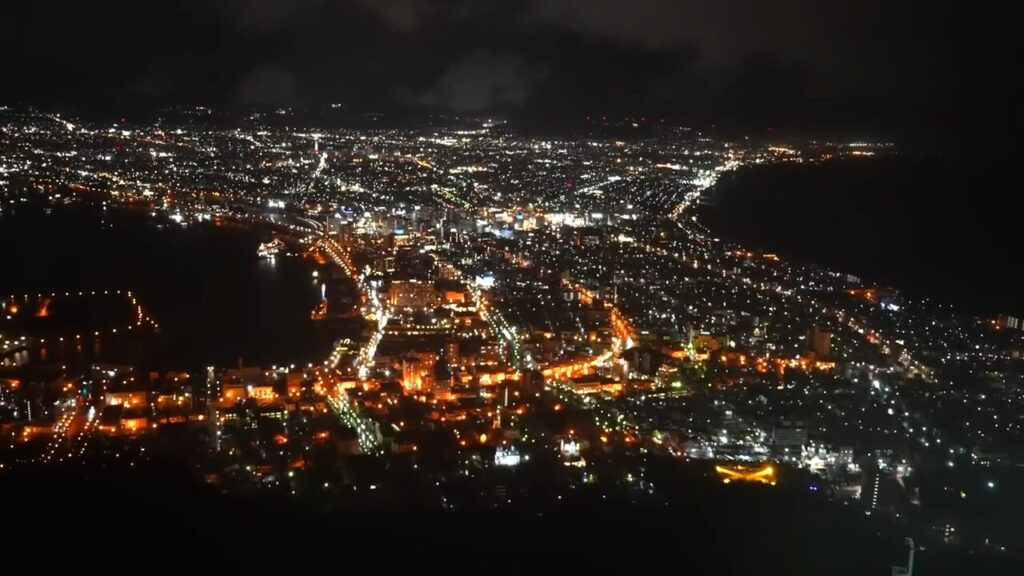
Having eaten plenty and warmed up, I decided to head to Mt. Hakodate. Mt. Hakodate is ranked among Japan’s three great night views, and even the world’s three great night views. Then, out of nowhere — heavy snow. It was truly, unbelievably cold.
You go up Mt. Hakodate by ropeway. You can also get there by bus or on foot, but the ropeway is the most convenient. The weather wasn’t great that day, so the night view might not be that clear. But since I’d come all the way to Hakodate, I decided to go up anyway. It takes about 3 minutes by ropeway to reach the top. The heavy snow falling made for a truly magical scene.
The line for the ropeway back down was quite long — but the view was worth every minute of the wait. A breathtakingly beautiful view. Even though I’d heard the weather was bad, it was still plenty beautiful. It was so cold it took my breath away — but despite the cold, this view was truly one of a kind.
Closing Thoughts
Spending 4 hours in Gran Class on Japan’s fastest Shinkansen, the Hayabusa, was a luxurious experience that rivaled first class on an airplane. From the moment of uncoupling at Morioka Station, to the world’s longest undersea tunnel, to the food and the world-class night view in Hakodate afterward — the whole day felt like it flew by. Wondering where to go next, I brought this trip to a close.
What Is Gran Class?
Gran Class is JR East’s top-tier Shinkansen class, comparable to first class on an airplane or a suite room at a hotel. It offers a special 18-seat space on the E5, H5, E7, and W7 series trains running on the Tohoku and Hokkaido Shinkansen lines, providing a comfortable travel experience.
Gran Class Services
- Meals (light refreshments) served by a dedicated attendant
- Free-flowing alcoholic beverages, including wine and beer
- Amenity items such as slippers and eye masks provided
Perk: View Gold Lounge
- Available at Tokyo Station upon presenting a Gran Class ticket
- Relax with free Wi-Fi and soft drinks
- Not available when full
- Available hours: from 90 minutes before train departure (within operating hours)
Route and Speed Connects Tokyo with Shin-Aomori and Shin-Hakodate-Hokuto; the fastest train on the Tohoku Shinkansen line, with a top speed of 320 km/h.
Comments